By
Vijeth Iyengar; Greg Link; Phillip W. Beatty; Madeleine Boel; Cailin Crockett;
Casey DiCocco; Dana Fink; Jacqueline S. Gray; Cynthia LaCounte; A. Cate Miller;
Megan Phillippi; Shannon Skowronski; Mary Twomey; Timothy Williams
January 07, 2019 | Discussion Paper
Overview and Scope
In light of population estimates and projections—both in the
United States and around the world—forecasting an increase in the decades to
come in the number of individuals ages 65 and older, it has become increasingly
important for scientists, policy makers, and state and federal governments to
meet the needs—via research, services, and support—of this growing population
segment. While these stakeholders continue to make great advances in our
understanding of the aging process and in improving our capacity to provide the
specific service and support needs for this population, comparatively little is
known about the potentially deleterious impacts that the experience of
traumatic events may have on older adults, and specifically on their ability to
lead functionally independent and healthy lives. Given the increase of older
adults in the decades to come, it is critical to advance understanding and
address the influence traumatic events may have on the mental health and
functional independence of older adults.
This review attempts to provide a broad overview of select U.S. federal governmental programs—operated
outside the Department of Veterans Affairs—that serve older adults who
experienced or may experience a traumatic event. Our intention is to
demonstrate both the breadth and depth of the role the federal government has
in responding to the potential needs of these individuals.
Readers are asked to keep in mind the following considerations:
·
This article is intended to serve as a resource for readers
seeking better understanding of existing federal government programs,
initiatives, and services for older adults who experienced or may experience a
traumatic event in late life. No policy or programmatic recommendations will be
made by the authors.
·
We adopted the Substance Abuse and Mental Health Administration
(SAMHSA) definition of trauma: “an event, series of events, or set of
circumstances that is experienced by an individual as physically or emotionally
harmful or life threatening and that has lasting adverse effects on the
individual’s functioning and mental, physical, social, emotional, or spiritual
well-being” [1]. We acknowledge here that not all traumatic events experienced
by individuals may have lasting adverse effects.
·
There are a number of experiences that can cause trauma in
individuals of all ages: illness or medical procedures; community violence;
school violence; bullying; natural or man-made disasters; forced displacement;
war, terrorism, or political violence; and/or military trauma, as identified by
SAMHSA [2]. However, given evidence in the geriatric trauma literature
emphasizing that injury based trauma (for example, falls-related incidences)
[3] and interpersonal trauma (for example, elder abuse) [4] are predominant
mechanisms of injury within the older adult population, these two sources of
trauma are the focus of this article. This allowed for a more circumscribed
discussion of traumatic events experienced by individuals in late life and a
focused discussion of programs, initiatives, and supports in place for these
individuals.
Ultimately, our intention is for readers to come away from this
review with the following:
·
A heightened sense of the importance of addressing the needs of
older adults who experienced or may experience a traumatic event and an
understanding of the demographic and economic indicators that contribute to the
urgency of programs, initiatives, services, and supports for this
sub-population.
·
An increased awareness of some of the federal government
programs—and their component features—for older adults who experienced or may
experience a traumatic event in late life.
·
An understanding of the promising practices and challenges in
service delivery and implementation that have been identified within current
federal programs.
Living in an Increasingly Aging
Society
Demographics
The United States is currently experiencing a significant
demographic shift. For many years to come, the number and proportion of older
adults in the United States will continue to increase. Between the years 2005
and 2015, the number of people ages 65 and older increased by 30 percent to
47.8 million; this number is projected to reach 98 million in the year 2060
[5]. Similar trend profiles are reported for persons ages 85 and older, with
recent projections reporting that this population segment will triple in size
by the year 2049 [6]. Global population projections parallel these trends.
Specifically, as a percentage of the global population, the 65 and older
population segment has been increasing since 1950 and is projected to increase
through 2050 [7]. Conversely, during that same period (1950–2050), the under
age 5 population, as a percentage of the global population, is projected to
experience a steady decline.
Traumatic Events Experienced by
Older Adults in Late Life
In the sections that follow, two types of events that could lead
to experiencing trauma are discussed: interpersonal trauma and injury-based trauma. In this review, interpersonal
trauma is defined as trauma resulting from violence perpetrated against an
older person by someone in a position of trust, including elder abuse and intimate partner and sexual
violence. Injury-based trauma is defined as trauma resulting
from falls in the home and community, or traumatic brain injuries (TBIs). For each
potential source of trauma, we will cover the available prevalence and
demographic data, risk factors, and respective impact on the U.S. health care
infrastructure.
Interpersonal Trauma
Elder abuse
The U.S. National Academies of Sciences, Engineering, and
Medicine [8] defines elder abuse as: “(a) intentional actions that cause harm
or create a serious risk of harm (whether or not harm is intended) to a
vulnerable elder by a caregiver or other person who stands in a trust
relationship, or (b) failure by a caregiver to satisfy the elder’s basic needs
or to protect the elder from harm” [8]. Complementing this definition, the
Centers for Disease Control and Prevention (CDC) mentions various forms of elder
abuse, including physical abuse, sexual abuse or abusive sexual contact,
emotional or psychological abuse, neglect, and financial abuse or exploitation
[9].
Prevalence and demographics. The
most recent data available on the aggregated prevalence of elder abuse suggest
that between 7.6 percent [10] and 9.5 percent of older Americans (ages 60 and
older) experience emotional, physical, or sexual abuse and neglect each year
with many of them experiencing abuse in multiple forms [11]. In the United
States, prevalence rates for non-sexual physical abuse in the older adult
population are 1.4 percent; 0.5 percent for sexual abuse; 4.5 percent for
financial abuse; 1.5 percent for emotional/psychological abuse; and 1.1 percent
for neglect [10]. While the focus of this article is not on persons with
disabilities, noted here is that the abuse of older adults and younger adults
with disabilities takes place in both institutional settings (nursing homes or
assisted living facilities) and community settings (the victim’s own home or
adult day programs). In the area of elder abuse, the issue of abuse of younger
adults with disabilities is often included, though few studies have focused
exclusively on this population. This is troubling given that adults with
disabilities are 4 to 10 times more likely to become victims of maltreatment
than persons without disabilities [12]. In 2010, the age-adjusted serious
violent crime (for example, rape, robbery, assault) victimization rate for
persons with disabilities was three times the rate of adults without
disabilities [13]. Available evidence does suggest, however, that there are no
significant differences between violent crimes for older adults with a
disability and older adults without a disability [14]. Furthermore, the trend
is going in the wrong direction. For example, when compared to an analysis
conducted from data in the year 2000, state data from Adult Protective Services
(APS) agencies in 2004 revealed an increase in reports of adult maltreatment
[15]. These increases are concerning as other research estimates that as few as
1 in 23 cases of maltreatment [8, 16] and 1 in 44 cases of financial
exploitation [11] are reported to the appropriate authorities.
Risk factors. Before practitioners
can craft effective intervention or prevention remedies, they must understand
why elder abuse occurs. Risk factors can be organized by the strength of
evidence as well as by factors primarily associated with the victim, the
perpetrator, and their relationship. Factors related to the victim and based on
strong evidence include functional dependence; poor physical health; cognitive
impairment and dementia; poor mental and emotional health; and low
socioeconomic status [10]. Gender, age, race, and financial dependence also
affect risk. For example, in the United States, when compared to their
Caucasian counterparts, Hispanic older adults demonstrate a lower risk of
emotional abuse, financial abuse, and neglect [17, 18] and African American
older adults may have an increased risk of financial and psychological abuse
[18, 19]. Risk factors related to the characteristics of the perpetrators and
based on strong evidence include mental illness, substance abuse, and financial
dependency on the victim. The most common perpetrators of elder abuse are relatives,
primarily spouses/partners and adult children [10]. Protective factors found to
reduce the risk of elder abuse that are validated by substantial evidence
include higher levels of social support [10], family and community support and
connectedness, and the coordination of resources and supports at community
agencies.
Impact on the American health care
infrastructure. Elder abuse has been identified as a risk factor for more
intensive use and costs of health care services. Older adults who experience
even modest forms of abuse or neglect have dramatically higher (300 percent)
morbidity and mortality rates than those who have not experienced maltreatment
[20]. Moreover, victims of elder abuse are four times more likely to be
admitted to a nursing home [21] and three times more likely to be admitted to a
hospital [22]. Elder abuse, neglect, and mistreatment are associated with $5.3
billion of annual health care expenditures in the United States [23].
Late-life intimate partner and
sexual violence
A subset of elder abuse is intimate partner violence (IPV),
which includes physical violence, sexual violence, stalking and psychological
aggression (including coercive acts) by a current or former intimate partner
[24]. Sexual violence describes a range of sexual acts committed against
someone without that person’s consent, including rape or attempted rape, and
unwanted sexual contact of any kind [25]. Perpetrators of sexual violence
against an older person may be an acquaintance, a current or former intimate
partner, caregivers (both in and outside of institutional settings), or a
member of the community. The majority of victims are abused by a person they
already know [26]. The most extensive national study on elder abuse to date
revealed that the majority of cases of physical violence involved female
victims with their spouses as perpetrators [11].
Prevalence and demographics. In
the United States, as well as globally, the primary distinction between
measurements of late life IPV and sexual violence and elder abuse is that elder
abuse definitions specify victims as ages 60 and older [27]. Meanwhile, the
majority of research and clinical guidelines on IPV and sexual violence is
centered on women of childbearing age (generally, from ages 15–49) [28]. The
U.S. Preventive Services Task Force acknowledged this serious gap in both data
collection and health system responses to middle-aged victims [28]. For this
reason, the growing body of research on late life IPV and sexual violence
encourages a focus on victims ages 50 and older. In the United States, this is
a significant age cohort, representing 40 percent of the total female
population and 30 percent of the total male population [29]. Although older
victims report lower rates of physical and sexual forms of IPV than those below
age 50, research suggests that the prevalence of non-physical IPV (including
verbal, emotional, and psychological abuse and coercive, controlling behavior)
does not abate as women and men age [30, 31]. Several studies by women’s health
researchers have demonstrated that women who remain in abusive partnerships
over their life course into older age are at greater risk for non-physical IPV
than younger women due to the changing tactics of aging abusers, who reduce the
frequency of physical violence, perhaps due to their own disability or health
problems, and instead control their partners through economic coercion,
psychological abuse, and verbal threats that take a mental and physiological
toll on older women’s health [31, 32]. Older women in abusive relationships are
also at risk for the most lethal form of IPV: partner homicide. Data from seven
U.S. states show that more than one in five women (23 percent) killed by their
partners were above age 50 [33]. Furthermore, more than one-third (35.5 percent)
of all homicides among women ages 50 and older were IPV related, as were just
under one-third (31 percent) of all homicides among women ages 65 and older
[33]. Sexual violence experienced by older women and men is mostly hidden.
Reliable, comprehensive prevalence data on sexual violence are lacking, in part
due to underreporting. For example, data from the Bureau of Justice Statistics
show non-partner sexual assaults committed against adults ages 65 and older are
reported 15.5 percent less frequently than sexual assaults committed against
individuals ages 25–49 [14]. One estimate from researchers at the National
Institute of Justice (NIJ) describes 0.7 percent of community-residing older
adults ages 70 and older as reporting sexual abuse in the previous 12
months [34]. It should be noted that, like physical violence from an
intimate partner in late life, sexual violence has been shown to affect older
women at significantly higher rates than older men [35].
Risk factors. Older women and men who
experience IPV or sexual violence share many of the same characteristics as
younger victims [36], but have an elevated risk profile due to health and
economic circumstances associated with aging, such as the onset of disease,
disability, and poverty [34]. Common risk factors for IPV and sexual violence
over 50 years include dependence on a caregiver (as a result of lifelong
disability or age-related health decline, including dementia); social isolation
(either greater risk for stranger or community violence as a result of living
alone or heightened risk for abuse inside the home stemming from restricted
contact with outside family and friends by a controlling partner or family
member); and experiencing IPV or sexual violence earlier in the life course
[37]. For example, of the older adults ages 70 and older surveyed by NIJ
researchers, those who were romantically involved, had poor access to health
care, and physical limitations had significantly increased odds of experiencing
abuse in the past year [34]. Furthermore, a significant proportion of
respondents reporting abuse shared the following risk profile: 64 percent are
women with 51 percent also being in a relationship; 58 percent lived at or
below the poverty line; 37 percent reported housing insecurity; 22 percent reported
food insecurity; and more than 20 percent reported health problems that
required a specialized form of equipment, such as a wheelchair [34].
It is important to emphasize that older adults are not a
homogenous group. Those from marginalized populations continue to be at greater
or unique risk for violence throughout their lifespan.. As a result, the
experiences of older victims of IPV or sexual violence (including access to
health and justice services) may differ based on race, ethnicity, sexual identity
or gender expression, or disability. Furthermore, it has been discussed that
the social, economic, and health-related disadvantages associated with aging
may intersect with other social determinants and identities, exacerbating risk
and impact of late life IPV and sexual violence, as well as interfering with
help seeking, for some older survivors [38].
Impact on the American health care
infrastructure. According to CDC, the combined costs from emergency department
(ED) visits, mental health services, and lost productivity related to IPV and
sexual violence among victims of all ages exceed $8 billion each year; this
includes $460 million for rape [39]. For older survivors of sexual assault, the
health consequences can be devastating. Studies show that older adults are more
likely to be admitted to a hospital following an assault than younger
individuals or other older adults who have not experienced sexual violence
[40]. Post-menopausal women experience more frequent and acute genital injuries
from sexual assault than younger women, and older women with a history of
repeated experiences of sexual assault demonstrated a two- to three-fold risk
of arthritis and breast cancer compared to older women without a history of
assault [40]. Older victims of IPV also report greater health service
utilization, a decline in overall health status, and reduced life expectancy
than older adults who have not experienced abuse [31, 41, 42].
Injury-Based Trauma
Falls in the home and community
Older adult falls are a common source of injury, trauma, and
loss of functional independence in the United States, and as a result, this
will likely become ever more important to address as the population continues
to age.
Prevalence and demographics. In
2014, 28.7 percent of individuals ages 65 and older reported falling [43],
which resulted in 2.8 million trips to an ED for a fall-related injury and
approximately 800,000 hospitalizations [43]. Furthermore, falls are the leading
cause of fatal and non-fatal injuries for older adults [43]—in 2015, 28,486
older adults died from a fall incident [44]. The health consequences of a fall
vary, but can include bone fractures and breaks, lacerations and wounds, head
injuries [45], and posttraumatic stress disorder [46]. With respect to head
injuries, falls are the most common cause of TBIs in the United States [47] and
among adults ages 65 and older, 79 percent of TBI-related ED visits,
hospitalizations, and deaths were caused by falls [48]. When assessing where
falls occur in the natural environment, slightly more than half of older adult
falls (55 percent) occur in the home, 23 percent occur outside but near the
home, and the remaining 22 percent occur somewhere away from the home and in
the community [49].
Age contributes significantly to fall risk: 26.7 percent of
people ages 65–74 reported a fall compared to 36.5 percent of those 85 and
older [43]. Moreover, older women are more likely to report falls than older
men (30.3 percent versus 26.5 percent, respectively) [43]. These last two
points are significant to the issue of prevalence, as the U.S. population is
currently undergoing unprecedented aging, and the fastest growing demographic
in the United States is women over age 85 [50]. Underscoring this trend, by
2060 there will be approximately 98 million Americans ages 65 and older, making
up 24 percent of the population [51].
Risk factors. There are a number of
demographic factors that impact the risk of falling. As previously mentioned,
age and gender are both risk factors for experiencing and reporting a fall
[43]. Annual household income also factors into the fall risk for an individual
who is 65 and older. A 2016 Morbidity and Mortality Weekly
Report (MMWR) examining falls and fall injuries among adults
ages 65 and older revealed that 34.9 percent of Americans with an annual income
of less than $15,000 reported incidents of falling, while 24.8 percent of those
with an annual income of more than $75,000 reported a fall [43]. In fact, the
same report showed that individuals in each increasing income bracket were less
likely to report a fall than the individuals in the previous income bracket
[43]. Health status also correlates with the likelihood of reporting a fall. To
this end, the MMWR analysis showed that those with poor health status were far more
likely (47.3 percent) to report a fall than those with excellent or very good
status (19.2 percent and 23.7 percent, respectively) [43].
Complementing these demographic factors, the likelihood that an
older adult will experience a fall is influenced most acutely by
individual-level factors, both environmental and intrinsic [52]. Additionally,
elder abuse may potentially be a risk factor of falls. It is recommended to
health care providers to spot indications of “unexplained falls and injuries”
[53]. Environmental factors include the safety of individual’s homes and
communities (for example, maneuverability, visibility, and presence of obstacles
and dangers), use of assistive or medical equipment, and types of footwear.
Medication is also an important external factor in fall risk [52], as many
common medications, such as antihypertensive agents, diuretics,
antidepressants, and benzodiazepines, can increase fall risk [54]. However,
many of these risk factors are modifiable. Medications can be adjusted and
homes can be assessed and changed to address and reduce risk factors. Intrinsic
risk factors include physical factors like gait, balance, and strength; sensory
factors like vision; and overall cognition [52]. Balance and gait are
particularly important; older adults with poor balance and/or poorly controlled
gait are much more likely to fall [52]. Ultimately, the single most predictive
risk factor for a fall is a previous fall in the past 12 months [55].
Impact on the American health care
infrastructure. Fall incidence among older adults is a multi-billion dollar
cost to the American health care system [56]. CDC’s Web-based Injury Statistics
Query and Reporting System reports that in 2010—the most recent year for which
comprehensive data are available—the total medical cost associated with falls
(for all ages) was approximately $59.8 billion, and $31 billion of that was
from adults ages 65 and older [57]. The majority of the costs are associated
with non-fatal falls; of $31 billion in medical costs in 2010, only $530
million was in relation to the 21,759 deaths from a fall that year [57]. The
remaining costs came from ED visits and hospitalizations following a non-fatal
fall [57]. A 2016 analysis estimated that by 2015, the cost of fatal falls had
risen to $637.5 million and the cost of non-fatal falls had risen to $31.3
billion [58]. Providers, payors, older individuals, and families and caregivers
of older adults all bear the cost of falls. For older adults ages 65 and
older, the average cost of a hospitalization is more than $30,000 [58],
but this can range significantly based on the length of the stay and the
consequences of the fall. Additionally, upon discharge, many older adults do
not go home, but instead to rehabilitation facilities, assisted living
facilities, the homes of family caregivers, or other clinical or community
settings. Any of these outcomes are associated with widely variable but
substantial costs—both direct costs to the health care system and indirect
costs for families and institutions.
TBIs. One
particularly serious consequence of falls is TBI, which is defined as damage to
the brain caused by an external physical force such as a car accident, a
gunshot wound, or a fall [59]. CDC defines a TBI as a disruption in the normal
function of the brain that can be caused by a bump, blow, or jolt to the head
or a penetrating head injury [60]. Commonly accepted criteria that indicate the
presence of a TBI include a documented loss of consciousness, inability to
recall the traumatic event that led to the injury, skull fracture,
posttraumatic seizure, or abnormal brain scan due to the trauma [59].
Prevalence and demographics.
Individuals ages 65 and older are disproportionately represented among
Americans who experience a TBI each year. In particular, the rate of
hospitalization or death due to TBI is highest for Americans who are ages 75 or
older [47, 61]. When examining the sources of TBIs, intentional interpersonal
violence (for example, assault or homicide) accounts for less than 1 percent of
TBIs experienced by people over age 65 [47], while falls account for
approximately 47 percent of all TBIs in the United States [47], although this number
increases to 78 percent among individuals over age 65 [47].
Risk factors. Individuals over age 65
who are admitted to rehabilitation for TBI are significantly more likely than
their younger counterparts to have comorbid health conditions such as hypertension,
diabetes, and coronary artery disease [62, 63, 64]. The association between
comorbid medical conditions and TBI could indicate that older people who have a
functional or health decline may be more likely to incur a TBI—most likely as a
result of a fall [64]. At the same time, a TBI may be the trigger for poor
health and functional outcomes among older people—even those who were
previously in good health [62]. Further research is needed to generate new
knowledge about how health and social factors are related to the incidence and
outcomes of TBI among the population of Americans ages 65 and older. Findings
from future studies may help to reduce TBI among older adults and to target
medical and rehabilitation interventions to promote better functional and
community living outcomes among older Americans who sustained a TBI [65].
Impact on the American health care
infrastructure. For individuals with TBI ages 65–74, the average cost of care
is $76,903 and for individuals ages 75–84, the average cost of care is $72,733.
However, utilization patterns differ significantly between those in the 65–74
and 75 and older age groups. First-year TBI survivors ages 65–74 have higher
expenditures for initial acute hospitalization and inpatient rehabilitation,
while those who are 75 or older have higher expenditures for acute
rehospitalizations and for skilled nursing home facility use [66]. Acute care
and inpatient rehabilitation hospitals have seen a significant increase in the
number of older adults with TBIs over the course of the past two decades [67].
As recently as 2000, people over age 75 accounted for about 18 percent of
admissions to inpatient rehabilitation for TBI. This oldest age group now
accounts for more than 35 percent of TBI inpatient rehabilitation admissions.
The increase in the incidence of brain injury among the older population can be
attributed in part to the overall aging of the population, a more active older
adult population [68], and the continuing success of EDs and acute care
hospitals in reducing TBI mortality [62].
The Federal Response to Common
Sources of Trauma in Older Adults
Federal Programs, Initiatives,
and Services
The sections that follow cover select federal
governmental programs, initiatives, and services that are relevant to
individuals who experienced or will experience these sources of trauma during
late life. It is important to note here that the focus is centered on programs,
initiatives, and services with a role in meeting the needs of individuals who
have been or may be impacted by trauma. Given the scope of this review, the
research funded by these programs, initiatives, or services was not discussed.
Interpersonal Trauma
Elder abuse. Through
the enactment of the Elder Justice Act of 2010 [69], the Elder Justice
Coordinating Council (EJCC) [69] was established to coordinate activities
across the federal government related to elder abuse, neglect, and exploitation.
The EJCC, led by the Administration for Community Living (ACL), represents a
collaborative effort among federal departments with a stake in elder justice to
identify gaps, make recommendations, and coordinate activities. The EJCC
members include the Consumer Financial Protection Bureau; Department of Health
and Human Services (HHS); Department of Housing and Urban Development;
Department of Justice (DOJ); Department of Labor; Department of the Treasury;
Department of Veterans Affairs; Federal Trade Commission; Securities and
Exchange Commission; Social Security Administration; and U.S. Postal Service.
Activities at each agency include education, training, prevention programs,
research, and enforcement of laws and policies aimed at protecting older adults
from abuse, maltreatment, and exploitation. Input solicited by the EJCC from
stakeholders resulted in the development of eight recommendations [69] for
increased federal involvement to address elder maltreatment. The eight
recommendations include increasing the rates of prosecution, enhancing the
services to victims, building a robust APS system, providing training for
professionals, educating the public about elder abuse, developing a federal
research agenda, combatting financial elder abuse (especially that which is
perpetrated by fiduciaries), and improving screening for diminished capacity,
financial capacity, and financial exploitation. In 2014, DOJ, in partnership
with HHS, released the results of a stakeholder engagement process with the purpose
of finding consensus around the most important issues for the elder justice
field. The results found in the Elder Justice Roadmap report [70] identified
priority action items on which the federal government should focus. Among the
needs of highest significance were strategic investment of resources in
services, education, research, and expanding knowledge to reduce elder abuse;
and increased public awareness of elder abuse. With this in mind, in the
sections that follow, we will discuss specific programs targeting the areas
identified above. In 2014, ACL established the Office of Elder Justice and
Adult Protective Services (OEJAPS) [71]. Through OEJAPS, ACL leads and supports
the development and implementation of a comprehensive, national infrastructure
for preventing, detecting, and responding to adult maltreatment.
Adult maltreatment. ACL
programs such as the National Center on Elder Abuse (NCEA) [72], the National
Indigenous Elder Justice Initiative (NIEJI) [73], and the Elder Justice
Innovation Grants (EJIG) program [74] promote and support a robust,
evidence-based national elder justice infrastructure to mitigate all types of
adult maltreatment. NCEA serves as a national resource center dedicated to the
prevention of elder maltreatment through information dissemination and
technical assistance to states and to community-based organizations. NCEA
disseminates research findings, identifies and shares promising practices and
interventions to reduce the incidence of elder maltreatment, creates educational
curricula, and spearheads public awareness efforts related to elder abuse.
Established in 2011, NIEJI addresses the lack of culturally appropriate
information and community education on elder abuse, neglect, and exploitation
in American Indian communities. Efforts to deliver services in these
communities is critical in light of findings such as higher rates of adverse
childhood experiences among American Indians compared to non–American Indians,
which are attributable to incidences of emotional and physical abuse and
neglect [75]. EJIG contributes to the improvement of the field of elder
maltreatment at large by developing materials, interventions, or programs that
can be widely disseminated and/or replicated and by establishing and/or
contributing to the evidence base of knowledge.
State and tribal APS programs. ACL is
developing a national APS system infrastructure to improve the coordination of
the prevention, intervention, and response to adult maltreatment. This national
APS system is one component of ACL’s vision to design a strategic framework
that brings together a comprehensive and holistic system that promotes the
rights of, and justice for, older adults, including older adults from diverse
racial, ethnic, and cultural backgrounds and adults with disabilities. Programs
such as the National Adult Maltreatment Reporting System (NAMRS) [76], the
Adult Protective Services Enhancement grant program [77], and the National APS
Technical Assistance Resource Center (APS-TARC) [78] all contribute to the protection
and support of adults who experience maltreatment. However, it is critical to
underscore that there is no national APS program and the federal government
does not have any investigatory or enforcement authority with respect to elder
abuse. In partnership with the HHS Office of the Assistant Secretary for
Planning and Evaluation, ACL developed NAMRS in 2012. In light of the fact that
absence of data for research and best practice development is cited by numerous
entities, including the U.S. Government Accountability Office, as a significant
barrier to improving APS programs [79], NAMRS collects quantitative and
qualitative data on the practices and policies of APS agencies and the outcomes
of investigations into the maltreatment of older adults and adults with
disabilities. The goal of NAMRS is to provide consistent and accurate national
data on the exploitation and abuse of older adults and adults with
disabilities, as voluntarily reported by state APS agencies on an annual basis.
As of August 2017, 54 of 56 states and territories have voluntarily contributed
data to NAMRS in its first year of operation [76]. Policy makers, APS programs,
and researchers will be able to use these data to evaluate and improve relevant
programs. However, within the American Indian and Alaskan Native communities
the situation is far more challenging. Gathering tribal APS data is challenged
by the sovereignty of tribal nations and by subsequent jurisdictional issues
[80]. In addition, research and data pertaining to American Indian/Alaskan
Native APS are extremely limited due to these same reasons.
The APS Enhancement grant program was launched in 2015 to help
address gaps and challenges in state APS systems. The program is designed to
provide funding to states to enhance APS systems statewide, including
innovations and improvements in practice, services, data collection, and
reporting. The anticipated long-term impact of this program is to improve the
experiences, health, well-being, and outcomes of the individuals served by APS
and to document improvements accurately and in a manner that is consistent with
national data collection efforts, including NAMRS. APS-TARC serves to enhance
the effectiveness of APS programs. Funded in 2011, APS-TARC has the primary
responsibility for implementing NAMRS and laying the groundwork for future
programmatic technical assistance. Such technical assistance focuses on best
practices and innovative strategies developed through stakeholder feedback, an
APS process evaluation, and the collection of NAMRS data.
Legal services programs. ACL
works with various state and local legal assistance programs to empower older
persons to remain independent, healthy, and safe within their homes and
communities. Legal assistance can be provided in many ways, including (a)
access to public benefits such as Medicaid, Medicare, and unemployment
compensation; (b) issues related to supported decision-making alternatives to
guardianship; (c) access to available housing options, including low-income
housing programs; (d) assistance during foreclosure or eviction proceedings;
(e) maintenance of long-term financial solvency and economic security; and (f)
mitigation of elder abuse, among others [81]. ACL funds the National Center on
Law & Elder Rights (NCLER) [82], which empowers aging adults and legal
professionals with the tools and resources to provide older clients and
consumers with high-quality legal assistance in areas of critical importance to
their independence, health, and financial security. NCLER is a streamlined point
of entry supporting the leadership, knowledge, and systems capacity of legal
and aging service providers across the country. It serves to enhance the
quality, cost-effectiveness, and accessibility of legal assistance and
elder rights protections available to older persons with social or economic
needs. NCLER provides resource support to a broad range of legal, elder rights,
and aging services professionals and advocates through a strategic combination
of case consultation, training, and technical assistance on a broad range of
legal issues and systems development issues.
Combating financial exploitation.
Losses from financial exploitation are estimated to range from $2.9–$36.5
billion each year [83]. A 2016 report from the EJCC to Congress [84] highlighted
the efforts made by participating agencies from 2014 to 2016 to combat various
forms of elder abuse, including financial exploitation. While a robust
discussion of the programs offered by agency members of the EJCC is outside the
scope of this article, these programs offer a range of services from developing
innovative ways to identify incidents of fraud committed by conservators and
guardians [84], to online resources to assist family caregivers in their
financial management responsibilities [85], to a variety of programs working to
increase education and awareness among older adults and health care
professionals on issues of financial exploitation.
Late life intimate partner and sexual
violence. Since 1984, the Family Violence Prevention and Services Act
(FVPSA) has provided federal support to domestic violence programs serving
people of all ages. Although older adults comprise a minority of victims served
in FVPSA-funded programs, the cohort of those ages 60 and older who are
receiving support is increasing. In 2017, domestic violence shelters and
non-residential advocacy programs in the FVPSA network reported serving at
least 42,589 survivors over age 60—an 8 percent increase from the previous year
[86]. Complementing the FVPSA, Congress passed the Violence Against Women Act
(VAWA) in 1994, establishing federal resources for the development of
coordinated community responses to integrate the criminal justice system with
services for victim advocacy. VAWA supports victims of domestic violence,
sexual assault, and stalking, regardless of age.
However, the singular source of federal funding specifically
allocated for direct services to IPV and sexual violence among adults ages 50
and older is the Enhanced Training and Services to End Abuse in Later Life Program
(the Abuse in Later Life Program) [87], administered by the Office on Violence
Against Women (OVW) in DOJ. Established under the 2000 reauthorization of VAWA,
the Abuse in Later Life Program addresses elder abuse, neglect, and
exploitation, including domestic violence, dating violence, sexual assault, or
stalking, against victims who are ages 50 or older through training and
services.. The OVW Abuse in Later Life (OVW-ALL) program supports projects with
comprehensive and multidisciplinary approaches to address elder abuse in
communities across the country. OVW-ALL program grantees are required to do the
following: (a) provide training to assist criminal justice professionals,
victim service providers, and other professionals in recognizing and addressing
elder abuse, neglect, and exploitation; (b) provide or enhance services for
victims of abuse in late life; (c) establish or support multidisciplinary
collaborative community responses to abuse in late life; and (d) conduct
cross-training for victim service providers, agencies of states or units of
local government, attorneys, health care providers, community organizations,
and faith-based advocates to enable them to better serve victims of abuse in
late life.
In addition to funding multidisciplinary teams (MDTs) and direct
services for victims of abuse in late life, this program supports a national
training and technical assistance provider operated by the National
Clearinghouse on Abuse in Later Life (NCALL). NCALL provides individualized
technical support for communities developing and implementing their
multidisciplinary responses to older survivors, as well as facilitating
national training and awareness building for mainstream domestic violence and
sexual assault organizations seeking to build their capacity to serve older
adults in their programs [88]. In addition, NCALL partners with culturally
specific training and technical assistance providers to develop resources and
tools for communities to enhance their inclusion of underserved older populations,
including American Indians and Alaskan Natives, in their services for abuse in
late life [89]. Programs that service reservations and areas where American
Indians and Alaskan Natives are essential given that these communities
experience some of the highest rates of IPV and sexual violence across the
lifespan, with 84 percent of American Indian and Alaskan Native women and men
reporting some form of violence from an intimate partner in their lifetimes
[90].
Injury-Based Trauma
Falls in the home and community. ACL,
CDC, and the National Institutes of Health (NIH) are working collaboratively to
leverage complementary, but distinctive, older adult falls prevention efforts.
ACL. To facilitate the
increase in public education about the risk of falls and to stimulate the
implementation and dissemination of evidence-based community programs and
strategies proven to reduce the incidence of falls among older adults, ACL has
funded the National Falls Prevention Resource Center [91] since 2014. Housed at
the Center for Healthy Aging at the National Council on Aging, the Resource
Center serves as the national clearinghouse of tools and best practices for
falls prevention. Complementing efforts by the Resource Center, ACL provides
funding, via the Evidence-Based Falls Prevention discretionary grant programs
[92], to state and local government agencies, universities, tribal
organizations, and nonprofit community-based organizations to support
evidence-based health promotion and disease prevention programs for older
adults. The purpose of these grants is to (a) significantly increase the number
of older adults and older adults with disabilities at risk of falls to actively
participate in evidence-based community programs to reduce falls and fall
risks, (b) implement innovative funding arrangements to support these programs
both during and beyond the grant period, and (c) embed these programs into an
integrated, sustainable evidence-based prevention program network via
centralized, coordinated processes.
CDC. To improve the
integration of effective fall prevention strategies and patient care, CDC is
building partnerships with health systems, providers of health care, and those
who pay for health care services through its National Center for Injury
Prevention and Control [93] program. Complementing this program is CDC’s
Stopping Elderly Accidents, Deaths & Injuries (STEADI) [94] initiative,
which provides resources and tools for health care providers. These tools
include online training, screening tools, case studies, videos and information
on how to conduct functional assessments, and patient educational materials.
CDC is also working with the suppliers of electronic health record systems to
facilitate the adoption and use of the STEADI tools in the clinic setting.
Additionally, CDC also supports opportunities to broaden and improve the
linkage between primary care and evidence-based community fall prevention
programs supported by ACL. CDC also supports critical data and surveillance
efforts [95] and research in the area of older adult falls prevention.
NIH. The National Institute on
Aging (NIA) within NIH funds a portfolio of older adult fall prevention–related
research, examining a broad range of interventions (for example,
pharmacological, psychosocial, and environmental) across a variety of settings
(for example, community-based, hospital, and long-term care facilities).
Additionally, in 2014, NIA and the Patient-Centered Outcomes Research Institute
partnered to support the Strategies to Reduce Injuries and Develop confidence
in Elders (STRIDE) trial. According to Kelly and colleagues [96], the purpose
of STRIDE was “to test a customized prevention strategy and concept of a fall
care manager in various healthcare systems and communities to reduce serious
fall-related injuries in individuals aged 75 and older.” Stakeholders from
three universities, an NIA-funded research center, and local health care
partners are all involved in this community-based study. The study is expected
to conclude in 2019. This research is critical to help identify effective,
community-based interventions and programs that may be suitable for
implementation throughout ACL’s networks.
TBIs. ACL’s
State Partnerships Program [97] supports an infrastructure of accessible,
appropriate, and person-centered supports for individuals who sustained a TBI,
their families, and caregivers. This program focuses on training a competent
TBI workforce, supporting accurate screening services, and providing resource
facilitation services to all individuals who sustained a TBI. Programs
throughout the country devote resources to underserved populations, including
older adults, youth and adults in correctional settings, minority and rural
populations, and youth athletes. ACL also funds the Protection and Advocacy for
Individuals with Traumatic Brain Injury (PATBI) program [98], which is a
formula grant to 57 protection and advocacy organizations in the United States
and its territories to assess protection and advocacy systems’ responsiveness
to TBI issues and provide advocacy support to individuals with TBI and their
families. The PATBI program provides legally based advocacy services for people
who sustained a TBI. PATBI recipients also have the legal authority to
investigate suspected abuse or neglect and seek justice for victims and their
families.
The National Institute on Disability, Independent Living, and
Rehabilitation Research (NIDILRR) housed within ACL supports the Traumatic
Brain Injury Model System Centers (TBIMS Centers) program [99]. This program
was established in 1987 to demonstrate the benefits of a coordinated system of
neurotrauma and rehabilitation care and to conduct innovative research on all
aspects of care for those who sustain a TBI. The mission of the TBIMS Centers
is to improve the lives of persons who experience TBI, and of their families
and communities, by creating and disseminating new knowledge about the natural
course of TBI and about rehabilitation treatment and outcomes following TBI. In
addition to conducting site-specific and collaborative research, the 16 funded
centers contribute data to the TBIMS National Database [100], the largest
longitudinal TBI research effort to date. The TBI National Data and Statistical
Center coordinates data collection, manages the TBIMS National Database, and
provides statistical support to the TBIMS Centers. As of December 2016, the
TBIMS Centers had enrolled 15,413 participants in the TBIMS National Database,
with follow-up data available to date for 14,728 participants at 1 year post
injury; 13,163 at 2 years post injury; 10,144 at 5 years post injury; 5,884 at
10 years post injury; and 640 at 20 years post injury. Fifteen percent of the
participants in the TBIMS National Database were ages 65 or older at the time
of their brain injury. Of those enrolled in the database and still living, 26
percent are ages 65 or older [101].
Complementing many of the programs, initiatives, and services
discussed above in their efforts to meet the needs of older adults who
experienced or will experience a traumatic event during older adulthood are a
range of entitlement benefit programs and services already in place. While
these benefit programs and services do not focus on a particular source of trauma,
they do deliver vital services to individuals, especially in the context of
behavioral health and one’s maintenance of emotional well-being and mental
health. Within the Medicare program, and specifically under Medicare part B, a
spectrum of mental health services are covered, including psychiatric
diagnostic interviews, individual psychotherapy, family psychotherapy,
psychoanalysis, biofeedback therapy, individualized activity therapy, a yearly
screening for depression, and a yearly wellness visit [102]. Ensuring that
older adults are able to navigate the Medicare system is critical in their
subsequent use of available services. The State Health Insurance Assistance
Program provides Medicare beneficiaries with information, counseling, and
enrollment assistance and helps individuals sort through their Medicare
options, including the original Medicare program, Medicare Advantage, and
Medicare Prescription Drug plans [103]. Outside of the available programs,
there are additional behavioral health services such as the National Suicide
Prevention Lifeline [104] and the Treatment Referral Routing Service [104]
operated by SAMHSA, which cover issues of suicidal crisis, emotional distress,
and mental and/or substance use disorders prevention and recovery.
Lessons Learned, Challenges,
and Promising Practices
Barriers and Facilitators to
Positive Outcomes
In the preceding sections, an overview of the sources of trauma
experienced by individuals in their older adulthood and related federal
government programs, initiatives, and services for these individuals and those
who will experience a traumatic event was provided. In the sections that
follow, attention is shifted toward the discussion of the lessons learned,
challenges faced, and promising practices identified in each of the programs.
We hope this discussion will make it possible to obtain a better sense of how
programs discussed for each source of trauma are functioning at the level of
the organization, state, or community. Lastly, we briefly discuss the potential
applications of trauma-informed care in older adults who experienced a
traumatic event in late life.
Interpersonal Trauma
A major challenge for the field of elder abuse is the lack of
research on best practices for identifying, treating, and preventing elder
abuse [10]. Opportunities for further research also exist around the areas of
screening tool validation and policies for universal screening of all older
adults for elder abuse [106]. In order to build effective intervention and
prevention programs, the elder justice field needs to develop a more
comprehensive understanding of the diverse risk factors, predictors, and root
causes of elder abuse. In addition to research limitations, a lack of consensus
on successful intervention outcomes also serves as a gap in existing programs
[106]. Empirical research on prevalence is inadequate, and research is even
more limited in the context of special populations such as older adults who
reside in long-term care facilities [10] or those with cognitive impairments [106].
Additionally, more routine evaluation—or evaluation as a routine part of the
service—is needed to determine which outcomes are successful or promising and
which need further development. More recent studies have expanded our knowledge
about elder abuse in several minority population groups (for example, African
American, American Indian, Chinese, Korean, and Latino populations).
However, we still need to study the prevalence, incidence,
risk/protective factors, and consequences associated with cases of elder abuse
in minority populations [22].
While much still needs to be studied, the body of knowledge in
the field of elder abuse has grown significantly in the past few years and
promising practices are emerging. These include caregiver support interventions
to reduce re-victimization; money management support programs to prevent
financial exploitation; telephone helplines to facilitate early intervention;
and MDTs to support service coordination among criminal justice, health care,
victim legal services, APS, financial services, long-term care and proxy
decision-making systems [10], and psychotherapeautic interventions to reduce
depression (for example, PROTECT, which combines psychotherapy with services to
address elder abuse [107]). Existing research on forensic markers of abuse may
help health care professionals distinguish between abuse-related injuries (for
example, an arm fracture that occurred as a result of being pushed [108] or a
bruise caused by an intentionally forceful touch [109]) and non-abuse-related
trauma (for example, a fracture or a bruise caused by a fall). Recent research
also supports the development of MDTs comprising emergency medical services
providers, triage providers, nurses, radiologists, radiology technicians,
social workers, and case managers. This is a recommended strategy for enhancing
the identification of elder abuse in an ED setting [110]. American Indian
tribes have also used MDTs as a successful approach to provide assistance with
APS [80]. Participation in tribal MDTs allows for expanded work through several
tribal service departments. Lastly, the elder abuse field has started to borrow
evidence-based practices from intervention and prevention efforts of similar
programs designed to address child abuse and IPV. These present exciting
opportunities for adaptation within elder abuse intervention and prevention
provided that these practices prove to be promising in relation to elder abuse
[111].
Injury-Based Trauma
The prevention of falls and treatment of fall-related injuries
is challenging due to the complexity of the factors involved. As noted above,
both environmental and intrinsic factors can impact a person’s risk for falls
or a person’s ability to recover post fall. The good news is that falls are
preventable when modifiable risk factors are addressed. A range of effective
clinical interventions and community-based programs have been shown to be
effective in helping address modifiable risk factors [112]. Interventions that
have been shown to reduce falls or fall risk among older adults may include
those that focus on increasing physical activity and strength, improving home
safety, promoting the use of necessary equipment or sensory aids, and
introducing appropriate medication management [112]. On the other hand, there
are some fall risk factors that are not as easily modifiable, such as
socioeconomic-related issues. Financial resources are necessary to purchase
equipment to aid mobility, make home modifications, and in post-fall recovery
support (for example, stays in skilled nursing facilities, formal and family
caregivers in home), which can be a barrier for some older adults [113]. In
addition, recommendations to strengthen informal and formal connections among
falls researchers, health care providers, policy makers, fall prevention
coalitions, and other stakeholders to promote clinical-community linkages have
also been suggested [114]. Although evidence-based community interventions have
been shown to reduce fall risk, not all older adults have available access to these
programs or the means to pay the fees or transportation costs associated with
participation. Although some progress has been made with respect to
reimbursement for fall risk screening (for example, through a Medicare Wellness
Visit) [115], provider reimbursement for fall intervention can be a barrier and
at times there is the perception among providers that reimbursement rates do
not fully cover the cost of the fall risk assessment [113].
ACL acknowledges the need for the development of evidence-based
best practices in the area of TBI. To this end, the TBI ACL State Partnership
Grant Program [97] is focused on supporting a network of TBI-related
infrastructures that address commonly identified gaps within the community.
These gaps include the development and implementation of screening methods for
the reliable and accurate recognition of TBI in people of all ages. This is
accomplished through the training of professionals in a multitude of settings
to provide appropriate supports for individuals of all ages who sustained a
TBI, in addition to connecting individuals of all ages who experienced TBI with
appropriate information and independent or community living supports.
Emerging Practice:
Trauma-Informed Care for Older Adults
While the primary focus of this article is on the discussion of
the sources of traumatic events experienced by persons in late life,
individuals can also enter late life having already experienced a traumatic
event. In the section below, we review the testing and development of a
person-centered approach for serving these older adults.
Person-Centered Trauma-Informed
(PCTI) Supportive Services
One type of trauma, termed historical and multi-generational
trauma, is experienced by a group of individuals such as, but not limited to,
those members of the American Indian and Alaskan Native communities or those
who are Holocaust survivors. Typically, this is trauma experienced by a
specific cultural, racial, or ethnic group and is usually in connection to a
significant history of oppression such as slavery, forced migration, or some
other similar, significant occurrence [116].
In 2015, ACL administered a new grant program – Advancing
Person-Centered, Trauma-Informed (PCSTI) Supportive Services for Holocaust
Survivors – to deliver services and supports for aging Holocaust survivors
living in the United States. ACL and its grantee, the Jewish Federations of
North America established the Center for Advancing Holocaust Survivor Care
[117] which works together with a host of community-based, sub-grantee
organizations from across the United States to advance innovations in the
design and delivery of supportive services to Holocaust survivors.
Adopting SAMHSA’s 2014 publication [118] on trauma and
trauma-informed approaches as a guiding framework, this 5-year project is
focusing on two primary objectives: (a) advancing innovations in the delivery
of PCTI supportive services to Holocaust survivors living in the United States;
and (b) improving the nation’s overall capacity to deliver PCTI health and
social services to this and other populations of older adults who experienced
trauma. To date, community-based organizations are working in a variety of ways
to provide or enhance the provision of PCTI supportive services to Holocaust
survivors. This includes (a) infusing PCTI principles (for example, safety;
trustworthiness and transparency; peer support; collaboration; and mutuality)
throughout an agency’s programming, including wellness, transportation,
socialization, care management, and family caregiver support programs; (b)
employing PCTI approaches in meeting the legal needs of Holocaust survivors
through the training of attorneys and the tailoring of legal services to meet
specific survivor needs and situations; (c) enhancing PCTI outreach and
cultural competence training for health care, financial, legal, and mental
health professionals to improve delivery to Holocaust survivors and their
families; and (d) developing end-of-life planning approaches to address the
unique needs and concerns of Holocaust survivors and their families.
Delivering services and supports in a PCTI manner has potential
benefits for older adults who experienced a traumatic event in the early stages
of their older adulthood and consequently may suffer the harmful effects of
trauma for decades to come. Knowing that trauma can occur in anyone’s life at
any time throughout the life course and can have significant and lasting
impacts on its victims and their families, it is essential that a broad
spectrum of community-based organizations serving older adults have the
competence and support to deliver PCTI-based services.
While this particular initiative focuses on serving a narrow
segment of the older adult population that experienced a traumatic event not
connected to military service before late life, ACL and its grantees are
working toward advancing understanding of how lessons learned from this
population can be generalizable to older adults who experienced a particular
traumatic event.
Conclusion
Falls, TBI, and elder abuse are common sources of trauma that
are more likely to occur as people age. This article provides a broad overview
of select federal programs, initiatives, and services for older adults who
experienced or may experience a traumatic event in late life. In doing so, this
review may potentially serve as a tool and reference guide for readers hoping
to advance their knowledge of current federal programs and their component
services in the areas of evidence-based interventions, education, awareness,
and home and community support. It is the intention of the authors that this
review will provide useful information concerning the impact and response to
trauma experienced in late life and ways that different types of trauma might
be addressed both now and in future work in this area.
Join
the conversation!

Tweet this! New from @theNAMedicine: Trauma Caused
by Injury or Abuse in Late Life: Experiences, Impacts, and the Federal
Response: https://doi.org/10.31478/201901a #NAMPerspectives
Tweet this! A review of existing programs shows the
federal government has invested heavily in responding to trauma caused by
injury or abuse in the aging population, but there is more work to be
done: https://doi.org/10.31478/201901a #NAMPerspectives
Tweet this!
Helping those who have experienced injury or abuse in late life navigate the
trauma and repercussions may also help an aging population live independently
for longer: https://doi.org/10.31478/201901a#NAMPerspectives
Download the graphics below and
share them on social media!


References
1.
SAMHSA (Substance Abuse and Mental Health Services
Administration). 2018. Trauma and Violence. https://www.samhsa.gov/trauma-violence (accessed
March 5, 2018).
2.
SAMHSA. 2018. Types of Trauma and Violence. https://www.samhsa.gov/trauma-violence/types (accessed
March 5, 2018).
3.
Reske-Nielsen, C., and R. Medzon. 2016. Geriatric trauma.
Emergency Medicine Clinics 34(3), 483–500.
4.
Kozar, R. A., S. Arbabi, D. M. Stein, S. R. Shackford, R. D.
Barraco, W. L. Biffl, K. J. Brasel, Z. Cooper, S. M. Fakhry, D. Livingston, F.
Moore, and F. Luchette. 2015. Injury in the aged: Geriatric trauma care at the
crossroads. Journal of Trauma and Acute Care Surgery 78(6),
1197.
5.
ACL (Administration for Community Living). 2016. A Profile of Older Americans: 2016. Administration on Aging.Washington,
DC: Administration for Community Living.
6.
Ortman, J.M., V. A. Velkoff, and H. Hogan. 2014. An Aging Nation:
The Older Population in the United States: Population Estimates and
Projections. Washington, DC: U.S. Census Bureau.
7.
He, W., D. Goodkind, and P. Kowal. 2014. An Aging World: 2015:
International Population Reports. Washington, DC: U.S. Census Bureau.
8.
NRC (National Research Council). 2003. Elder Mistreatment:
Abuse, Neglect, and Exploitation in an Aging America. Washington, DC: The
National Academies Press. https://www.nap.edu/catalog/10406 (accessed December
10, 2018).
9.
CDC (Centers for Disease Control and Prevention). 2018. Elder
Abuse: Definitions. https://www.cdc.gov/violenceprevention/elderabuse/definitions.html (accessed
April 18, 2018).
10.
Pillemer, K., D. Burnes, C. Riffin, and M. S. Lachs. 2016. Elder
abuse: Global situation, risk factors, and prevention strategies. The Gerontologist 56(S2), S194–S205. doi:
10.1093/geront/gnw004.
11.
Acierno, R., M. A. Hernandez, A. B. Amstadter, H. S. Resnick, K.
Steve, W. Muzzy, and D. G. Kilpatrick. 2010. Prevalence and correlates of
emotional, physical, sexual, and financial abuse and potential neglect in the
United States: The National Elder Mistreatment Study. American Journal of Public Health 100(2), 292–297.
doi: 10.2105/AJPH.2009.163089.
12.
Petersilia, J.R. 2001. Crime victims with developmental
disabilities: A review essay. Criminal Justice & Behavior 28(6),
655–694.
13.
BJS (Bureau of Justice Statistics). 2011. Crime against persons
with disabilities, 2008–2010—Statistical tables. https://www.bjs.gov/index.cfm?ty=pbdetail&;lid=2238 (accessed
March 6, 2018).
14.
Morgan, R.E., and B. J. Mason. 2014. Crimes Against the Elderly,
2003–2013. NCJ 248339. Washington, DC: U.S. Department of Justice, Office of
Justice Programs, Bureau of Justice Statistics. https://www.bjs.gov/content/pub/pdf/cae0313.pdf (accessed
March 6, 2018).
15.
Teaster, P. B., T. Dugar, M. Mendiondo, E. L. Abner, K. A.
Cecil, and J. M. Otto. 2004. The 2004 Survey of Adult Protective Services:
Abuse of Vulnerable Adults 18 Years of Age and Older. Washington, DC: National
Center on Elder Abuse.
16.
Lachs, M., and J. Berman. 2011. Under the Radar: New York State
Elder Abuse Prevalence Study Final Report. Lifespan of Greater Rochester, Inc.
New York: Weill Cornell Medical Center of Cornell University and New York City
Department for the Aging.
17.
Burnes, D., K. Pillemer, P. Caccamise, A. Mason, C. R.
Henderson, and M. S. Lachs. 2015. Prevalence of and risk factors for elder
abuse and neglect in the community: A population-based study. Journal of the American Geriatrics Society 63(9),
1906–1912. doi: 10.1111/jgs.13601.
18.
Laumann, E. O., S. A. Leitsch, and L. J. Waite. 2008. Elder
mistreatment in the United States: Prevalence estimates from a nationally
representative study. The Journals of Gerontology,
Series B: Psychological Sciences and Social Sciences63, S248–S254.
doi: 10.1093/geronb/63.4.S248.
19.
Beach, S. R., R. Schulz, N. G. Castle, and J. Rosen. 2010.
Financial exploitation and psychological mistreatment among older adults:
Differences between African Americans and non-African Americans in a
population-based survey. The Gerontologist 50(6),
744–757. doi: 10.1093/geront/gnq053.
20.
Lachs, M. S., C. S. Williams, S. O’Brien, K. A. Pillemer, and M.
E. Charlson. 1998. The mortality of elder mistreatment. Journal of the American Medical Association 280(5),
428–432. doi: 10.1001/jama.280.5.428.
21.
Lachs, M. S., C. S. Williams, S. O’Brien, and K. A. Pillemer.
2002. Adult Protective Service use and nursing home placement. The Gerontologist 42(6), 734–739. doi:
10.1093/geront/42.6.734.
22.
Dong, X. Q., and M. A. Simon. 2013. Elder maltreatment as a risk
factor for hospitalization in older persons. JAMA Internal Medicine 173(10),
911–917. doi: 10.1001/jamainternmed.2013.238.
23.
Choo, W. Y., N. N. Hairi, S. Othman, D. P. Francis, and P. R.
Baker. 2013. Interventions for preventing abuse in the elderly. Cochrane Database of Systematic Reviews. doi:
10.1002/14651858.cd010321.
24.
CDC. 2018. Intimate Partner Violence: Definitions. https://www.cdc.gov/violenceprevention/intimatepartnerviolence/definitions.html (accessed
March 6, 2018).
25.
CDC. 2018. Sexual Violence: Definitions. https://www.cdc.gov/violenceprevention/sexualviolence/definitions.html(accessed
March 6, 2018).
26.
NIJ (National Institute of Justice). 2018. Rape and Sexual
Violence: Victims and Perpetrators. https://www.nij.gov/topics/crime/rape-sexual-violence/Pages/victims-perpetrators.aspx (accessed
March 6, 2018).
27.
WHO (World Health Organization). 2015. Elder Abuse Fact
Sheets. http://www.who.int/mediacentre/factsheets/fs357/en (accessed
December 10, 2018) and https://www.cdc.gov/violenceprevention/elderabuse/definitions.html (accessed
December 10, 2018).
28.
Final Recommendation Statement: Intimate Partner Violence, Elder
Abuse, and Abuse of Vulnerable Adults: Screening. U.S. Preventive Services Task
Force. 2018. https://www.uspreventiveservicestaskforce.org/Page/Document/RecommendationStatementFinal/intimate-partner-violence-and-abuse-of-elderly-and-vulnerable-adults-screening1 (accessed
December 10, 2018).
29.
U. S. Census Bureau. 2010. Age and Sex Composition in the United
States: 2010. https://www.census.gov/prod/cen2010/briefs/c2010br-03.pdf (accessed
August 14, 2018).
30.
Mezey, N. J., L. A. Post, and C. D. Maxwell. 2002. Redefining
intimate partner violence: Women’s experiences with physical violence and
non-physical abuse by age. International Journal of
Sociology and Social Policy 22(7/8), 122–154.
31.
Mouton, C. P. 2003. Intimate partner violence and health status
among older women. Violence Against Women 9(12),
1465–1477.
32.
Rennison, C., and M. Rand. 2003. Non-lethal intimate partner
violence: Women age 55 and older. Violence Against Women 9,
1417–1428.
33.
Petrosky, E., J. M. Blair, C. J. Betz, K. A. Fowler, S. P. Jack,
and B. H. Lyons. 2017. Racial and ethnic differences in homicides of adult
women and the role of intimate partner violence—United States, 2003–2014. Morbidity and Mortality Weekly Report 66, 741–746.
doi: http://dx.doi.org/10.15585/mmwr.mm6628a1.
34.
Rosay, A. B., and C. F. Mulford. 2017. Prevalence estimates and
correlates of elder abuse in the United States: The National Intimate Partner
and Sexual Violence Survey. Journal of Elder Abuse &
Neglect 29(1), 1–14.
35.
Bows, H. 2017. Sexual violence against older people: A review of
the empirical literature. Trauma, Violence & Abuse19(5),
567–583. doi: https://doi.org/10.1177%2F1524838016683455.
36.
Breiding, M., K. Basile, J. Klevens, and S. Smith. 2017.
Economic insecurity and intimate partner and sexual violence
victimization. American Journal of Preventive Medicine 53(4),
457–464.
37.
Crockett, C., J. McCleary-Sills, B. Cooper, and B. Brown. 2016.
Violence Against Older Women: Sector Brief for the Violence Against Women and
Girls Resource Guide. Washington, DC: World Bank Group.
38.
Crockett, C., B. Cooper, and B. Brandl. 2018. Intersectional
stigma and late-life intimate-partner and sexual violence: How social workers
can bolster safety and healing for older survivors. The British Journal of Social Work 48(4),
1000–1013. doi: https://doi.org/10.1093/bjsw/bcy049.
39.
CDC. 2015. Intimate Partner Violence: Consequences. Atlanta, GA:
Centers for Disease Control and Prevention. http://www.cdc.gov/violenceprevention/intimatepartnerviolence/consequences.html (accessed
March 6, 2018).
40.
Eckert, L., and N. F. Sugar. 2008. Older victims of sexual
assault: An underrecognized population. American Journal of Obstetrics
& Gynecology 198(6), 688.e1–688.e7.
41.
Fisher, B. S., and S. L. Regan. 2006. The extent and frequency
of abuse in the lives of older women and their relationship with health
outcomes. The Gerontologist 46(2),
200–209.
42.
Stein, M. B., and E. Barrett-Connor. 2000. Sexual assault and
physical health: Findings from a population-based study of older adults. Psychosomatic Medicine 62(6), 838–843.
43.
Bergen, G., M. Stevens, and E. Burnes. 2016. Falls and fall
injuries among adults aged ≥65 years—United States, 2014. Morbidity and Mortality Weekly Report 65(37),
993–998.
44.
CDC. 2017. 10 Leading Causes of Injury Deaths by Age Group
Highlighting Unintentional Injury Deaths, United States—2015. Atlanta, GA:
National Center for Injury Prevention and Control, Centers for Disease Control
and Prevention. https://www.cdc.gov/injury/images/lc-charts/leading_causes_of_injury_deaths_unintentional_injury_2015_1050w760h.gif (accessed
October 30, 2017).
45.
Hartholt, K. A., E. F. van Beeck, S. Polinder, N. van der Velde,
E. M. van Lieshout, M. J. Panneman, T. J. van der Cammen, and P. Patka. 2011.
Societal consequences of falls in the older population: Injuries, healthcare
costs, and long-term reduced quality of life. Journal of Trauma and Acute
Care Surgery 71(3), 748–753.
46.
Jayasinghe, N., M. A. Sparks, K. Kato, K. Wyka, K. Wilbur, G.
Chiaramonte, P. S. Barie, M. S. Lachs, M. O’Dell, A. Evans and M. L. Bruce.
2014. Posttraumatic stress symptoms in older adults hospitalized for fall
injury. General Hospital Psychiatry36(6), 669–673. doi:
https://doi.org/10.1016/j.genhosppsych.2014.08.003.
47.
Taylor, C. A., J. M. Bell, M. J. Breiding, and L. Xu. 2017.
Traumatic brain injury–related emergency department visits, hospitalizations,
and deaths—United States, 2007 and 2013. Morbidity and Mortality Weekly
Report Surveillance Summaries 66(No. SS-9), 1–16. doi: http://dx.doi.org/10.15585/mmwr.ss6609a1.
48.
CDC. 2017. TBI: Get the Facts.
https://www.cdc.gov/traumaticbraininjury/get_the_facts.html (accessed October
31, 2017).
49.
Kochera, A. 2002. Falls Among Older Persons and
the Role of the Home: An Analysis of Cost, Incidence, and Potential Savings
from Home Modification. Issue Brief (AARP Public Policy
Institute), (IB56), 1.
50.
White House Conference on Aging. 2015. 2015 White House
Conference on Aging Final Report. https://whitehouseconferenceonaging.gov/2015-WHCOA-Final-Report.pdf (accessed
October 31, 2017).
51.
Mather, M., L. A. Jacobsen, and M. A. Pollard. 2015. Aging in
the United States. Population Bulletin 70(2).
52.
Ambrose, A. F., G. Paul, and J. M. Hausdorff. 2013. Risk factors
for falls among older adults: A review of the literature. Maturitas 75(1), 51–61.
53.
Krug, E. G., L. L. Dahlberg, and J. A. Mercy (editors). 2002.
Chapter 5: Abuse of the Elderly. In World Report on Violence and Health.
Geneva, Switzerland: World Health Organization. http://www.who.int/violence_injury_prevention/violence/global_campaign/en/chap5.pdf?ua=1(accessed
October 9, 2018).
54.
de Jong, M. R., M. Van der Elst, and K. A. Hartholt. 2013.
Drug-related falls in older patients: Implicated drugs, consequences, and
possible prevention strategies. Therapeutic Advances in Drug
Safety 4(4), 147–154.
55.
Vieira, E. R., R. C. Palmer, and P. H. Chaves. 2016. Prevention
of falls in older people living in the community. British Medical Journal353(1), 1419.
56.
Vellas, B. J., S. J. Wayne, L. J. Romero, R. N. Baumgartner, and
P. J. Garry. 1997. Fear of falling and restriction of mobility in elderly fallers. Age and Ageing 26, 189–193.
57.
CDC. Web-Based Injury Statistics Query and Reporting System
(WISQARS). https://www.cdc.gov/injury/wisqars/index.html (accessed
March 9, 2018).
58.
Burns, E., J. Stevens, and R. Lee. 2016. The direct costs of
fatal and non-fatal falls among older adults—United States. Journal of Safety Research 58, 99–103.
59.
Novack, T., and T. Bushnik. 2017. Understanding TBI Part 1: What
Happens to the Brain During Injury and in the Early Stages of Recovery from
TBI. A TBI Model Systems Factsheet. http://www.msktc.org/lib/docs/Factsheets/TBI_Understanding_TBI_part_1.pdf (accessed
November 2017).
60.
CDC. 2015. Report to Congress on Traumatic Brain Injury in the
United States: Epidemiology and Rehabilitation. Atlanta, GA: National Center
for Injury Prevention and Control; Division of Unintentional Injury
Prevention.
61.
Faul, M., L. Xu, M. Wald, and V. Coronado. 2010. Traumatic Brain
Injury in the United States: Emergency Department Visits, Hospitalizations and
Deaths, 2002–2006. Atlanta GA: National Center for Injury Prevention and
Control, Centers for Disease Control and Prevention.
62.
Dijkers, M., M. Brandstater, S. Horn, D. Ryser, and R. Barrett.
2013. Inpatient rehabilitation for traumatic brain injury: The influence of age
on treatments and outcomes. NeuroRehabilitation 32,
233–252.
63.
Hirshon, C., A. Gordon, A. Singh, A. Ambrose, L. Spielman, K.
Dams-O’Connor, J. Cantor, and M. Dijkers. 2013. Mortality of elderly
individuals with TBI in the first 5 years following injury. NeuroRehabilitation 32, 225–232.
64.
Yi, A., and K. Dams-O’Connor. 2013. Psychosocial functioning in
older adults with traumatic brain injury. NeuroRehabilitation 32(2),
267–273.
65.
Thompson, H., S. Dikmen, and N. Temkin. 2012. Prevalence of
comorbidity and its association with traumatic brain injury and outcomes in
older adults. Research in Gerontological Nursing 5(1),
17–24.
66.
Thompson, H., S. Weir, F. Rivara, J. Wang, S. Sullivan, D.
Salkever, and E. Mackenzie. 2012. Utilization and costs of health care after
geriatric traumatic brain injury. Journal of Neurotrauma 29(10),
1864–1871.
67.
Felicetti, T. 2008. The graying of brain injury. Journal of Head Trauma Rehabilitation 23(3),
137–138.
68.
Hartholt, K., W. Van Lieshout, S. Polinder, M. Panneman, T. Van
der Cammen, and P. Patka. 2011. Rapid increase in hospitalizations resulting
from fall-related traumatic head injury in older adults in the Netherlands
1986–2008. Journal of Neurotrauma 28(5),
739–744.
69.
ACL. 2018. Elder Justice Coordinating Council (EJCC). https://www.acl.gov/programs/elder-justice/elder-justice-coordinating-council-ejcc (accessed
March 7, 2018).
70.
Connolly, M. T., B. Brandl, and R. Breckman. 2014. The Elder
Justice Roadmap. https://www.justice.gov/file/852856/download (accessed
October 10, 2018).
71.
ACL. 2018. Protecting Rights and Preventing Abuse. https://www.acl.gov/programs/protecting-rights-and-preventing-abuse (accessed
March 7, 2018).
72.
ACL. 2018. National Center on Elder Abuse. https://ncea.acl.gov (accessed
March 7, 2018).
73.
NIEJI (National Indigenous Elder Justice Initiative). 2018.
About NIEJI. https://www.nieji.org/about (accessed March 7,
2018).
74.
ACL. 2018. Elder Justice Innovation Grants. https://www.acl.gov/programs/elder-justice/elder-justice-innovation-grants-0 (accessed
March 7, 2018).
75.
Warne, D., K. Dulacki, M. Spurlock, T. Meath, M. M. Davis, B.
Wright, and K. J. McConnell. 2017. Adverse Childhood Experiences (ACE) among
American Indians in South Dakota and Associations with Mental Health. Journal of Health Care for the Poor and Underserved 28(4),1559–1577.
76.
ACL. 2018. National Adult Maltreatment Reporting System
(NAMRS). https://www.acl.gov/programs/elder-justice/national-adult-maltreatment-reporting-system-namrs (accessed
March 7, 2018).
77.
ACL. 2018. State Grants to Enhance Adult Protective
Services. https://www.acl.gov/programs/elder-justice/state-grants-enhance-adult-protective-services (accessed
March 7, 2018).
78.
ACL. 2018. National Adult Protective Services Technical
Assistance Resource Center. https://www.acl.gov/programs/elder-justice/national-adult-protective-services-technical-assistance-resource-center(accessed
March 7, 2018).
79.
GAO (U.S. Government Accountability Office). 2011. Stronger
Federal Leadership Could Enhance National Response to Elder Abuse.
GAO-11-208.
80.
Gray, J. 2017. Disrespect: Native American Elder Abuse. In Elder
Abuse: Research, Practice, and Policy, edited by XinQi Dong. P. 523. New York:
Springer Publishing.
81.
ACL. 2018. Legal Services for the Elderly Program. https://www.acl.gov/programs/legal-help/legal-services-elderly-program (accessed
April 18, 2018).
82.
ACL. 2018. National Center on Law & Elder Rights. https://ncler.acl.gov (accessed
March 7, 2018).
83.
CFPB (Consumer Financial Protection Bureau). 2016. Report and
Recommendations: Fighting Elder Financial Exploitation Through Community
Networks. https://s3.amazonaws.com/files.consumerfinance.gov/f/documents/082016_cfpb_Networks_Study_Report.pdf(accessed
April 18, 2018).
84.
HHS (U.S. Department of Health and Human Services). 2017. The
Department of Health and Human Services Elder Justice Coordinating Council
2014–2016 Report to Congress. https://www.acl.gov/sites/default/files/programs/2017-11/2017%20EJCC%20Report.pdf (accessed
April 18, 2018).
85.
Office of Justice Programs. 2018. Legal Assistance for Crime
Victims. https://www.ovcttac.gov/views/dspLegalAssistance.cfm?tab=1onlinetraining (accessed
April 18, 2018).
86.
State & Tribal Domestic Violence Services. 2018. National
Resource Center on Domestic Violence. https://www.acf.hhs.gov/sites/default/files/fysb/fvpsa_state_and_tribal_factsheet_081518_508.pdf (accessed
October 9, 2018).
87.
DOJ (U.S. Department of Justice). 2018. Office on Violence
Against Women (OVW) Grant Programs. https://www.justice.gov/ovw/grant-programs#etse (accessed
March 7, 2018).
88.
NCALL (National Clearinghouse on Abuse in Later Life). 2018. Our
Work. http://www.ncall.us/our-work (accessed
March 7, 2018).
89.
NCALL. 2018. For Professionals Working in Tribal
Communities. http://www.ncall.us/for-professionals-working-in-tribal-communities (accessed
March 7, 2018).
90.
Rosay, A. 2016. Violence Against American Indian and Alaska
Native Women and Men: 2010 Findings from the National Intimate Partner and
Sexual Violence Survey. Washington, DC: National Institute of Justice.
https://www.ncjrs.gov/pdffiles1/nih/249739.pdf (accessed December 10,
2018).
91.
NCOA (National Council on Aging). National Falls Prevention
Resource Center. https://www.ncoa.org/center-for-healthy-aging/falls-resource-center/
(accessed March 7, 2018).
92.
ACL. 2018. Falls Prevention. https://www.acl.gov/programs/health-wellness/falls-prevention (accessed
March 7, 2018).
93.
CDC. 2018. About CDC’s Injury Center. https://www.cdc.gov/injury/about/index.html (accessed
March 7, 2018).
94.
CDC. 2018. STEADI—Older Adult Fall Prevention. https://www.cdc.gov/steadi/index.html (accessed
March 7, 2018).
95.
Kaniewski, M., J. A. Stevens, E. M. Parker, and R. Lee. 2014. An
introduction to the Centers for Disease Control and Prevention’s efforts to
prevent older adult falls. Frontiers in Public
Health 2, 119.
96.
Kelley, M. S., M. A. Barnard, and R. J. Hodes. 2017. Aging
research: Collaborations forge a promising future. Journal of the American Geriatric Society 65(11),
2441–2445. doi: 10.1111/jgs.15052.
97.
ACL. 2018. Traumatic Brain Injury (TBI) State Partnership Grant
Program. https://www.acl.gov/programs/post-injury-support/traumatic-brain-injury-tbi (accessed
March 7, 2018).
98.
ACL. 2018. State Protection & Advocacy Systems. https://www.acl.gov/programs/aging-and-disability-networks/state-protection-advocacy-systems (accessed
March 7, 2018).
99.
MSKTC (Model Systems Knowledge Translations Center). 2018. About
the Model Systems Knowledge Translation Center. http://www.msktc.org/about (accessed
March 7, 2018).
100. National
Data and Statistical Center. 2016. Using the Traumatic Brain Injury Model
Systems National Database TBI Fact Sheet. http://www.msktc.org/lib/docs/Data_Sheets_/Using_TBIMS_Natl_Database_2016.pdf (accessed
April 18, 2018).
101. P. W.
Beatty personal correspondence with database administrators at the TBI National
Data and Statistical Center, November 2017.
102. CMS
(Centers for Medicare & Medicaid Services). 2015. Mental Health Services. https://www.cms.gov/Outreach-and-Education/Medicare-Learning-Network-MLN/MLNProducts/Downloads/Mental-Health-Services-Booklet-ICN903195.pdf (accessed
April 18, 2018).
103. ACL.
2018. State Health Insurance Assistance Program (SHIP). https://www.acl.gov/programs/connecting-people-services/state-health-insurance-assistance-program-ship (accessed
April 18, 2018).
104. SPRC
(Suicide Prevention Resource Center). 2018. About SPRC. http://www.sprc.org/about-sprc (accessed
April 18, 2018).
105. SAMHSA.
2018. SAMHSA’s National Helpline. https://www.samhsa.gov/find-help/national-helpline (accessed
April 18, 2018).
106. NIH
(National Institutes of Health). 2015. NIH Workshop: Multiple Approaches to
Understanding and Preventing Elder Abuse and Mistreatment. Bethesda, MD:
National Institutes of Health.
107. Sirey,
J. A., A. Halkett, S. Chambers, A. Salamone, M. L. Bruce, P. J. Raue, and J.
Berman. 2015. PROTECT: A pilot program to integrate mental health treatment
into elder abuse services for older women. Journal of Elder Abuse &
Neglect 27, 438–453. doi:1080/08946566.2015.1088422.
108. Wong,
N. Z., T. Rosen, A. M. Sanchez, E. M. Bioemen, K. W. Mennitt, K. Hentel, R.
Nicola, K. J. Murphy, V. M. LoFaso, N. E. Flomenbaum, and M. S. Lachs. 2017.
Imaging findings in elder abuse: A role for radiologists in detection. Canadian Association of Radiologists Journal 68(1),
16–20. doi: 10.1016/j.carj.2016.06.001.
109. Wiglesworth,
A., R. Austin, M. Corona, D. Schneider, S. Liao, L. Gibbs, and L. Mosqueda.
2009. Bruising as a marker of physical elder abuse. Journal of the American Geriatrics Society 57(7),
1191–1196.
110. Rosen,
T., S. Hargarten, N. E. Flomenbaum, and T. F. Platts-Mills. 2016. Identifying
elder abuse in the emergency department: Toward a multidisciplinary team-based
approach. Annals of Emergency Medicine 68(3),
378–382. doi: 10.1016/j.annemergmed.2016.01.037.
111. Saylor,
K. W. 2016. Multiple approaches to understanding and preventing elder abuse:
Introduction to the cross-disciplinary National Institutes of Health
workshop. Journal of Elder Abuse & Neglect 28
(4–5), 179–184.
112. Tricco,
A. C., S. M. Thomas, A. A. Veroniki,J. S. Hamid, E. Cogo, L. Strifler, P. A.
Khan, R. Robson, K. M. Sibley, H. MacDonald, J. J. Riva, K. Thavorn, C. Wilson,
J. Holroyd-Leduc, G. D. Kerr, F. Feldman, S. R. Majumdar, S. B. Jaglal, W. Hui,
and S. E. Straus. 2017. Comparisons of interventions for preventing falls in older
adults: A systematic review and meta-analysis. Journal
of the American Medical Association 318(17), 1687–1699.
113. Child,
S., V. Goodwin, R. Garside, T. Jones-Hughes, K. Boddy and K. Stein. 2012.
Factors influencing the implementation of fall-prevention programmes: A
systematic review and synthesis of qualitative studies. Implementation Science 7, 91.
114. NCOA.
2015. Falls Free: 2015 National Falls Prevention Action Plan. https://www.ncoa.org/resources/2015-falls-free-national-falls-prevention-action-plan (accessed
March 8, 2018).
115. CMS.
2017. The ABCs of the Annual Wellness Visit (AWV). https://www.cms.gov/Outreach-and-Education/Medicare-Learning-Network-MLN/MLNProducts/downloads/AWV_chart_ICN905706.pdf (accessed
November 7, 2017).
116. Sotero,
M. M. 2006. A conceptual model of historical trauma: Implications for public
health, practice and research. Journal of Health Disparities
Research and Practice 1(1), 93–108.
117. The
Jewish Federations of North America Center for Advancing Holocaust Survivor
Care. About the Center. https://holocaustsurvivorcare.org/about-the-center
(accessed December 19, 2018).
118. SAMHSA.
2014. SAMHSA’s Concept of Trauma and Guidance for a Trauma-Informed Approach.
HHS Publication No. (SMA) 14-4884 1-20.
https://nam.edu/trauma-caused-by-injury-or-abuse-in-late-life-experiences-impacts-and-the-federal-response/

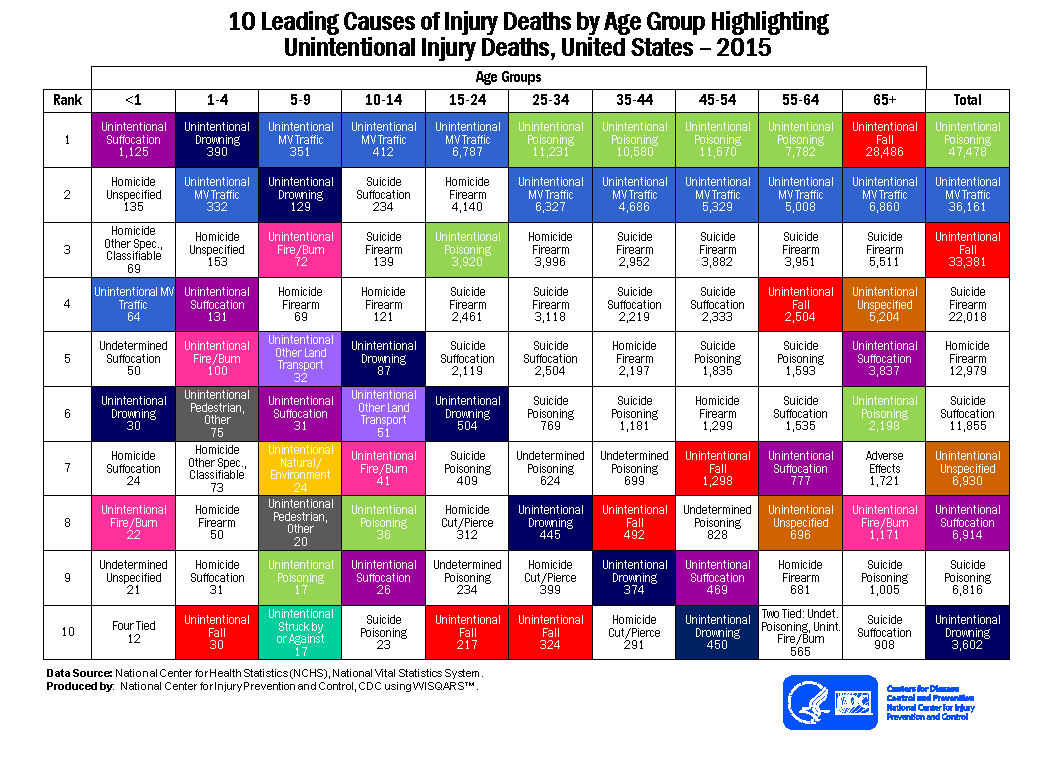
No comments:
Post a Comment