|
Key insights from
Man’s Search for Meaning
By
Viktor Frankl
|
|
|
What you’ll learn
In the face of unspeakable
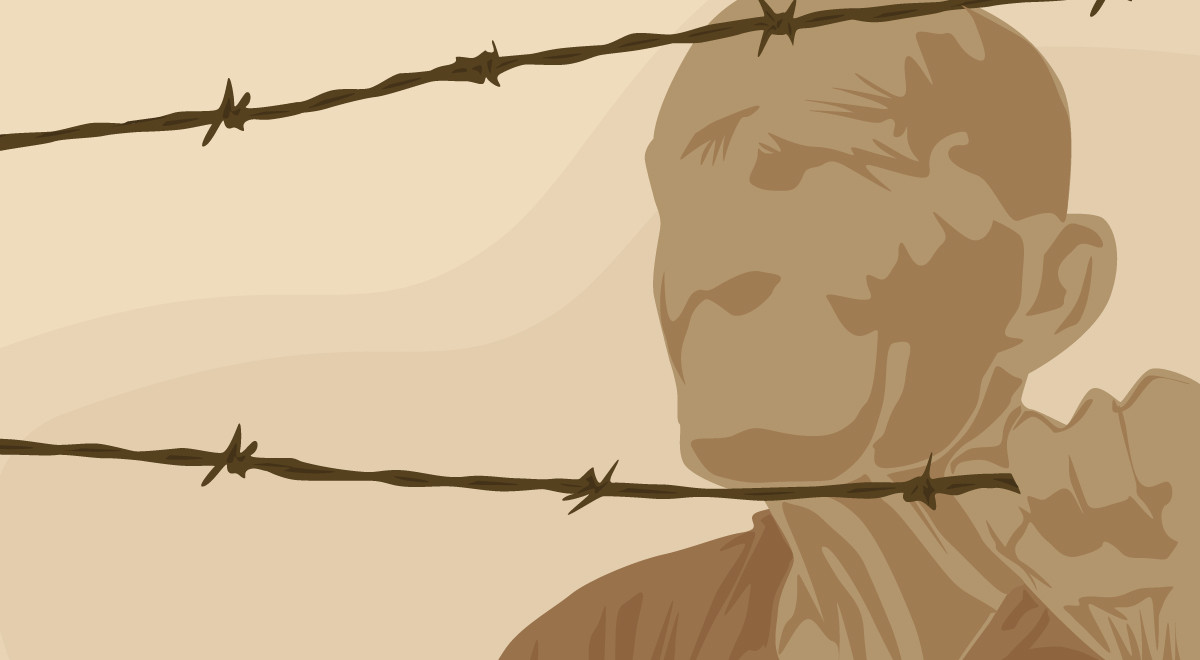
cruelty and crushing conditions in Nazi concentration camps, Viktor Frankl
learned that it is still possible to live a life with dignity and purpose.
In Man’s Search for
Meaning, Frankl reflects upon his experience and how he found
hope in the most unlikely places.
Read
on for key insights from Man’s Search for Meaning.
|
|
1. If a man wanted
to stay alive in Auschwitz, he shaved regularly.
Even though it was verboten for prisoners
assigned to one hut to visit residents of another, one of Frankl’s medical
colleagues snuck into Frankl’s hut to impart pearls of wisdom to the new
arrivals at Auschwitz. One of his main pieces of advice was to stand up
straight and shave—shave even if all you have is a shard of glass. A
clean-shaven face conveyed health, which often meant the difference between
life and death when SS guards were looking for an excuse to pull a sickly
man from the ranks and send him to the gas chambers. Those who looked
frail, walked with a limp, looked depressed, and unable to handle the
physical labor were prime pickings.
|
|
2. Harrowing
conditions reveal just how adaptive humans are.
Russian novelist Dostoevsky
once wrote that, “Man is a creature who can get used to anything.” He was
right. It is difficult to say how that happens, but prisoners at Auschwitz
were able to adjust to an oppressive set of circumstances.
For example, the textbooks
would have us believe that we can’t function without x amount of sleep.
False. People convince themselves that they can sleep only under particular
conditions. Wrong. Beds in the huts were stacked in tiers, with nine men
assigned to a six by eight foot board and given two blankets. Inmates would
all lie on their sides so that all nine could fit on the plank. People
would use their arm or a shoe as a pillow. Even under these conditions,
even with a fellow sardine snoring inches from your face, you would sleep
soundly, and were even thankful for the collective warmth during the frigid
winter season.
Despite a lack of proper
dental care, many prisoners’ gums were never stronger. People got used to
wearing the same clothes for six months. Bathing was an infrequent event,
but, somehow, cuts usually did not become infected.
|
|
3. Under camp
conditions, food became the preoccupation of conversation, imagination, and
dreams.
Over time, people’s drives
became increasingly primal. Sexual appetites all but evaporated under camp
conditions. Dreams were no longer about sexual encounters, but about
a hot bath or freshly baked bread. The extreme undernourishment that
prisoners faced brought food to the fore of consciousness. It became the
primary mental occupation. In moments when guards weren’t monitoring
prisoners too closely, they would cluster as they worked. Food would
invariably come up. They would talk about favorite foods and recipes they
had enjoyed before imprisonment, and imagine future reunion feasts to be
had after liberation. The informal planning committee would suddenly
disband when code word passed through the ranks reached them, indicating
that the guard was returning. Such talk was more harmful than helpful from
a psychological perspective. The imaginations were a reprieve, but
ultimately did not serve a person who had managed to acclimate to tiny
portions of thin gruel and bread. Even with a meager “extra allowance”—as
it was called—of jam, low-grade sausage, a wedge of cheese, or bit of
margarine, the diet was far from adequate, especially given the heavy labor
to which prisoners were daily subjected.
Whatever reserves of fat
and muscle inmates had disappeared as the body consumed itself. People
began to die in a succession that fellow prisoners became apt at accurately
predicting.
But the truth was that even
the living were already corpses themselves—skeletons draped with skin,
corralled into huts, hemmed in by barbed wire. Everyone longed for a time
when they would eat quality food once again, less because of the food
itself and their need of nourishment, and more because it would symbolize a
return to dignity, that this animal existence would be over.
|
|
4. Politics and
religion featured prominently in discussions among prisoners.
Political discussions
usually revolved around rumors about the war, who was gaining ground and
who was losing it. The reports were usually contradictory. Predictions that
the war would be over soon were often dashed, making hope difficult to
sustain and the eternally optimistic prisoners intolerable.
The religious
conversations, however, were some of the most meaningful and rewarding.
People were only genuine in their inquiries. Many newcomers to the prison
were often surprised by the robust spiritual climate of some of the prison
huts. Even at the end of the day, when men were exhausted and freezing in
their rags, there would still be prayers uttered, songs sung, and services
held in the dark of a cattle truck transport or the corner of a hut.
Under crushing physical and
mental conditions, the spiritual life could still be cultivated.
Oftentimes, the more intellectual sorts did not fare well in manual labor
because of their fragile frames, yet the internal reservoirs, which were
often more developed, were not depleted as quickly. They tended to have a
more vibrant inner life, and this spiritual liberty proved to be both an
anchor and a buoy for the soul amidst the violent storminess of camp life.
The spiritual robustness is the only adequate explanation for why the
outwardly frail outlasted men of sturdier build and greater strength.
|
|
5. The simple and
the mundane took on new significance for prisoners.
Many prisoners found relief
from their dismal circumstances in contemplation of the past. Oftentimes,
the events that sprang to mind were not major life events but trivial
routines—or at least would have seemed trivial to them before getting sent
to the camps. Locking the front door, a stroll down the street in their
hometown, their phone ringing—these were the routines on which the mind
would settle, which would bring tears to a man’s eyes to recall. These
simple memories became treasures.
Nature and art were also
balms for prisoners’ hearts and minds. To watch Salzburg’s snow-capped
mountains turn pink and orange in the sunset, or see the sun rise over the
Bavarian woods elevated the soul. One evening a prisoner ran into the hut
to draw everyone’s attention to the sunset they were missing. Everyone
walked outside and gazed at the vibrant sky, together enjoying a moment of
silent, holy reverie. “How beautiful the world could be,” one prisoner remarked.
On another occasion, an
especially hopeless, gray morning, the author questioned whether there was
any meaning behind the immense suffering he was experiencing. Somehow,
mysteriously, he sensed his soul for a moment transcending the grim gray
shroud that encompassed the camp. He heard the response from somewhere,
“Yes!” resound within him. At that same moment, he saw a light flicker on,
illuminating a farmhouse a ways off, as if to reinforce the response to his
despair.
|
|
6. Art and humor
kept prisoners’ spirits from being utterly crushed.
Art also existed—at least
in a primitive form. Occasionally, space was cleared in a hut and a few
benches were put together to create a temporary makeshift stage. There was
poetry and song and even jokes—usually veiled satire targeting camp
conditions. In a concentration camp, one couldn’t expect anything
spectacular, but it made men forget their present circumstances—even if
only briefly—and that was what mattered. Many were willing to miss their
midday ration for the informal cabaret, where they could laugh, shed a
tear, and forget where they were.
It might surprise some to
hear of humor in a concentration camp, but this was the best defense
against despair. Perhaps better than anything, humor provided a buffer and
distance from the situation, even if for a moment. Cultivating a sense of
humor is an important part of a life well-lived, and life did not stop for
those living in the camps. The ability to find humor, even in dismal
conditions, preserved life.
While being transported
from Auschwitz to a new camp, there was gnawing fear that they were being taken
to Mauthausen, which was known to be a death sentence. If they crossed the
bridge over the Danube River, they were certainly Mauthausen-bound. To the
immense relief of the travelers, the train did not cross the river. The
prisoners laughed at the absurdity that they were “only” heading to
Dachau—another concentration camp, rather than a death camp.
|
|
7. Regardless of
one’s circumstances, there is always a choice.
There is always a certain
level of autonomy that can never be extinguished. Many cases have been made
on biological, psychological, and sociological grounds that, ultimately,
people are products of their environment. Life in a concentration camp
could be viewed as an intensification of conditioning factors, where every
aspect of life is regulated and everyone is expected to conform to a rigid
set of policies. The concentration camp experience, however, is not a
strong argument for the illusion of free will, but for its reality. People can achieve victory
over apathy and anger. There were notable instances of prisoners who
comforted hopeless comrades, and of men willing to give their last bit of
bread to someone who looked like they needed it more.
Even if opportunity for
positive action in a situation is stifled, there was always a choice
regarding one’s attitude toward circumstances. There were endless
opportunities everyday to make decisions that would either preserve one’s
humanity and sense of self, or erode it to conform to the image of the
common prisoner that sickness, starvation, and exhaustion encouraged. The
prisoners’ mental reactions were more than mere extensions of upbringing or
background or chemical make-up. The decision as to what kind of person to
become was not first and foremost based on external circumstances, but an
internal choice—even in a prison camp. One can maintain his dignity through
the choices he makes. This inner liberty—which is the means by which we
experience meaning and find purpose—cannot be confiscated like coats and
watches were.
Suffering creates
opportunities that will enrich us if we accept it, and will ruin us if we
avoid or reject it. We achieve something through bearing up against
suffering with courage. This is, of course, not easy, but the fact that
even one person (there were many) who exemplified this is evidence enough
that the human spirit is capable of triumph, even under crushing
circumstances.
|
|
8. Liberation was
not the immediately joyous experience that the prisoners anticipated.
In the days leading up to
liberation, prisoners heard planes overhead and could see gunfire in the
woods. The war waged outside created an internal war on the inmates’
nerves. Eventually, the fighting ceased, and they saw a white flag rise
from within the camp. The prisoners walked toward the gate—for the first
time ever without fear of a beating. The guards had quickly switched into
civilian attire and were smiling ingratiatingly and doling out cigarettes
to the emaciated group walking out the now open gate.
To their surprise, the
realization that they were free was not a moment of immense joy and
celebration. They had dreamed of what liberation would be like for years,
but in the very moment that the dream had come true, they felt nothing.
Somehow they couldn’t accept it. They walked through the woods surrounding
the camp, and were at moments awakened to beauty, but the men were far more
subdued in reality than they had been in their imaginings.
As it turned out, the
capacity for feeling happiness had been so blunted that it needed to be
rediscovered. It wasn’t until several days after his release that Frankl
was struck by his changed circumstances. As he took a walk in the
countryside, he came upon a grassy meadow alive with the sound of songbirds
and colors of flowers and an expansive blue sky. As he looked around, the
weight of his drastically altered circumstances was enough to bring him to
his knees. For some time, a single line from one of David’s psalms ran
through his mind over and over— “I called to the Lord from my narrow
prison, and He answered me in the freedom of space.”
|
|


No comments:
Post a Comment