Vaccine Monitor: Where People are Getting
Information About COVID-19 Vaccinations
Those Most Hesitant About Vaccination are
More Likely to Turn to Social Media for Information
Additional Data Available Through Online Vaccine Monitor Dashboard
As vaccination efforts
ramp up across the country, the KFF COVID-19
Vaccine Monitor examines where the public is getting its
relevant information.
Large shares of the
public report that they are getting at least a fair amount of vaccine
information from television news, including cable (43%), network (41%)
and local (40%) television, and from friends and family (40%). Somewhat
fewer get at least a fair amount of information from social media (31%),
a doctor, nurse, or other health care provider (31%) and other sources.
There are differences in people’s sources of vaccine information based on
how enthusiastic they are about getting a vaccine.
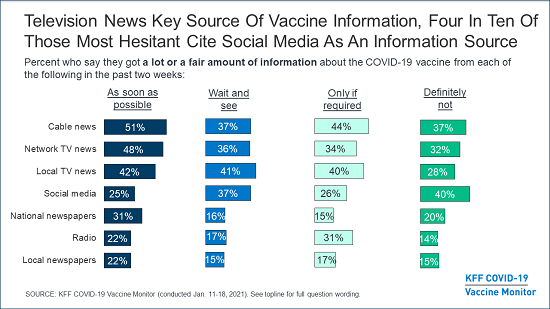
Among those who say they “definitely will not” get a vaccine (13% of the
public), the most-cited media source for at least a fair amount of
vaccine information is social media (40%), followed by cable (37%),
network (32%) and local (28%) television. Most likely, the vaccine
hesitant are self-selecting social media information sources they are
comfortable with.
Those who want to “wait
and see” how the vaccine is working for others before getting it (31% of
the public) are about equally likely to say they are getting at least a
fair amount of relevant information from social media (37%) as cable
(37%), network (36%) and local (41%) television.
In contrast, those who
want to get the vaccine as soon as they can (41% of the public) are about
twice as likely to say they have gotten at least a fair amount of
information about the vaccine from cable news (51%) as from social media
(25%) This may in part reflect generational differences in media
consumption, as older Americans on average are more enthusiastic about
getting vaccinated and less likely to turn to social media for vaccine
information.
|



No comments:
Post a Comment