Meredith Freed , Tricia Neuman Follow @tricia_neuman on
Twitter , and Gretchen Jacobson
Published: Mar 13, 2019
Oral health is an integral part of overall
health, but its importance to overall health and well-being often goes
unrecognized.1 Untreated oral health problems can
lead to serious health complications. Having no natural teeth can cause
nutritional deficiencies and related health problems.2 Untreated
caries (cavities) and periodontal (gum) disease can exacerbate certain
diseases, such as diabetes and cardiovascular disease, and lead to chronic
pain, infections, and loss of teeth.3 Lack
of routine dental care can also delay diagnosis of conditions, which can lead
to potentially preventable complications, high-cost emergency department
visits, and adverse outcomes.
Medicare, the national health insurance
program for about
60 million older adults and younger beneficiaries with disabilities,
does not cover routine dental care, and the majority of people on Medicare have
no dental coverage at all. Limited or no dental insurance coverage can result
in relatively high out-of-pocket costs for some and foregone oral health care
for others. This brief reviews the state of oral health for people on Medicare.
It describes the consequences of foregoing dental care, current sources of
dental coverage, use of dental services, and related out-of-pocket spending.
Key Findings
·
Almost two-thirds of
Medicare beneficiaries (65%), or nearly 37 million people, do not have dental
coverage (Figure 1).
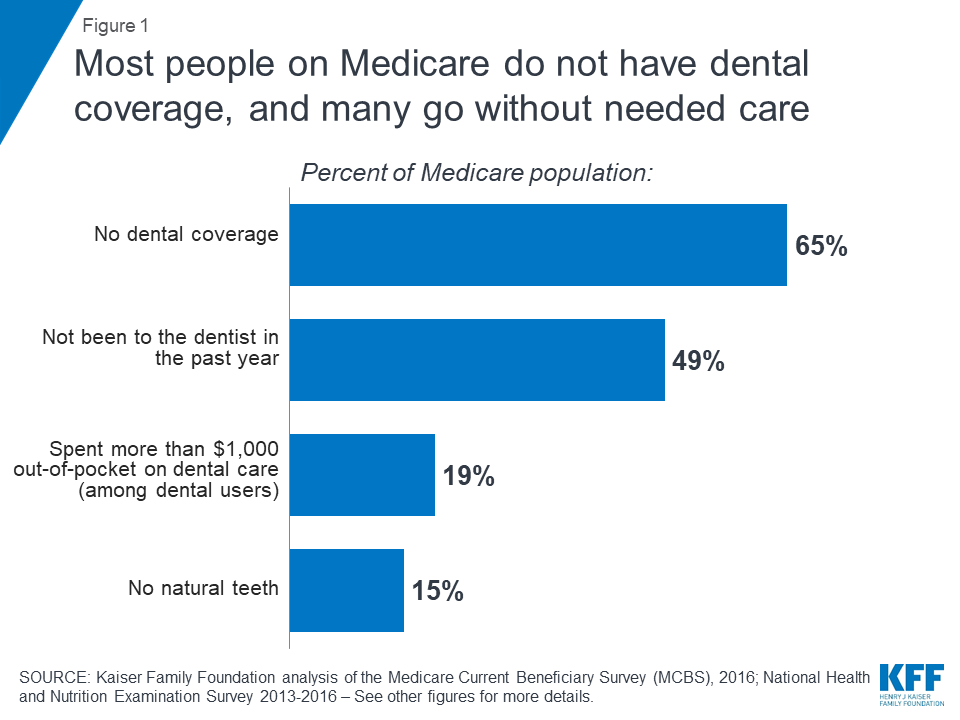
Figure 1: Most people on Medicare do not have
dental coverage, and many go without needed care
·
Almost half of all
Medicare beneficiaries did not have a dental visit within the past year (49%),
with higher rates among those who are black (71%) or Hispanic (65%), have low
incomes (70%), and are living in rural areas (59%), as of 2016.4
·
Almost one in five
Medicare beneficiaries (19%) who used dental services spent more than $1,000
out-of-pocket on dental care in 2016.
The Health and Economic Consequences of Unmet
Need
Numerous studies confirm the direct connection
between oral health and overall health.5,6 Oral health is often a reflection of
the overall health of the body.7 Oral health examinations can identify
nutritional deficiencies, HIV, certain microbial infections, and some cancers.8,9 In addition to reflecting underlying
disease, poor oral health can exacerbate general health issues and systemic
diseases. Periodontal disease, or advanced gum disease, is associated with
increased risk of cardiovascular diseases, including arteriosclerosis, coronary
heart disease, and stroke,10,11,12 increased risk of mortality for those
with chronic kidney disease,13 adverse pregnancy outcomes,14 increased risk of cancer,15,16 and poor glycemic control for
diabetes.17,18 The chronic systemic inflammation and
dysbiosis (bacterial imbalances in the mouth) that are characteristic of
periodontal disease can exacerbate these conditions. For example, inflammation
and dysbiosis may generate immune responses that increase the risk of cancer as
well as contribute to insulin resistance that makes diabetes management more
difficult.19,20,21
Oral health issues pose particular concerns
for older adults. For example, xerostomia (dry mouth) is a side effect for
hundreds of medications. Dry mouth significantly increases the risk of dental
caries, loosening dentures that can lead to painful ulcerations, difficulty
chewing or swallowing and altered taste, which can negatively impact nutrition,
as well as a series of other oral health issues such as recurrent oral thrush
and lesions on the oral mucosa.22 Incidence of dry mouth increases with
the number of medications used, and is a particular concern for seniors: 54
percent of adults age 65 and older take at least four prescription drugs.23,24,25
Among adults 65 and older residing in the
community, 15 percent are edentulous, meaning they have no natural teeth (Figure
2).26 The share of older adults without
natural teeth increases with age, from 12 percent among those 65 to 74 years
old to 20 percent for 75 to 80 year olds. Edentulism is also more common among
seniors with low incomes. While edentulism among all older adults has declined
over time, the greatest declines have been among primarily high income
populations.27 For example, almost one in three of
those with incomes below 100% of the federal poverty level (30%) have no
natural teeth, a rate five times higher than those with incomes over 400% of
the federal level (6%).28 There
is also significant geographic variation in the number of older adults without
teeth. For example, more than 30 percent of seniors in West
Virginia have no natural teeth, compared to less than 10 percent in states such
as California and Connecticut.29
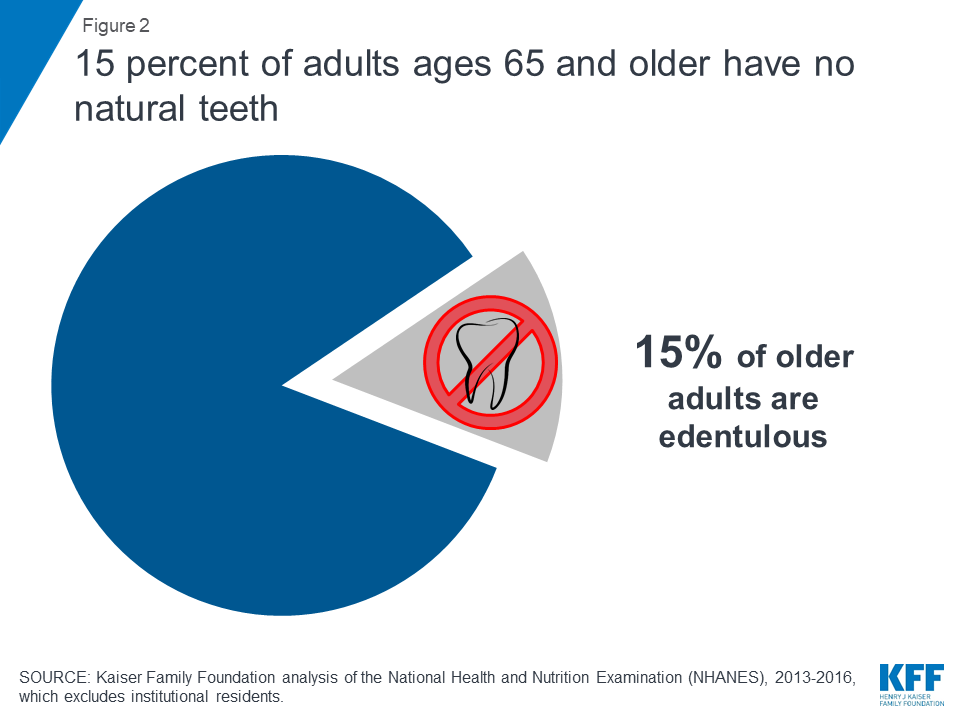
Figure 2: 15 percent of adults ages 65 and
older have no natural teeth
Having no or few teeth can adversely impact
quality of life. Many older adults report being embarrassed about their teeth,
avoid smiling, and even reduce social participation due the condition of their
mouth and teeth.30 Furthermore, having no or few teeth
can make chewing and eating difficult and can lead to additional health
complications. Among all Medicare beneficiaries living in the community, 18
percent have some difficulty chewing and eating solid foods due to their teeth
– a rate that rises to 29 percent for those with low incomes and 33 percent for
adults with disabilities on Medicare who are under age 65.31 Tooth loss also affects nutrition
because people without teeth are more likely to substitute easier to chew foods
that are high in saturated fat and cholesterol for fruits and vegetables which
are harder to chew.32,33
Older adults also have high rates of untreated
caries and periodontal disease, which negatively affect oral and overall
health: more than 14 percent of older adults have untreated caries34 and about 2 in 3 (68%) have
periodontal disease.35 If left untreated, caries and
periodontal disease can lead to infections, abscesses, tooth loss, and chronic
pain.36 Many older adults report having
frequent painful aching in their mouths, with 15 percent having painful aching
at least occasionally.37
Poor oral health is associated with
potentially preventable and costly emergency department (ED) visits, with more
than 2 million visits to the ED each year among people of all ages due to oral
health complications.38 Many dental-related ED visits are for
potentially avoidable, non-traumatic dental conditions and could be treated in
a primary care setting.39,40 However, further research is needed
that focuses specifically on the Medicare population and their use of EDs for
dental-related issues, including how lack of dental coverage may impact
potentially preventable ED use.
Many People on Medicare Forego Non-Emergency
Dental Care
A relatively large share of people on Medicare
go without needed dental care. The American Dental Association recommends
at least one annual visit per year, but suggests more frequent
visits depending on the health status and dental needs of individual patients.41 Yet, almost half of all Medicare
beneficiaries did not have a dental visit in 2016 (49%) – with even higher
rates reported among those who are black or Hispanic, have low incomes, are in
relatively poor health, and live in rural areas (Figure 3).
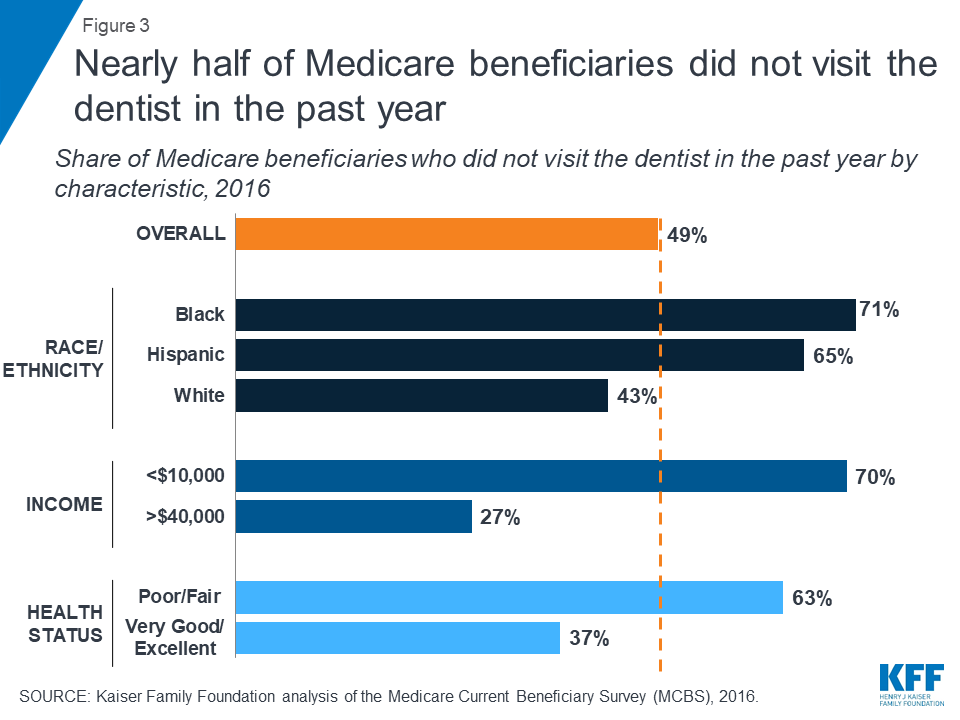
Figure 3: Nearly half of Medicare
beneficiaries did not visit the dentist in the past year
·
In 2016, more than
seven in ten black beneficiaries (71%) and nearly two in three Hispanic
beneficiaries (65%) went without a dental visit in the past year, compared to
43 percent of white beneficiaries;
·
Seven in ten
beneficiaries living on incomes of less than $10,000 per year (70%) reported
not going to the dentist within the past year, compared to 27 percent of
beneficiaries with incomes over $40,000 per year;
·
More than six in ten
beneficiaries in self-reported fair or poor health did not go to the dentist in
the past year (63%), as compared to 37 percent of beneficiaries in excellent or
very good health;
·
More than six in ten
beneficiaries younger than 65 with disabilities (62%) went without a dental
visit in the past year; and
·
Nearly six in ten
(59%) beneficiaries living in rural areas did not see a dentist in the past
year, compared to 46 percent of beneficiaries living in metropolitan areas.
Many Medicare beneficiaries go without dental
care due to costs. Overall, 10 percent of all beneficiaries did not get needed
dental care in the past year because they could not afford it (Figure 4). The
rate was higher among those with low incomes (18%), those in relatively poor
health (24%), and beneficiaries under 65 with long-term disabilities (26%).
While cost is often cited as top reason for not going to the dentist among
those who said they needed care but did not go, fear of the dentist,
inconvenient location or time for an appointment are also important
contributing factors.42
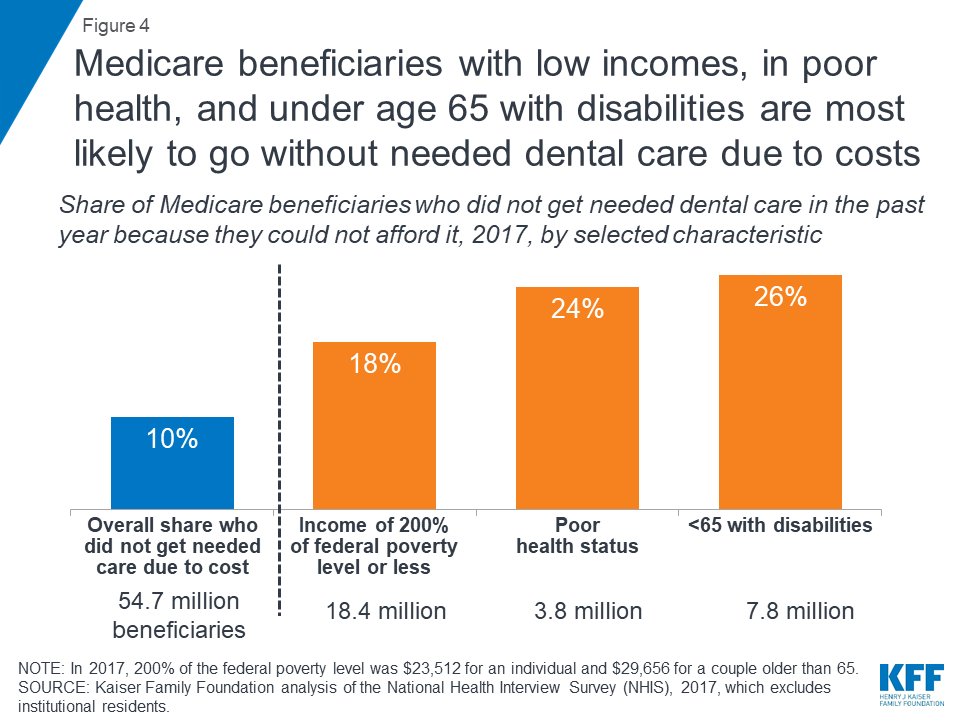
Figure 4: Medicare beneficiaries with low
incomes, in poor health, and under age 65 with disabilities are most likely to
go without needed dental care due to costs
Older adults also encounter additional
challenges accessing oral health care, including dental health professional
shortages, transportation challenges, and health literacy issues. Approximately
46 million people of all ages live in dental health professional shortage
areas, 66 percent of which are considered rural.43,44 Many older adults and adults with
disabilities cite transportation as an important barrier to accessing health
care, which disproportionately affects certain populations, such as those
living in rural areas and those with low-incomes.45 Oral health literacy continues to be
an issue as many do not understand the importance of oral health, how to
prevent oral health diseases, and how to obtain dental care.46
Beneficiaries with Significant Dental Needs
May Incur High Out-of-Pocket Costs, If They Seek Treatment
The vast majority (89%) of beneficiaries who
received dental services paid for some of their care out-of-pocket (Figure 5).
Across all beneficiaries, average out-of-pocket spending on dental care was
$469 in 2016, and among those who used any dental services, average
out-of-pocket spending on dental care was $922. Almost one-fifth of
beneficiaries who used dental services (19%) spent more than $1,000
out-of-pocket on dental care. With
half of Medicare beneficiaries living on less than $26,200 per year,
this is a significant portion of their incomes.47 Only a small percentage (11%) used
dental services without incurring any out-of-pocket costs. Medicare
beneficiaries who used dental services may or may not have had dental
insurance, including dental coverage through Medicare Advantage, Medicaid, or
private plans.
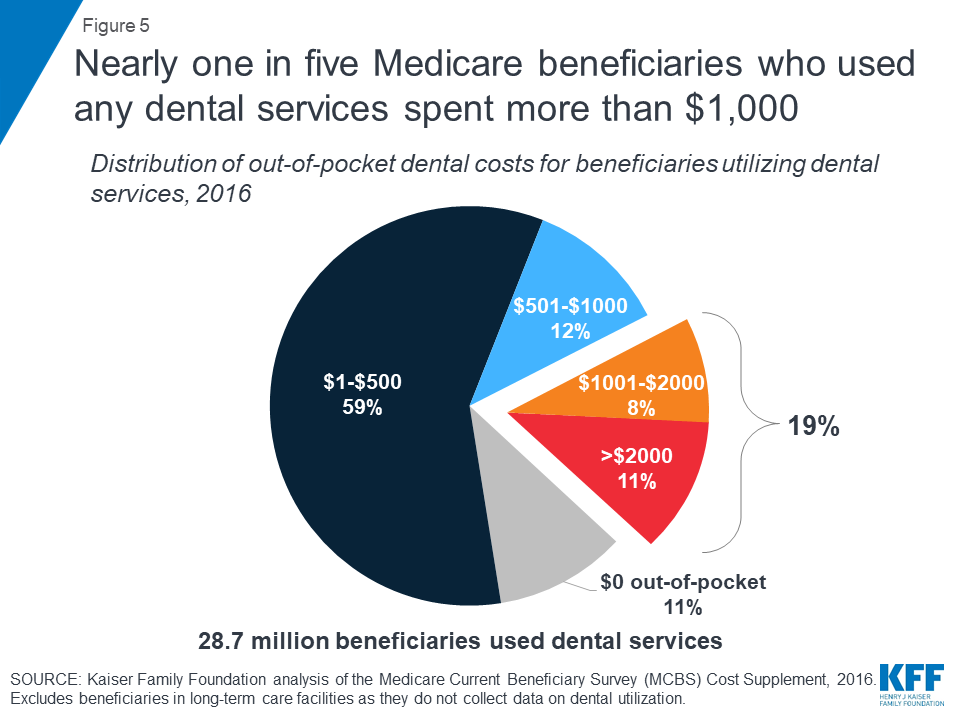
Figure 5: Nearly one in five Medicare
beneficiaries who used any dental services spent more than $1,000
As might be expected, average out-of-pocket
spending on dental care rises with income because higher income beneficiaries
are more able to afford such expenses, not because they have greater dental
needs. Conversely, lower income beneficiaries are more likely to forego needed
dental care. Among dental users, one in four beneficiaries (25%) living on
incomes of less than $10,000 per year spent more than $500 out-of-pocket per
year on dental care. Among those living on $10,000-$20,000 per year, more than
28 percent spent more than $500 out-of-pocket on dental care. The share of
beneficiaries spending more than $500 out-of-pocket on dental care rises to 29
percent for those living on $20,000-$40,000 per year to 34 percent for those
living on more than $40,000 per year.
Current Sources of Dental Coverage
Since its establishment in 1965, Medicare
has explicitly
excluded coverage for dental services, except in very limited
circumstances.48 Traditional Medicare does not cover
routine preventive dental services (such as exams, cleanings, or x-rays), nor
minor and major restorative services (such as fillings, crowns, or dentures;
Figure 6).
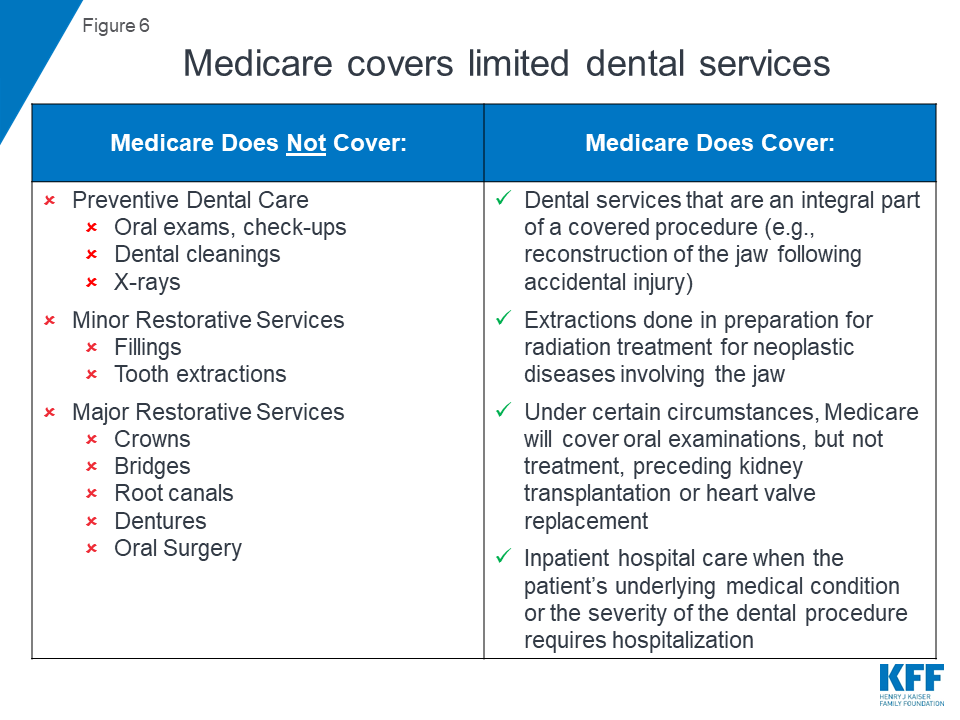
Figure 6: Medicare covers limited dental
services
Medicare coverage is limited to dental
services that are an integral part of a covered procedure, extractions done in
preparation for radiation treatment for cancers involving the jaw, and oral
examinations (but not treatment) preceding kidney transplants or heart valve
replacements.49 Medicare
also covers hospital care (such as emergency department visits) resulting from
complications of a dental procedure, but does not cover the cost of the dental
care itself.50 Current coverage policy for dental
care is not completely clear or consistent, and the Medicare program is
reviewing its authority to provide additional services.51
Nearly 37 million people, or almost two in
three Medicare beneficiaries (65%), do not have any form of dental coverage
(Figure 7). Beneficiaries without any form of dental coverage are more likely
than others to go without needed dental care, unless they can afford to cover
the costs out-of-pocket.52,53
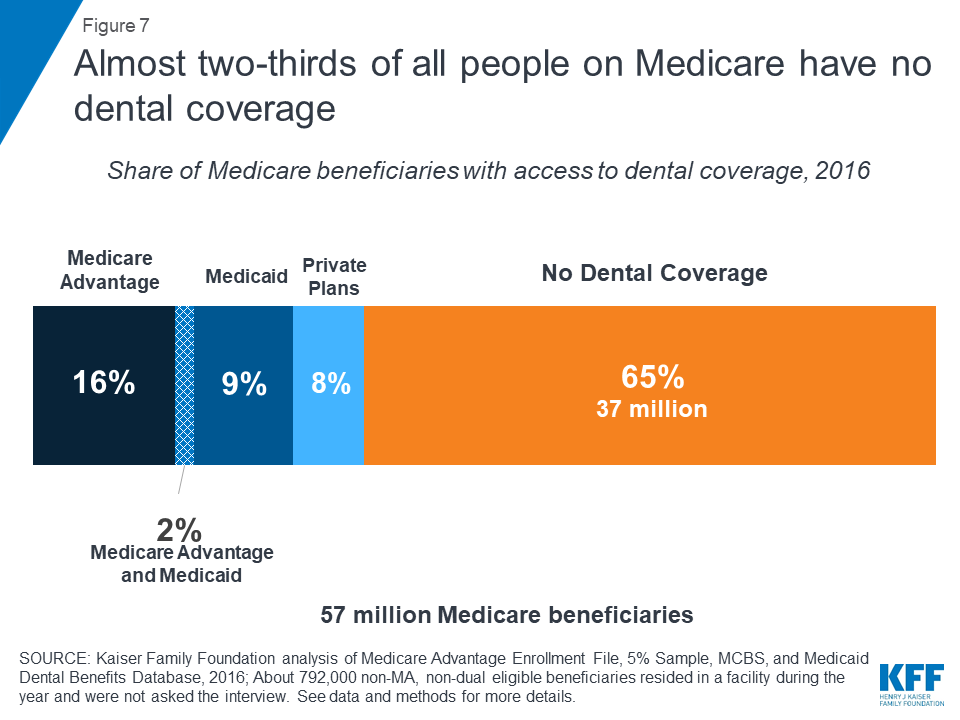
Figure 7: Almost two-thirds of all people on
Medicare have no dental coverage
The remaining Medicare beneficiaries have
access to dental coverage through Medicare Advantage plans, Medicaid, and
private plans, including employer-sponsored retiree plans and individually
purchased plans. In 2016, about 10.2 million beneficiaries (18%) had access to
some dental coverage through Medicare Advantage (including approximately 1.2
million enrollees who also have access to dental coverage through Medicaid). An
estimated 6.2 million low-income Medicare beneficiaries (11%) had access to
dental coverage through Medicaid (including the aforementioned who also have
coverage through Medicare Advantage plans), and 4.5 million (8%) had coverage
through private plans.
Scope of Coverage
The scope of dental coverage and affordability
of dental care is an issue for people of all ages. Private dental insurance
plans, primarily for working-age adults, vary in terms of benefits and
cost-sharing, but typically provide limited coverage for high-cost treatments.
Private dental insurance tends to cover most, if not all costs, associated with
preventive services, but has less generous coverage for more expensive
services, exposing patients to high out-of-pocket costs for needed dental care.
For example, in these private dental plans, preventive care is generally 100%
covered, while co-insurance for minor and major restorative services often
ranges from 20-40% for basic procedures and up to 50% or more for major
procedures.54 Further, private dental plans often
impose an annual dollar cap on the amount the plan will pay toward covered
services, with a median cap of about $1,500.55 Thus,
even with dental insurance, people of all ages can face high out-of-pocket
costs for dental treatments, an issue that also affects people on Medicare.
In the following sections, we review current
sources of dental coverage that may be available to people on Medicare,
including Medicare Advantage, Medicaid, and private dental plans
(employer-sponsored retiree and individually purchased).
MEDICARE ADVANTAGE
Many Medicare Advantage plans provide
access to dental coverage as a supplemental, non-Medicare
covered benefit.56 In 2016, 60 percent of Medicare
Advantage enrollees, or about 10.2 million beneficiaries, had access to some
dental coverage (Figure 8).57 The remaining 40 percent of all
Medicare Advantage enrollees, or almost 7 million beneficiaries, did not have
access to dental coverage under their plan.
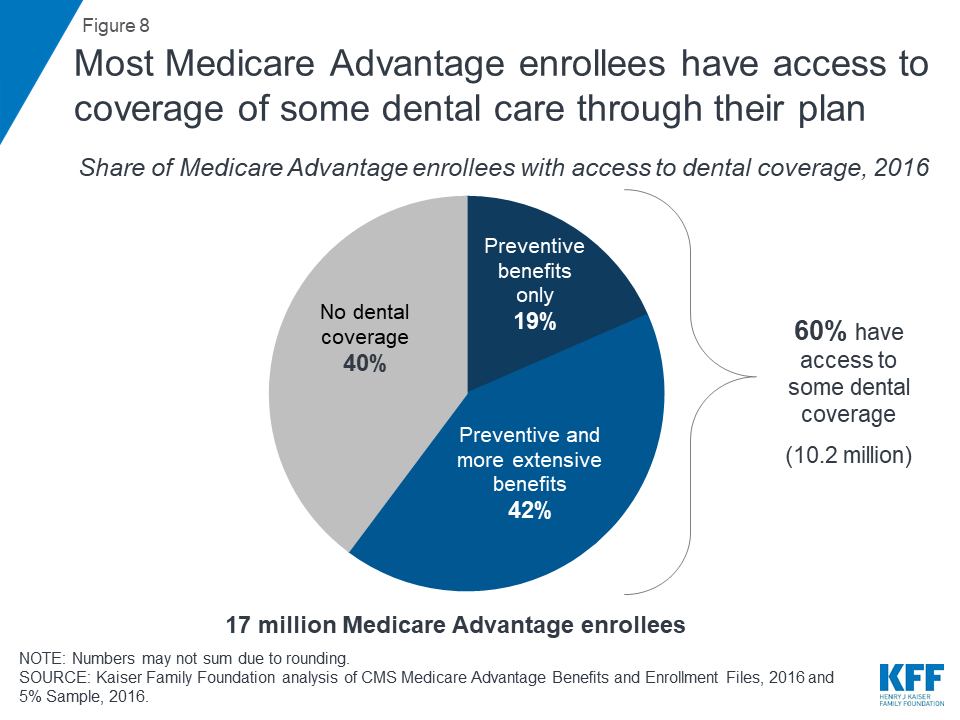
Figure 8: Most Medicare Advantage enrollees
have access to coverage of some dental care through their plan
About four in ten (42%) Medicare Advantage
enrollees had access to both preventive and more extensive dental benefits,
while about one in five (19%) had access to preventive dental benefits only,
which would exclude coverage of benefits many older adults need such as
fillings, crowns, implants and dentures.58 Preventive dental coverage under
Medicare Advantage plans generally includes oral exams, cleanings, fluoride
treatments, and dental x-rays.
Additional Premiums for Dental
Coverage. Some Medicare
Advantage plans charge an additional premium for dental benefits, and enrollees
must pay that premium in order to receive the dental coverage. No data are
available about how many people take up this option when a premium is required.
Overall, almost three in ten (29%) Medicare Advantage enrollees with access to
dental benefits under their plan may be required to pay a monthly premium,
averaging $284 per year in 2016, for the plan dental benefits. Premiums are
more common in plans that offer coverage beyond preventive dental coverage:
almost four in ten (38%) enrollees in plans that offered both extensive and
preventive dental coverage may be required to pay a premium for that coverage, compared
to less than one in ten enrollees (8%) in plans that provided only preventive
coverage. Premiums for Medicare Advantage dental benefits in 2016 ranged from
about $72 per year to more than $720 per year. Dental premiums are in addition
to premiums for other Medicare Advantage benefits, as well as the Medicare Part
B premium.
Cost-Sharing. Medicare Advantage plans’ cost-sharing for
dental benefits varies widely from plan-to-plan and across counties. Some plans
require no cost-sharing for preventive services but charge a monthly premium,
while other plans require enrollees to pay a flat co-pay (e.g., $5) for each
preventive service. Similarly, for relatively extensive benefits, some plans
cover most of the cost of some benefits (e.g., dentures) and others charge a
flat coinsurance rate (e.g., 50%) for all services. Plans charge coinsurance
rates that often range greatly – from 20-70% – and some plans require flat
copayments instead of coinsurance.59
Annual Caps on Coverage and
Service Limits. Medicare Advantage
plans that offer access to preventive and more extensive dental benefits
commonly cap the total amount the plan will pay for dental care. Of the 7
million Medicare Advantage enrollees in plans that offered both preventive and
more extensive dental benefits, about four in ten (43%) are in plans with
dollar limits on coverage, and most plans had limits around $1,000.60 Coverage limits are far more common
among plans that cover both preventive and more extensive benefits than plans
that cover only preventive services. In addition to dollar limits, Medicare
Advantage plans typically limit the number of services covered (e.g., one
periodontal exam every three years).
MEDICAID
Medicaid is a source of dental coverage for
some low-income Medicare beneficiaries dually eligible for Medicaid (known as
“dual eligibles”), but only in the states that elect to provide a dental
benefit to adults. In 2016, approximately 10 million Medicare beneficiaries
qualified for Medicaid, with 7 million qualifying as full dual eligibles and 3
million as partial dual eligibles.61 Full dual eligibles are generally
eligible to receive full Medicaid benefits, such as dental, when it is covered
by that state, whereas partial dual eligibles generally receive assistance from
Medicaid with Medicare premiums and/or cost-sharing, but not other benefits.
State Medicaid programs are not required to cover dental benefits for adults
because it is an optional benefit, and can choose to provide the benefit to
some but not all dual eligibles.
Among full dual eligibles, almost nine in ten
(88%) lived in a state where they were eligible for some dental benefits from
Medicaid.62 However,
the range in covered benefits varies significantly across states. For
example, some states only offer preventive benefits, such as Kansas, Maine, and
North Dakota, which allow a limited number of exams and cleanings per year. A
number of states offer more extensive coverage, but have annual dollar caps on
benefits and may require prior authorization for certain procedures. There also
some states, such as Georgia and Oklahoma, which limit coverage to emergency
dental visits only. States that offer emergency-only benefits may not provide
much additional coverage than what is currently covered by traditional
Medicare. About one-tenth of dual eligibles (12%), or 800,000 people, resided
in the 6 states that provided no dental coverage through Medicaid in 2016
(Alabama, Delaware, Maryland, Tennessee, Texas, Virginia).
In addition to the 800,000 full dual eligibles
who do not have dental coverage through Medicaid, another 3 million partial
dual eligibles do not have Medicaid dental coverage because they are not
eligible for Medicaid-covered benefits. Overall, 3.8 million low-income people
who qualify for Medicaid did not have dental coverage through Medicaid in 2016
(Figure 9).
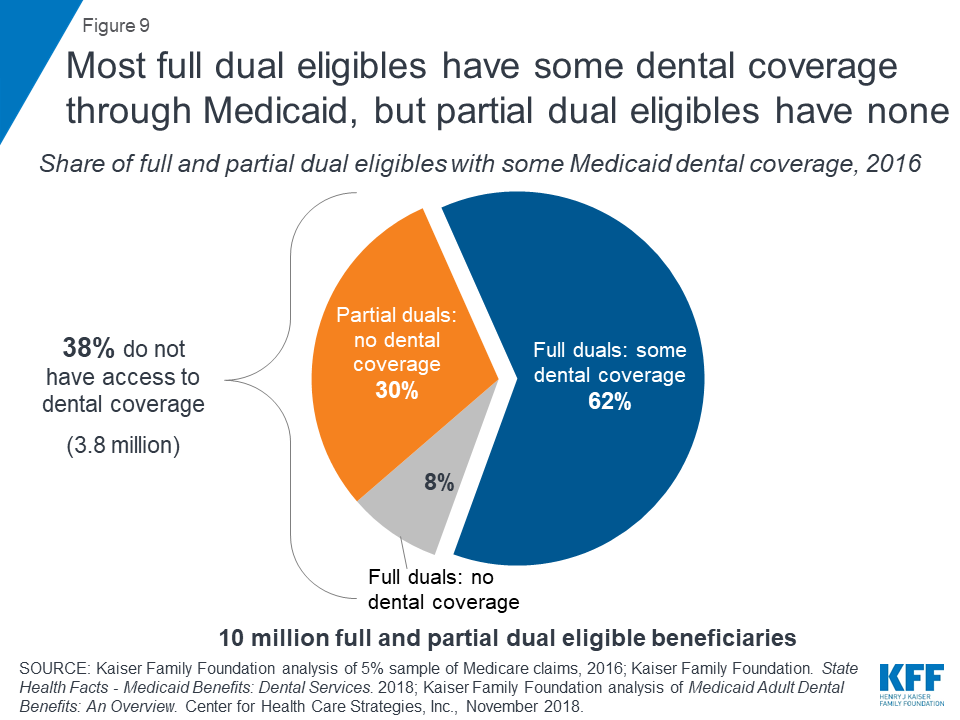
Figure 9: Most full dual eligibles have some
dental coverage through Medicaid, but partial dual eligibles have none
State dental benefits can change over time,
particularly in response to budget pressures, since dental coverage for adults
is an optional Medicaid benefit. For example, in California, adult dental
benefits were cut in 2009 due to budget constraints, partially restored in
2014, and fully restored in 2018.63,64 In 2018 and 2019, two states
(California, Illinois) enhanced or added dental benefits for all adults, while
three states enhanced benefits for certain adult populations (Arizona’s applies
to Non-Long Term Services and Supports (LTSS) adults, Utah’s applies to only
those with disabilities, and Maryland’s applies only to full dual eligibles).
Six states (Alaska, Connecticut, Iowa, Kentucky, Oklahoma, Nevada) restricted
adult dental benefits.65
Overlap of Dental Coverage for Dual Eligibles
Some beneficiaries covered by both Medicare
and Medicaid are also able to access dental care through Medicare Advantage
plans. In total, approximately 2.4 million full and partial dual eligibles (1.4
million full dual eligibles and 1.0 million partial dual eligibles) were
enrolled in Medicare Advantage plans that provided access to dental coverage in
2016.66 However, premiums and cost-sharing
for dental benefits may still present a significant hurdle and may make the
coverage unaffordable, particularly if Medicaid does not cover these costs.
About one in ten (11%) dual eligibles were in plans that charged an additional
premium for dental coverage, which would be in addition to any cost-sharing for
the dental care.
About 1.2 million full dual eligibles lived in
states that offer some dental coverage through Medicaid and were enrolled in
Medicare Advantage plans that offer access to some dental coverage. While these
beneficiaries have more than one option for dental coverage, coordinating
Medicaid dental coverage and dental coverage through Medicare Advantage plans,
and specifically, figuring out the circumstances under which each coverage
option would pay for particular services, can be especially complicated and
murky.
PRIVATE INSURANCE
Medicare beneficiaries may also receive dental
benefits through private plans such as employer-sponsored retiree plans or
through individually purchased plans. In 2016, about 4.5 million Medicare
beneficiaries received dental coverage through private plans.67
Unfortunately, data describing dental coverage
under employer-sponsored retiree and individually purchased plans for people on
Medicare are limited. For example, nearly
10 million beneficiaries in traditional Medicare had employer-sponsored retiree
insurance.68 However, there are no known data
sources that convey how many of these plans cover dental benefits, or the level
of dental coverage these plans provide.
Medicare beneficiaries can purchase individual
dental policies directly through companies such as DeltaDental, United Healthcare,
Cigna, and BlueCross BlueShield. These plans vary in terms of premiums, covered
benefits, cost-sharing requirements, annual service limits, and annual benefit
caps. Based upon company websites, annual caps appear to be similar to those
offered by Medicare Advantage plans.
Older Adults Can Incur Substantial
Out-of-Pocket Costs for Dental Care, Even with Insurance: Three Scenarios
Even with dental insurance, older adults can
face substantial out-of-pocket costs for their dental care. While the scope of
dental coverage varies, it is often the case that out-of-pocket costs may be
relatively low for people who simply need routine check-ups and cleanings.
However, people who need more extensive oral health services can incur
relatively high costs for their dental care, on top of premiums and other
out-of-pocket medical expenses, due to coinsurance requirements and annual
caps.
We developed the following scenarios, with
input from oral health experts, to demonstrate the range in potential costs
older adults may face for common dental services, based on fees obtained from
the American Dental Association (ADA) 2018 Survey of Dental Fees. The scenarios, based on national, median
fees, are designed to be illustrative, recognizing that fees vary by a number
of factors, including geography and the negotiated rates established between
dentists and insurers. (See Table 4 for a detailed description of services and
fees for each of the three scenarios.)
|
Scenario 1: Linda, age 67, is
in excellent health and visits her dentist regularly. In a typical year, such
as last year, Linda has one dental visit with an oral exam, cleaning, and
x-rays, and a follow-up exam and cleaning six months later. |
Without dental coverage, the total cost of
Linda’s procedures would be about $350, based on national median fees derived
from the 2018 ADA survey of dental fees. If Linda had coverage through a
private, dental insurance plan – either a dental plan that she purchased
directly or through a Medicare Advantage plan – her out-of-pocket costs would
be relatively low because dental insurance often covers a large portion of
preventive dental costs. Even if her dental plan capped annual benefits, as
many do, she would have limited expenses because annual caps are typically not
less than $500. Linda could have paid a premium for her Medicare Advantage
dental plan and premiums are on average $284 per year,69 varying based on the extent of
coverage and other factors.
If Linda had coverage under both Medicare and
Medicaid (dually eligible) and lived in a state that covered adult dental
through Medicaid, she would most likely have limited, if any expenses, if she
were able to find a dentist who treats Medicaid patients and lived in a state
that covers more than one preventive visit per year.
|
Scenario 2: James, age 72,
went to the dentist after realizing he hadn’t had an oral exam in close to
two years. After what he hoped would be a routine check-up and cleaning, his
dentist said he would need periodontal treatment, three fillings, and two
crowns due to degradation of restorations. After receiving these restorative
services, he returned six months later for a regular check-up where he
received periodontal maintenance. |
Without dental coverage, the total cost of
James’ visits would be an estimated $4,300. If James had dental coverage
through a private plan or Medicare Advantage, his costs would be lower, but he
would still likely incur substantial costs. Some Medicare Advantage plans, for
example, cover only preventive services, which would leave him with the biggest
expenses to pay for on his own. Others cover both preventive and more extensive
dental care, but require relatively high coinsurance for the most expensive
procedures, and often with caps on the annual amount paid by the plan. Medicare
Advantage plans often charge coinsurance, which ranges from 20%-70% depending
on the type of service.70 If James had signed up for a Medicare
Advantage plan, with dental coverage that included a common cap of $1,000, he
would be responsible for all charges above the cap, or as much as $3,300.
If James qualified for Medicaid, he could
potentially get some help with these expenses, if he lived in a state that
covers both preventive and more extensive dental services for older adults.
|
Scenario 3: Dorothy, age 80,
has diabetes, heart disease, and arthritis, and takes multiple medications to
manage her medical conditions, some of which cause dry mouth. Because she was
more focused on her other health problems, she had not been to a dentist in
three years. Last year, she went to see a dentist at the suggestion of her
physician after she complained of a dull throbbing pain in her lower left
jaw. After a comprehensive exam and x-rays, her dentist told her that she
needed a root canal and crown, and would need to have four upper teeth
extracted. Her dentist recommended two implants to replace the extracted
teeth, but when she heard what that would cost, she opted instead for a
partial upper denture. |
Without dental coverage, Dorothy’s dental bill
would be about $4,700, assuming she opted for the less expensive removable
partial denture, but closer to $10,000 for 2 implants, if not more, since the
estimated costs of the implants exclude fees for the final restorations.71
If Dorothy had coverage through a private plan
or Medicare Advantage plan, her costs would be somewhat lower, but by how much
would depend on the specific features of her dental plan. With a more extensive
plan, she may or may not have coverage for specific services, such as dentures,
which is a substantial portion of her bill. Plans typically require coinsurance
for these procedures, meaning she would still have to pay a significant amount
out of pocket for her care. Plans often have caps on coverage, which means
Dorothy would be responsible for all costs above her limit, which would be
close to $4,000 in a plan with a $1,000 annual cap, or close to $9,000 if she
had chosen the implants, or possibly less if the plan negotiated lower rates.
If Dorothy qualified for Medicaid, she could
get some coverage if she lived in one of the states that covers adult dental.
However, state annual caps and coverage of certain procedures vary, including
for dentures, so she still might pay a substantial amount of money
out-of-pocket. Dorothy would also need to make a number of visits to the
dentist for these procedures, which could be a barrier for many Medicare
beneficiaries, especially those that face transportation challenges.
Discussion
Oral health is important to people of all
ages, including older adults and younger Medicare beneficiaries with
disabilities, but maintaining good oral health is often challenging. Medicare
does not generally cover dental care, which can make dental procedures unaffordable.
Some Medicare beneficiaries have access to dental coverage through Medicare
Advantage plans, Medicaid, or private plans (employer-sponsored retiree or
individually purchased policies), but, similar to private dental plans offered
to working-age adults, coverage varies widely, is often less generous for
procedures beyond routine preventive care, and is frequently subject to annual
caps. Poor dental care and oral health lead to edentulism, untreated caries,
and periodontal disease, which contribute to adverse health outcomes and
high-cost preventable emergency room visits. These ongoing challenges heighten
interest in finding ways to make dental care more affordable and accessible for
the Medicare population.
A broad array of policy options could be
considered to expand dental coverage to people on Medicare. Some advocates
believe that the Centers for Medicare and Medicaid Services (CMS) currently has
the authority to cover oral health care when medically necessary for treatment
of Medicare-covered diseases, illnesses, and injuries, and at the request of
members of Congress, the agency is reviewing this.72,73 Legislation that would have a broader
scope is also under consideration. For example, during the 115th and 116th
Congresses, some have proposed striking the dental exclusion and including
dental services as a covered benefit.74 Others have considered a separate,
voluntary dental benefit, similar to the Part D prescription drug benefit, with
its own premium.75 An alternative approach could be to
create a benefit exclusively for low-income beneficiaries, under Medicare or
Medicaid. Each of these approaches would have budget implications, and raises
questions concerning scope of coverage, cost-sharing, provider fees and
administration. Thus far, the Congressional Budget Office has not estimated the
cost of adding a dental benefit to Medicare. Given the significant health risks
associated with poor oral care and the costs and consequences of untreated
dental needs, identifying potential solutions to improve the oral health status
of the Medicare population remains a challenge.
Kendal Orgera, a Policy Analyst with the
Kaiser Family Foundation, and Anthony Damico, an independent consultant,
provided programming support for this brief. The brief also benefited from the
research support of Nadia Massad and Robbie Herman of the Howard University
College of Dentistry, and comments from reviewers, including Cassandra
Yarbrough and Marko Vujicic of the American Dental Association.
This brief was funded in part by the AARP
Public Policy Institute.

No comments:
Post a Comment