|
By mid-2020 about half
(53%) of adults reported that worry and pandemic-related stress had
negatively impacted their mental health. Now with millions of U.S.
residents getting vaccinated against COVID-19, the latest analysis from
the KFF COVID-19 Vaccine Monitor finds 47% of adults continue to report
negative mental health impacts, and about a third of this group (or 15%
of adults overall) report unmet needs for mental health care. The new
report highlights recent data on the mental health impacts of the COVID-19
pandemic across gender, age, race, and income. Key findings include:
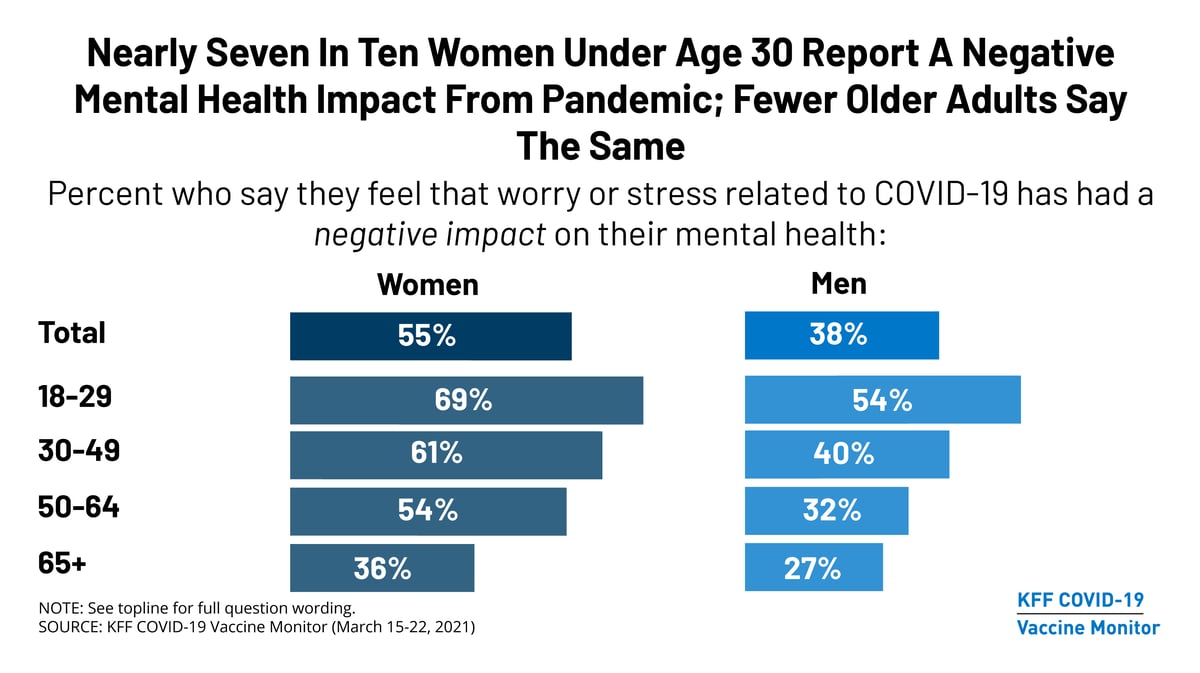
- Women,
including mothers with children under 18, younger adults, and those
in middle income groups are most likely to report their mental
health has been negatively impacted as a result of the pandemic,
compared to those 65 and older and men, including fathers with
children under 18, who are least likely to report any mental health
impact from the pandemic.
- The
groups most likely to be worried that they or a family member may
get sick from COVID-19 are women, Black and Hispanic adults, and
younger adults. Among those expressing this worry, nearly six in ten
say it has negatively impacted their mental health, showing a direct
link between worry and negative mental health impact.
- Among
mothers who say their mental health had been negatively impacted by
the pandemic, nearly half (46%) report they did not get the mental
health services or medications they needed, representing about one
in four (27%) mothers overall.
- Among
adults who did not get the mental health care they may have needed
in the past year, some of the biggest reasons include not being able
to find a provider (24%), inability to afford the cost (23%), or
being too busy or unable to take off work in order to seek treatment
(18%).
|



No comments:
Post a Comment