Pleural mesothelioma is a cancer that forms in the lining of the lungs. It is caused by asbestos exposure. Symptoms include shortness of breath, chest pain, cough and fluid in the lungs. Malignant pleural mesothelioma makes up 75% of mesothelioma cases.

Watch: Speaking with The Mesothelioma Center, thoracic surgeon Dr. Jacques Fontaine explains what pleural mesothelioma is and what causes it.
What Is Pleural Mesothelioma?
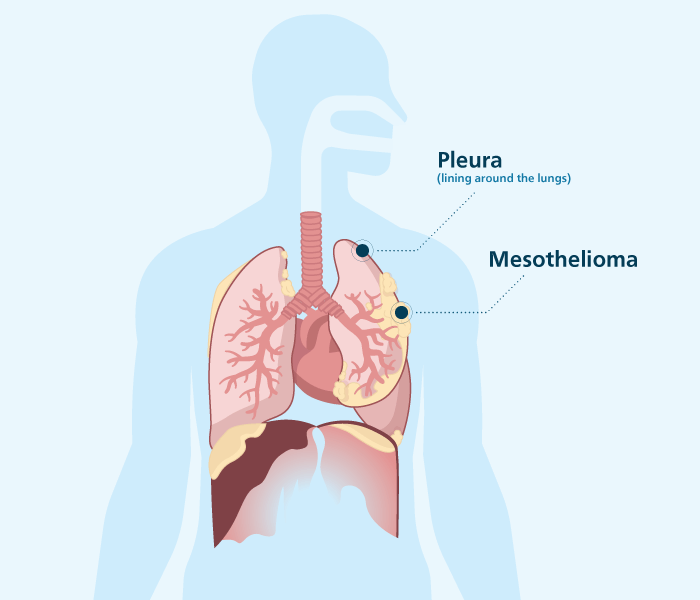
Malignant pleural mesothelioma is a type of rare cancer that develops in the pleura, the thin membrane that lines the lungs and chest cavity. When asbestos fibers get lodged in the lining of the lungs they can cause inflammation and scarring. The tumors that form in the pleura are known as pleural mesothelioma.
Doctors diagnose roughly 3,000 new patients with pleural mesothelioma every year in the United States.
Pleural Mesothelioma Facts
- Pleural mesothelioma is the most common type of mesothelioma cancer.
- Symptoms of pleural mesothelioma include shortness of breath, chest pain, dry cough, wheezing and fatigue.
- Pleural mesothelioma is not curable. It is managed with cancer treatment, which can improve life expectancy and alleviate symptoms.
- The average life expectancy with pleural mesothelioma is four to 18 months, and the five-year survival rate is 10%.
Several pleural cancer symptoms and conditions may indicate a person’s history of asbestos exposure and the potential of a mesothelioma diagnosis. This includes pleural plaques, pleural effusions and pleural thickening.
Pleural Plaques
Small areas of thickening on the pleura are the most common sign someone has a history of asbestos exposure. Pleural plaques are not cancerous and usually do not cause symptoms, but they may indicate an elevated risk for cancer.
Pleural Effusion
Irritation from asbestos fibers can cause excess fluid to build up between the two layers of the pleura. This condition, called pleural effusion, is present in many pleural mesothelioma cases. A little fluid between the pleural layers is healthy. Too much puts pressure on the lungs, causing chest pain that worsens when you cough or take deep breaths.
Pleural Thickening
When large areas of the pleura stiffen because of scarring, it may become difficult and painful to breathe. Pleural thickening around both lungs is often a sign of significant asbestos exposure. Repeated episodes of pleural effusion can cause the pleural thickening to worsen as scar tissue collects.
Asbestosis
Asbestosis is a pulmonary disease marked by progressive scarring of lung tissue caused by asbestos exposure. This condition does not affect the pleural lining. There is a greater risk for someone diagnosed with asbestosis to develop asbestos-related lung cancer rather than pleural mesothelioma, but the latter has been documented in medical literature.
With this disease, finding a specialist is critical. You need someone who really understands it and knows how to treat it aggressively to get the best possible outcome.Dr. Jacques FontainePleural mesothelioma surgeon
What Causes Pleural Mesothelioma?
The cause of pleural mesothelioma is exposure to asbestos fibers, which a person can inhale into the lungs. After the microscopic mineral fibers are inhaled, their sharp, pointed shape causes them to lodge in the lungs and gradually migrate into the pleural lining.
Over many years, these fibers cause irritation, chronic inflammation and genetic changes in DNA that turn healthy pleural cells cancerous. It usually takes from 20 to 50 years for malignant pleural mesothelioma to develop after a person’s first exposure to asbestos. Because of this latency period, the disease usually affects people older than 75.
The pleural lining of the lungs consists of two layers:
- The outer layer lines the entire chest cavity under the ribs.
- The inner layer covers and protects the surface of the lungs.
A malignant tumor can develop on either layer and may spread to the other layer. As nodules develop on the pleural surface, they grow to form tumor masses around the affected lung. The tumors can also cause pleural fluid to accumulate in the chest cavity.
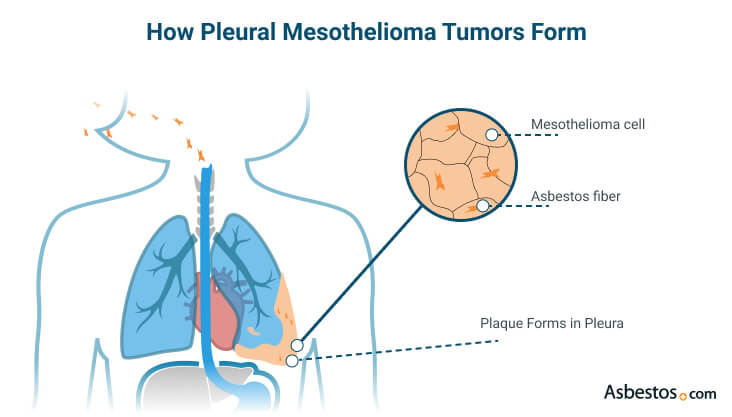
The combination of tumor mass on the lung and a collection of pleural fluid increases pressure in the chest and prevents the lung from expanding, which causes breathing difficulties.
When left untreated, malignant cells can multiply and damage nearby healthy tissues or spread through the blood and lymph system, forming new tumors on distant organs.

Symptoms of Pleural Mesothelioma
For many people, mesothelioma symptoms are not noticeable until the cancer is in a later stage.
Pleural mesothelioma symptoms can include:
- Shortness of breath
- Chest pain or painful breathing
- Persistent dry or raspy cough
- Coughing up blood
- Difficulty swallowing
- Pain in the lower back or rib area
- Unexplained weight loss and fatigue
- Swelling of the face or arms
- Night sweats or fever
- Lumps under the skin on the chest
- Fluid in the lungs
Patients rarely mention weight loss and fatigue during their initial doctor visit. These symptoms may only appear if the cancer is advanced. Some patients also develop swelling of the face or arms, back pain or nerve pain.
How Pleural Mesothelioma Is Diagnosed
The diagnostic process for pleural mesothelioma begins when a doctor evaluates the initial symptoms of the disease. Chest pain and breathing difficulty warrant a chest X-ray, revealing fluid buildup or tumors around a lung. A primary care physician refers a patient to a specialist when they require further testing.
Specialists must use advanced imaging scans and tissue biopsies to confirm a pleural mesothelioma diagnosis. In addition to identifying cancer, determining the cancer stage and cell type is vital to creating an effective treatment plan.
Cell Types
Tissue biopsies identify the three different cell types that can make up pleural mesothelioma tumors, and this information is important in determining treatment plans. Most cases of malignant mesothelioma are diagnosed with a high number of epithelial cells, also called epithelioid cells. This cell type responds best to cancer treatment.
The least common cell type is sarcomatoid mesothelioma. It is aggressive and challenging to treat, and most of these cases occur in pleural patients.
The biphasic cell type is a blend of these two cell types. How it responds to treatment depends on the ratio of cells. If more epithelioid cells are present, it will respond better than tumors composed of more sarcomatoid cells.
Several pleural cancer symptoms and conditions may indicate a person’s history of asbestos exposure and the potential of a mesothelioma diagnosis, including pleural plaques, pleural effusions and pleural thickening.
In a 2020 study published in Case Reports, researchers discovered a case of pleural mesothelioma through testing of metastatic gastric and colonic polyps identified in imaging scans. These polyps were the only sign that the patient had pleural mesothelioma.
https://www.asbestos.com/mesothelioma/pleural/

No comments:
Post a Comment