|
Key insights from
What Happened
By
Hillary Rodham Clinton
|

|
|
What you’ll learn
A few months after losing her second bid for the presidency
and after some much needed rest, Hillary Rodham Clinton sat down to write a
book detailing to herself and to her constituents what went wrong. She
shoulders complete responsibility for her defeat. That said, there were
many unexpected twists and turns that effected the election process.
Clinton lays out in intricate detail how the combination of all these
events led to her defeat. She also issues a warning about upcoming elections,
anticipating that similar problems will recur in the future.
Read on for key insights from What Happened.
|
|
1. While defeat
was difficult, Clinton realized she couldn’t stay stuck in loss.
The decision of whether or not to attend Donald Trump’s
inauguration was a difficult one for Clinton. Some Democrats were
boycotting the President Elect. Other friends and supporters advised her to
stay away.
Although still stinging from the “mean-spirited” campaign
she felt Trump ran, the peaceful transfer of power remained an honored
tradition in Clinton’s mind. After checking with the Bush families and the
Carters, she learned that each former president and first lady would be
attending. Clinton decided to put on a brave face and go.
This reality—Trump being sworn in as president—was shocking.
It was surreal smiling at and shaking hands with Republicans who, for the
past year, had called her terrible names and advocated she be “locked up.”
During Trump’s address, Clinton reflected on her campaign
and began to process what had happened. Until the very last days of the
campaign, most pollsters, political pundits and media predicted that
Clinton would be the next president of the United States. How, she
wondered, could 62 million Americans have voted for a man who had sexually
assaulted women, called Mexican immigrants rapists, mocked people with
physical disabilities and scammed so many through his various businesses?
The question that she continues to puzzle over is how she
allowed this to happen. Adding insult to injury, this was her second defeat
while aspiring to the office of the presidency. Eight years prior, Barack
Obama beat her out to receive the Democratic nomination. And now, despite
winning the popular vote by some three million votes, she was watching
someone else be sworn in.
To cope with this devastating loss, Clinton withdrew from
public life for several months, surrounding herself with family and her closest
friends. Hiking, yoga and chardonnay brought some degree of peace. Buying
and remodeling the house next door was another outlet.
A book that helped her gain perspective on the loss was The
Return of the Prodigal Son by Henri Nouwen. It taught her that
gratitude can coexist with hurt and resentment. This insight, while walking
through the grieving process, allowed her to begin thinking more about the
future instead of dwelling on the past.
|
|
|
Sponsored
by Patriot Post
Expand Your
Knowledge
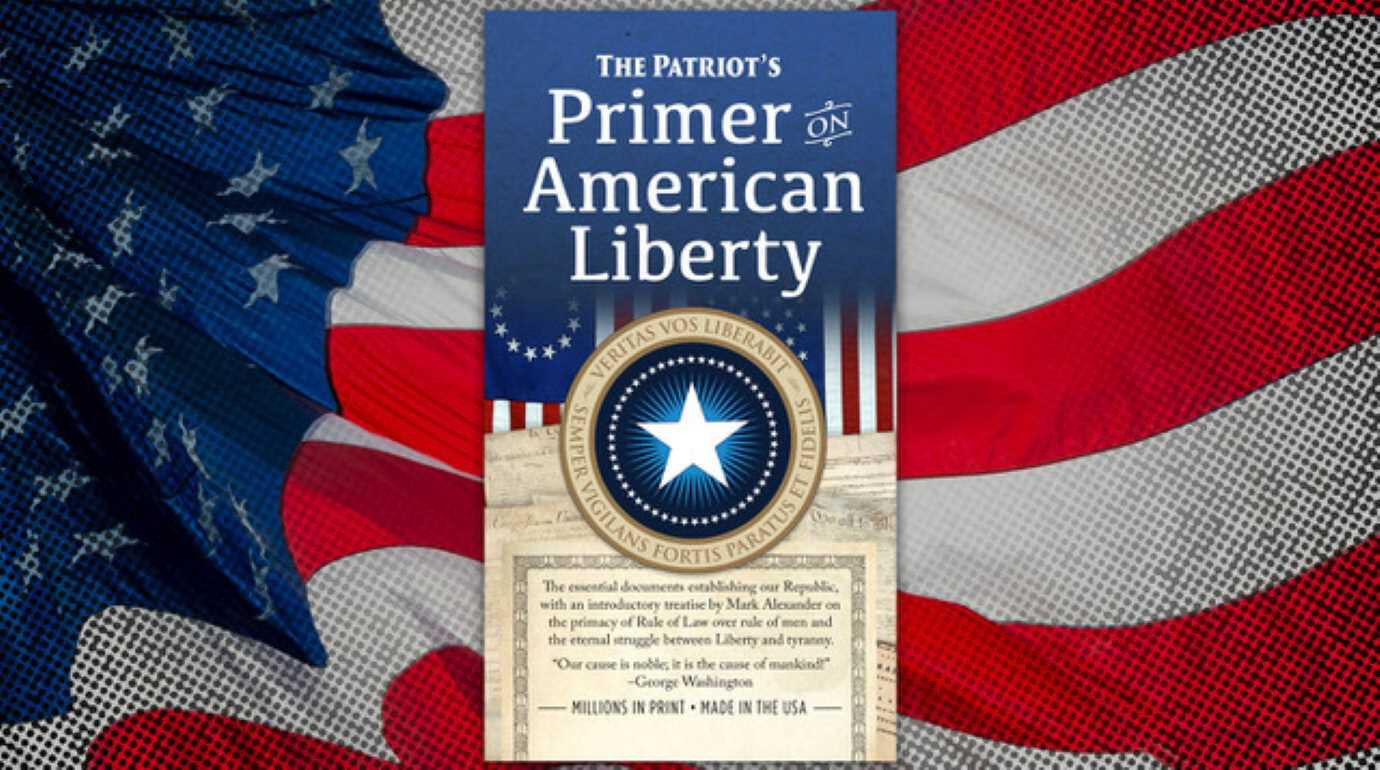
For 25 years The
Patriot Post has provided a solid conservative perspective on the most
important issues. Now, we've made our Patriot’s Primer on American Liberty
available as a free download for your use. Expand your knowledge and
fortify your loved ones with this essential guide to understanding Liberty
in the context of American history. It’s Right. It’s Free.
Get our highly-acclaimed Patriot Primer when you
confirm a free subscription to The Patriot Post.
|
|
2. Clinton
believed she was not only the best woman candidate, but the best candidate
period.
In deciding to run for president a second time,
Clinton believed that her experiences as First Lady, Senator of New York
and Secretary of State gave her credibility with the voting public. She
believed she would be a good president. But no woman in history had ever
won the nomination of a major political party. She threw her hat in the
ring in June 2015, certain that both Bill Clinton and Barack Obama were
right—no one was more qualified than she to be president.
While everything in politics is a little tougher for women,
Clinton didn’t want the electorate to view her as a female candidate per
se, but as the best candidate. That she was competing as a woman in a
male-dominated society should have made her look tougher and sharper.
Without question, sexism and misogyny played some role in her loss. Sexism
is when society develops a set of rules and behaviors for women. Misogyny,
on the other hand, is a darker, deeper attitude towards women that often
manifests as rage and disgust, sometimes even violence.
Sexism and misogyny are challenges that dogged Clinton her
entire political life, but the 2016 campaign further amplified them. While
the press judged Clinton to have won three of the four debates, Donald
Trump’s camp credited him with promoting an extremely masculine, aggressive
approach to the contests.
While being a woman in politics makes the job more
difficult, the other side of the coin is that the presence of women makes
politics better for everyone. When our political landscape resembles our
national makeup, we will have laws and policies that are fair and
representative for all Americans.
|
|
3. Clinton focused
on projecting an organized campaign more than displaying a charismatic
personality.
From the outset, Clinton was determined to run a better
campaign than she had in 2008 when she lost to Obama. Hiring smart, key
people was the first objective, and many came from Obama’s camp. There were
data analysts, computer programmers, personal advisers, fund-raising
experts, press handlers, focus group organizers, opinion researchers and so
on.
The next step was to iron out major issues for her campaign
to address. With her new staff, Clinton identified two main “pain points”
facing Americans—economic pressure and political gridlock. While the
country was coming out of the Economic Crisis of 2007-2008, many people
were still struggling financially. Many of these same people saw Washington
as a hub of dysfunction that was hindering their recoveries. In short,
elites had caused the mess, and the elected elites couldn’t be bothered to
do anything about it.
In the 2008 campaign, the press often referred to Clinton as
secretive and guarded. The more negative attacks the press leveled at her,
the more she limited her interactions with them, further justifying their
accusations. She now sought to change that dynamic, vowing to be more open
and transparent.
As the campaign progressed, many unforeseen problems came to
light. Anger over the economy proved to be far greater than her team
anticipated. Also, no one on Hillary’s team foresaw how nontraditional
Donald Trump’s campaign would turn out to be.
|
|
|
|
4. Though
politically imprudent, Clinton felt compelled to take on the NRA.
In November of 2015, Clinton met with a group of mothers in
Chicago to discuss the growing problem of gun violence, especially in black
communities. Some of these mothers began traveling together, calling
themselves Mothers of the Movement. They shared stories of their sons and
daughters having been shot and killed. During this same period, the Black
Lives Matter movement arose in response to police shootings that often
involved young black men.
The most notable of these shootings occurred in Sanford, Florida
when Trayvon Martin, an unarmed seventeen year old black, was shot and
killed while walking to a local convenience store. The man who pulled the
trigger was a neighborhood watch volunteer, George Zimmerman. The jury
found Zimmerman innocent. For a time, it seemed that every day revealed a
fresh gun death. There seemed to be two common denominators—guns and young
blacks.
For Clinton and many Democrats—including President Obama—the
gun issue is tied directly to the National Rifle Association. Their heavy
lobbying and campaign contributions swayed politicians to pass a law
exempting gun manufacturers from being sued for criminal negligence when
arms are used in the commission of crimes, individual shootings and mass
killings. Clinton notes that gun violence is far and away the leading cause
of death for young black males, but touches every community, race and class
in America. Thirty-three thousand people die each year from guns, about
ninety per day. But the country wasn’t ready to embrace any safeguards
because of a perceived infringement on second amendment rights. As one
voter told a Clinton aide, “The Democrats want to take away my gun and make
me go to a gay wedding.”
After listening to these mothers and looking at the
available data on gun deaths and shootings, Clinton felt it incumbent upon
her to take on the NRA. Trump, on the other hand, suggested that teachers
should have guns in their classrooms, and that the night clubbers in
Orlando would have been safer “with guns attached to their hips.”
By risking the wrath of the NRA and angering a majority of
gun owners, Clinton opened up a new front in the war between herself and
Donald Trump—quite an emotional issue for many Americans. The available
data shows that more guns cause more deaths, and yet this research seems to
have little bearing on new gun safety legislation.
|
|
5. Clinton
underestimated the furor her mixing of personal and official emails would
cause.
If Donald Trump, the NRA, and economic insecurities weren’t
big enough issues, Clinton also had a contentious press to deal with. From
day one, the media was after Clinton regarding her use of a personal server
which housed both official and unofficial emails during her tenure as
Secretary of State. To her, this was a non-story and an issue with
precedent—Colin Powell had mixed professional and personal emails on his
computer as well. For Clinton, well thought-out policies were far more
important than the hype surrounding her emails. Trump quipped to Time magazine,
“She’s got people that sit in cubicles writing policy all day. It’s just a
waste of paper.”
Her opponent was not alone in believing that policy papers
were a waste of time and energy. The media was following suit based on air
time devoted to policy coverage. In 2008, major networks in their evening
newscasts spent a total of 220 minutes covering policy positions. By 2012,
it was down to 114 minutes, and in 2016 that number dropped to 32 minutes. One
hundred minutes, however, were spent covering the email story in 2016.
Policy details were not important to her Democratic opponent
during the primaries, either. Bernie Sanders talked about big ideas and
excited his fan base with bold, new visions, but when pushed to explain
funding and organizational details, Sanders often failed to offer
satisfactory responses.
Clinton admits she misjudged the impact that her prepared
policy papers would have—or more precisely, not have—on the voting public.
She was surprised by the lack of media attention they received, and regrets
being unable to convince the media that the economy was more important than
her email issues.
Perhaps more damaging to the Clinton campaign than any of
the media and bipartisan attacks, though, was the press conference held by
FBI Director James Comey on July 5, 2016, when he announced that, while
there was no evidence of wrongdoing by Clinton, the handling of her emails
was “extremely careless.” Clinton and her team were joined by Deputy Attorney
General Rod Rosenstein in arguing that Comey had badly overstepped his
authority and influenced the election. This was one of the reasons the
Trump administration later fired Mr. Comey.
|
|
6. Russian
interference quite probably cost Clinton the election.
That our democracy and the 2016 presidential election were
interfered with by Russia is indisputable. Furthermore, this foreign
interference likely decided the outcome of the election. In Clinton’s
estimation, she and Vladimir Putin were longtime enemies, and he would
rather have seen almost anyone else in the White House. Some of Putin’s
anger can be traced back to the Clinton administration of the 1990s. During
that time, a number of territories that had belonged to the USSR began
declaring their independence. Several even joined NATO at the urging of the
US. Putin was a high-ranking KGB agent who saw the actions of these states
as treasonous, and blamed President Bill Clinton’s policies for Russia’s
losses.
As Secretary of State, Clinton saw Russia use social media
and strategic information leaks to destabilize eastern Ukraine. Similar
operations began in Crimea.
How were Trump and the Republican Party drawn into this
dangerous alliance? One possible explanation is Trump’s fascination with
strong-arm dictators and thugs, such as Kim Jong-un and Putin. Trump
routinely defended their actions as examples of strong leadership. He also
stated the massacre of Chinese dissidents in Tienanmen Square showed
strength.
Another factor was Trump’s vision of the role the U.S.
should play on the world stage. He seemed to want to disassociate from our
allies and practice a more isolationist policy, shedding the mantle of
global responsibility. Abandoning NATO appeared to be on his radar.
Lastly is the more shadowy issue of Trump’s financial ties
to Russia. He publicly stated that he had done a lot of business with the
Russians. Golf journalist James Dodson, who frequently plays golf with the
Trump family, quotes Trump’s son, Eric, as saying, ”We don’t rely on
American banks. We have all the funding we need out of Russia.” Since Trump
refused to release his tax returns, these claims were difficult to
substantiate.
Further evidence of Russian interference became public in
June, 2016, when the Democratic National Committee was hacked. Thousands of
personal emails were stolen and released, some twenty thousand to
WikiLeaks. This was proof that Putin was actively helping his preferred
candidate, Donald Trump.
The WikiLeaks email releases fascinated the public, though,
by and large, they were quite pedestrian in nature—one contained Clinton’s
campaign director’s recipe for risotto. This did guarantee, though, that
the words “Clinton” and “email” remained linked in the national headlines
right up until Election Day.
WikiLeaks also helped promote what came to be called “fake
news.” Inaccurate, misleading or completely false news stories began to
appear in WikiLeaks, Facebook, Breitbart, Reddit, Drudge Report and other
outlets. This fake news purported to be factual information gleaned from
the stolen emails. WikiLeaks tweeted on November 6, 2015, that the Clinton
Foundation used charitable donations to pay for Chelsea’s wedding. Glenn
Kessler of the Washington Post investigated this claim (after the election)
and found it to be false. Of course, the damage was done, as other major
news services picked up the story and spread it nationwide.
In early January, 2016, the US intelligence community
presented their findings to President Obama. In their report, they detailed
how Vladimir Putin himself had ordered all of these covert operations with
the express goal of arranging for Clinton’s defeat, having Trump elected
and seeking to undermine the faith of the American people in the democratic
process. President Trump, without wavering, refuses to acknowledge that the
Russians interfered with or manipulated the 2016 Presidential Election,
even as the evidence mounts.
|
|
7. In hindsight,
Clinton realizes she badly misjudged the mood of the nation.
Clinton spent the better part of a year struggling to
explain the loss to herself, as well as to her constituents. In the final
analysis, she accepts the blame for everything. To be sure, though, there
were a variety of complex issues and previously unseen tactics that occurred
in this particular election, including a country crying out for change,
excessive coverage of her emails, a Kremlin- directed misinformation
campaign, a deluge of fake news and, of course, the Electoral College’s
role in choosing the President. More difficult to quantify is the
undercurrent of anger and rage in American society. There is no doubt that
Donald Trump expertly harnessed that fear and resentment. Clinton did not,
and she has no regrets about that.
The question most often asked of Clinton is, “What do we do
now?” Certainly the Intelligence communities have a great deal of work to
do in rooting out foreign governments’ covert interference in our electoral
process. Additionally, the Democratic Party must seek to understand the
American working class—their thoughts, feelings and the root causes of
their anger. Employment opportunities must increase across the board.
Affordable health care must be available to all. The gridlock stifling
Washington must be resolved. The Democrats must turn again to the common
man and woman, and listen to them.
A difficult topic still to be addressed is that of race,
with tensions across the country between whites and minorities that need
immediate and honest attention. Clinton believes the Republican Party is
engaged in voter suppression aimed at keeping all minorities away from the
polls. This can only lead to increased unrest and violence. Racial unrest
is one avenue that Russia sought to exploit during this election.
Also close to Clinton’s heart are the issues she has dealt
with her entire life—sexism and misogyny. She didn’t break the glass
ceiling as she hoped. Her prayers are for the young, bright, educated women
with the same dream as hers. She is sure that one day, soon, a woman will
be in the Oval Office.
|
|
Endnotes
These insights are
just an introduction. If you're ready to dive deeper, pick up a copy of What
Happened here. And since we get a commission on
every sale, your purchase will help keep this newsletter free.
*
This is sponsored content
|
|
|
This newsletter is powered by Thinkr, a smart reading app for the
busy-but-curious. For full access to hundreds of titles — including audio —
go premium and download the app today.

|
|


No comments:
Post a Comment