|
Key insights from
Dedicated: The Case for Commitment in an
Age of Infinite Browsing
By
Pete Davis
|

|
|
What you’ll learn
Writer and civic advocate Pete Davis has expanded his viral
Harvard commencement address about the power of commitment into a
critically-acclaimed book. In Dedicated, Davis explores the modern
tension between two cultures: a Culture of Open Options and a
Counterculture of Commitment. He observes that while we admire the
dedication of society’s “long-haul heroes” and may even want to emulate
them, certain fears keep us eternally glued to the fence. Dedicated
reveals some of the drawbacks of constantly living between options without
ever diving in, and shows the untapped goodness that waits for us on the
other side of commitment to causes, places, and communities.
Read on for key insights from Dedicated.
|
|
1. We so hate the
feeling of being “locked in” that we’ve begun camping out in the long
hallway of indecision.
Have you ever found yourself mired in Infinite Browsing
Mode? If you have any kind of streaming service you probably have: that
endless vortex of searching, researching, and comparing without ever
landing on something in the end.
Our culture puts a premium on "keeping our options
open." It could be the defining feature of our era. The Culture of
Open Options has been described in another way: It’s a “liquid modernity,”
according to Polish thinker Zygmunt Bauman. That is, a state of constant
flux, an inability to tether ourselves to any single identity, geographic
location, or community. We keep ourselves malleable and adaptable in a
world where the only constant is change and that change comes at us with
growing rapidity. We don’t know what technologies or job markets will be like
tomorrow, but we are anxiously eager to fit whatever mold the transient
futures happen to cast. Institutions are liquid, too, and we feel we can’t
count on them, but we are liquid so they also have a hard time counting on
us.
Welcome to Infinite Browsing.
We can liken the modern experience to a long hallway of
endless open doors, each of which leads to new experiences, new social
groups, and new places. There’s something exciting about the slew of
options. If you don’t like the room you’ve selected or stumbled into, you
can leave, whether that room is a difficult marriage, an unfulfilling job,
a toxic community, or just that gnawing restlessness for something novel.
Out of the room and back into the hallway we go. Welcome back to Infinite
Browsing Mode.
There are opportunities for a thousand forms of fun, but it
seems we have become so afraid of getting trapped in a room that we have
failed to notice how much time we spend inhabiting the hallway.
|
|
|
Sponsored
by HAMAMA
Give The Gift Of
Greens This Year!
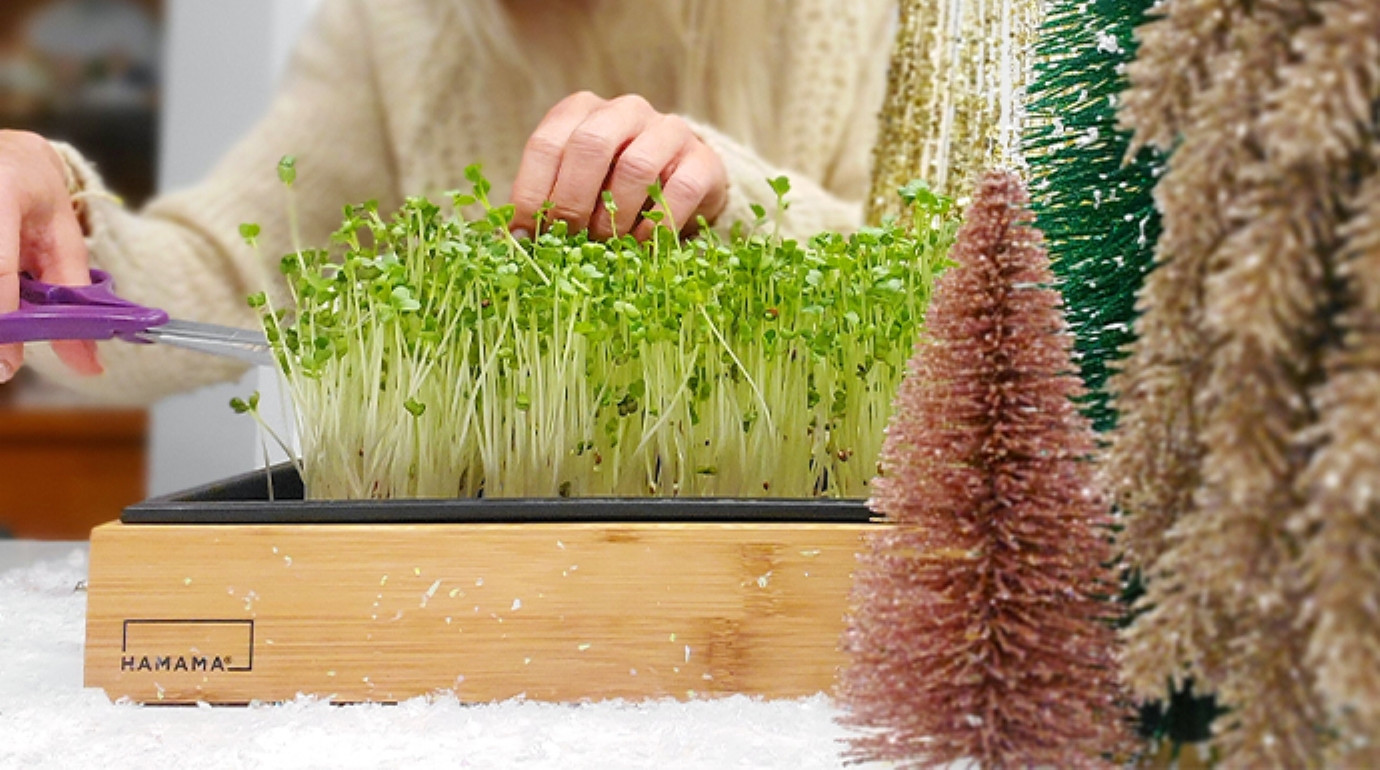
Give the gift of
healthy eating this year! Hamama Microgreen Kits provide an easy way to
grow your own microgreens at home -- just water once and harvest in 7 days.
Even in low light! Use code HOLIDAY20 for 20% off!
LEARN MORE
|
|
2. The Culture of
Open Options equates more variety with more freedom, but fails to see the
ways it can leave us paralyzed, isolated, and superficial.
The upsides of endless options are obvious enough: We get
novelty, flexibility, and authenticity. Each door presents an opportunity
to connect better with different aspects of who we are. We feel the freedom
to move on when rancor with a neighbor or boss becomes unbearable.
There are, however, less-discussed downsides to endless
options, like paralysis, isolation, and shallowness.
Paralysis
is a major block to committing—or even making simple choices. Endless
decisions lead to decision fatigue. As one economist puts it, there is a
“paradox of choice” in which more choices mean more freedom, but only to a
point. Eventually more is less. We become less free to choose, so stymied
that we choose less often. We get worn down by hundreds of granular
distinctions over the course of a day. Just think of a normal grocery run:
Crunchy or smooth? Generic or brand name? Strawberry or raspberry or mixed
berry? Or maybe honey? A honey substitute? Large or small? Thinkers have
commented on how the endless options not only tax our will, but also our
confidence in the decision we end up making. We can’t stop thinking about
all the options we did not choose in the process of choosing one.
Anomie
is another common downside of pursuing endless options. It refers to a
structureless, isolated existence, in which a person has no standard to
cling to or strive for. It comes from the Greek words meaning “no law.”
It’s not just about being friendless; it’s about the pain of being
free-floating and untethered from a mission-oriented community. This is
what soldiers grieve when they come home from war. They go from a shared
sense of purpose with a close-knit squad of comrades who will take a bullet
for each other to a society that lacks and avoids that kind of committed
cohesiveness. We make it seem like it’s the soldiers who have the problem
by diagnosing them with depression upon returning home, but we fail to
realize that American society is suffering from an acute case of anomie,
and military service had provided soldiers with a cure of purpose and
belonging.
Shallowness
is yet another cost of buying into a Culture of Open Options. Endless
options keep us fast and compulsively flitting from one thing to the next.
Well over a century ago, Ralph Waldo Emerson was onto this connection
between speed and superficiality when he remarked that, "In skating on
thin ice, our safety is our speed.” We fear what we might encounter if we
actually stopped browsing.
Sustained attention is an antidote to speedy shallowness,
but modern society wars against it. Facebook once ran an ad of a young boy
bored to pieces by his grandmother droning on about something, but then he
opens up his Facebook app and discovers a panoply of funny videos and
heart-stopping feats that provide an omnipresent reprieve from boring
grandma. The messaging is pretty clear: You always have an escape from
life’s dreary moments.
There are, however, heartening moments when people fight for
slow and “boring.” When a McDonald’s was scheduled to open a restaurant in
Rome’s culturally significant Piazza di Spagna in 1986, thousands of
outraged Italians protested. One indignant Italian journalist resisted the
corporate behemoth by handing out bowls of lovingly and thoughtfully
crafted pasta. The protestors chanted, “We don’t want fast food, we want
slow food!” The spectacle led to an internationally observed “Slow Food
Day” that celebrates local culinary traditions and relishes the slow
process of preparing quality food at a leisurely pace. Others have taken up
the call for slowness in the intervening decades. In domains as diverse as
architecture and city planning, video game production, therapy, and
political forums, people are slowing things down in order to prioritize
quality over quantity.
|
|
3. Most of life’s
dragons are slain not in a moment of high adrenaline, but through committed
action over time.
There are different kinds of valor. There’s the valor that
stares down death nonchalantly as the members of the firing squad cock
their rifles. There are the knights in old tales who fight tyrants or
dragons. But there’s another unsung valor: the valor of making meaning out
of the ordinary. This is a more neglected but desperately needed form of
valor. In your life you probably won’t have more than a handful of epic
dragon encounters. But you will have to get up everyday and commit to
starting and continuing the pursuits you have chosen to commit to—or let
them fall by the wayside. The dragons of boredom, distraction, and
uncertainty often get the better of us on a daily basis.
Hollywood has conditioned us to view dragon slaying as an
epic, adrenaline-soaked moment that we should aspire to. In some ways,
Twitter has lowered the bar for dragon slaying: You get to stand up in the
online public space, denounce the reprobate of the hour, and soak in the
cheers and likes from people who think the same as you do. It’s the
Hollywood-style dragon slaying victory, but way less costly.
But real, lasting change in individuals or communities comes
less in those glorious climactic Hollywood moments that make us weep or
cheer. Genuine change comes over a long time. Wounded relationships are not
fixed in a poignant scene or two. Authentic community never happens when
people pop in and out as they please.
The real dragon slayers are “long-haul heroes.” We hear a
lot about sit-ins and fire hoses trained on peaceful protestors, but much
less about the hundreds and hundreds of boring-but-crucial meetings that
Martin Luther King Jr. attended throughout the campaign. Fred Rogers would
not be so beloved if he hadn’t committed to elevating the quality of
children’s television. Even decades after his final 895th episode aired,
his name still evokes a smile and reminds us of the power of consistent
kindness. These are the kind of people we admire, the ones we name our
children after, the ones we aspire to emulate.
|
|
|
|
4. The act of
choosing is a must and a mutilation—it’s painful but also the path to
self-definition.
We find ourselves in a strange conundrum: We admire the
long-haul heroes who commit to a place, a community, and a cause, and make
a difference. We know we need them in this world, and part of us wants to
become a long-haul hero ourselves, but something holds us back from
committing.
There’s a potent trifecta of fears that get the better of
any part of us that wants to leap the great divide between the Culture of
Open Options and the Counterculture of Commitment. Those three fears are:
fear of regret, fear of association, and fear of missing out.
The fear of regret is powerful because pursuing a course for
decades and then looking back and wondering who we would be if we had
chosen that other course is a wistful, painful one. It isn’t dramatic to
consider deciding a kind of death. The words “homicide” and “decide” share
the root “–cide,” which means “to cut.” Deciding is an act
of selecting a part and setting aside the rest. It’s a painful, bitter
truth that we simply can’t be everything. Our identity is not infinite, and
choice is the path to greater self-definition. By choosing, we narrow our
range of options, which can burden us with a pressure to “get it right.”
Let’s ease the pressure. The highest stakes are the ones
that form the fence we are sitting on. Jumping off the fence and into a
commitment feels scary because we can’t see the bottom. Remember that
commitments are living, organic, relational things. They are not strictly
legal, transactional affairs. If they are, something has died along the
way. Because commitments are living things, they are vulnerable to death.
So while you don’t want to drop out of a commitment at the first sign of
trouble or relational sickness, you also aren’t obligated to resuscitate
something that’s died. In a strange way, becoming more comfortable with
quitting is part of becoming a committer.
Another way to minimize regret is to get in touch with what
you really want. Think about what makes you come alive, what you gravitate
to on a regular basis. This tells you more about you than your loftiest
ideals. When you think about options, don’t just think about the options
themselves, but, in a moment of stillness, pay attention to yourself and
what you are like when you ponder the different options. It’s something you
know not just in your head or heart, but down in your guts.
Another way to identify what matters most to you is to think
about your heroes. What you love in them tells you something of what
matters to you. It will help you find your values more readily than
beginning with abstractions like “kind” or “brave” or “generous.”
And, if those options don’t yield anything illuminating, there
is always the old fashioned pros and cons list that Benjamin Franklin
popularized.
Another block that we can remove is the compulsion to view
options as right or wrong, as if you are taking a test. Your options are
not between one choice that inexorably leads to success and the others that
lead to failure and unhappiness. The future is not fixed, so your choices
become part of creating a new future. Whichever choice you select, you have
a say along the way in whether it becomes the best option. In some ways,
the choice matters far less than being willing to commit to it. Instead of
right and wrong, think of commitments as “thriving” or “languishing.”
If you are teetering on the fence, wondering whether to
commit, maybe you simply need to hear: Leap!
|
|
5. We don’t lose
our identity in committed relation to other people and causes—we find it.
The fear of association is another block to
commitment that perceives a possible assault on identity, reputation, and
control.
We fret over losing our sense of self in a group. When we
hang back with these preoccupations, we are giving our current
self-concepts too much power over us. When people say they are just not
into long-term relationships, they are saying that long-term relationships
jeopardize some aspect of their identity.
Not only does association threaten how we see ourselves, but
it can also disrupt our reputation, or how others will see us. We tremble
at the thought of losing control over how others perceive us. Once others
know our affiliations to certain causes, organizations, or groups, the
image curating process becomes impossible because it involves something
bigger than just you.
Fear of association also disrupts our sense of control over
our schedule, our resources, and our autonomy. By committing to something,
you are committing to it—flaws and all. Communities and causes and people
are messy. We can’t just accept the parts we like and cut out the rest.
Friends let you down. Movements are not faction-free. Your spouse does
things that annoy you.
Associations also have a way of drawing out more of us than
we wish to show. They reveal strengths and talents as well as flaws and
deficiencies. It takes vulnerability.
The fear of association and unwillingness to face threats to
identity, reputation, and control are especially acute if we view the self
as immutable and isolated. But we are not a résumé or an “About Me” page.
We are dynamic human beings who discover ourselves—our true, authentic, but
constantly changing selves—not by trying to remain separate and static, but
through relationship. We are “embedded selves,” whose identity is not
hindered but realized through our ties.
|
|
6. Ironically,
giving into FOMO means missing out on the experience of depth that only
comes through commitment.
If fear of regret comes from wondering whether you committed
to the right path or not, fear of missing out (or FOMO) is the worry about
all the experiences you decline by sticking to your commitment. As that
list of new sights and places yet to be experienced begins to stack up into
the stratosphere, our commitments can feel pretty puny.
But at the heart of a severe case of FOMO is an inordinate
reliance on novelty to give our lives momentum. Commitment feels like
“stuckness,” like we are cutting ourselves off from movement-generating
thrills. It feels like the end of life itself. But the problem with novelty
is that it is subject to the law of diminishing returns. Think about how
long people laughed at and talked about the very first viral YouTube videos
compared to how they respond now. Longevity has dropped from months and
weeks to hours and minutes.
It is tempting to approach life with what Søren Kierkegaard
called the “aesthetic mode of life.” In this mode, we live life at a
distance, experiencing it without ever entering into it in a meaningful,
transformative way. You travel the world in the most thrilling way
imaginable, but you are homeless and rootless. You surround yourself with
fascinating, amusing people, but you remain unknown to them. You rely on
your above-average stories of adventure and abilities to nudge you toward
recognition.
The antidote to novelty is purpose. Unlike novelty, which
starts exciting and becomes boring, purpose often begins boring but gains
momentum and meaning over time. FOMO may not go away, but it can be
transformed. As we commit to something purposeful, we realize that the
experience we have been missing out on by pursuing novelty is depth, and
that depth is the most thrilling experience of all. If you never pause and
have a family, you miss out on a chance to bring children into the world
and come to know them or cheer them on as they become their own people. If
you never commit to a people and place, you miss out on a chance to become
a well-respected, sought-after voice in your town.
By switching from novelty to purpose as a way to create
meaning in life, we become solid people in a liquid world. Depth is a
superpower that many have never tapped because they have never committed.
Boredom, distraction, uncertainty, and wondering about greener grass
somewhere else will be your adversaries, tempting you back to a more
superficial mode of thrill-seeking, but just remember what you would miss
out on if you did. As you push through, you will find that truly committed
relationships to others, a sense of purpose and at-homeness, and depth are
the best solutions to our fears.
|
|
Endnotes
These insights are
just an introduction. If you're ready to dive deeper, pick up a copy of Dedicated
here. And since we get a commission on
every sale, your purchase will help keep this newsletter free.
Don't be like the
MLB. While they're
playing woke games instead of baseball, our friends at The Patriot Post
speak the message of Liberty to all people. Conservative perspective on the
most important issues is what's needed to fight the woke mob. Click here to join the Patriot's Post
mission and download their free Patriot's Primer.
*
This is sponsored content
|
|
|
This newsletter is powered by Thinkr, a smart reading app for the
busy-but-curious. For full access to hundreds of titles — including audio —
go premium and download the app today.
|
|


No comments:
Post a Comment