|
The study authors
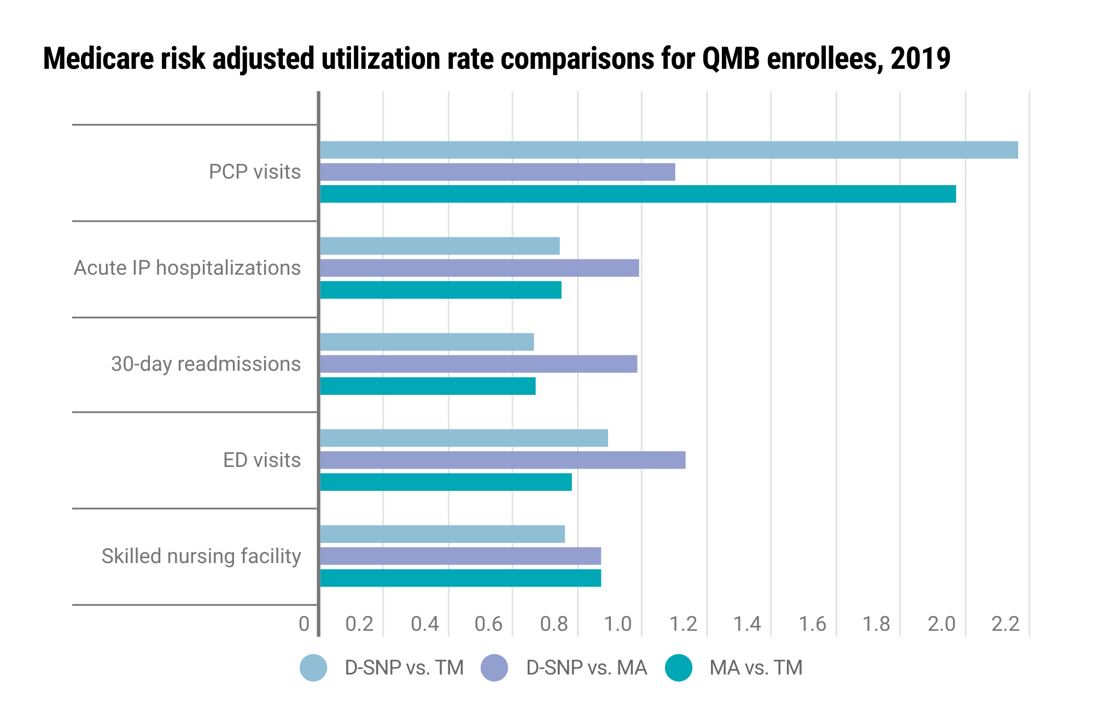
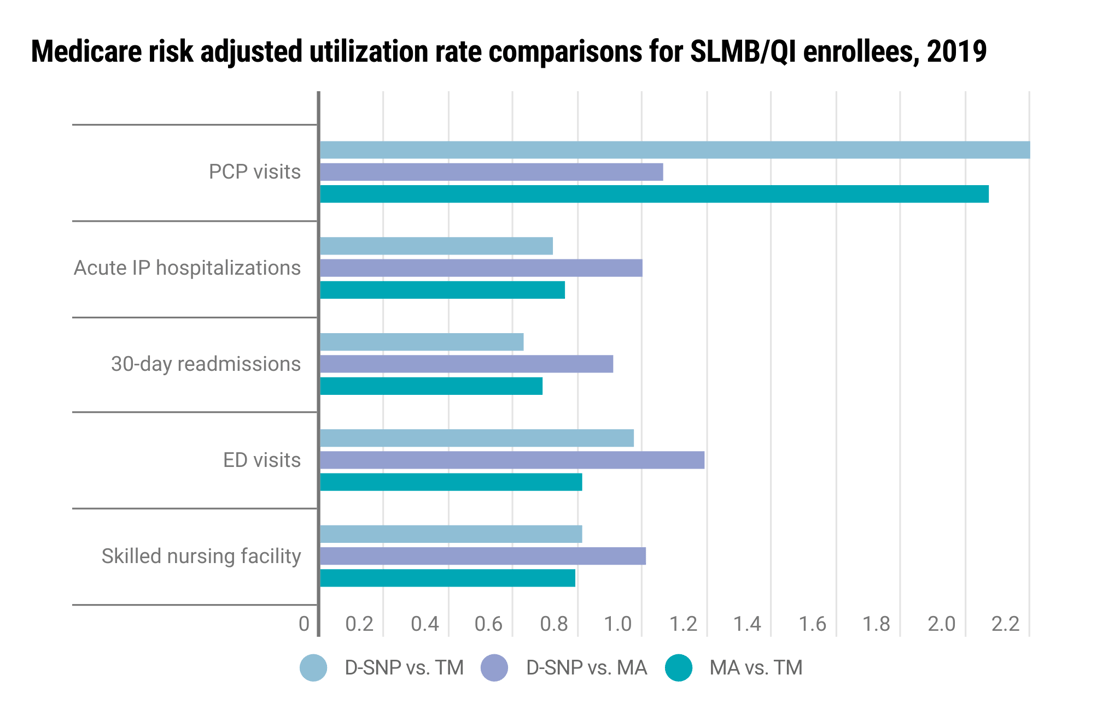
posited that the higher rates of PCP access among D-SNP enrollees,
coupled with D-SNPs’ emphasis on care coordination and tailored benefits,
may be contributing to these positive outcomes. Not all partial duals
have equal access to managed care, however. Some states allow only full
duals to enroll in D-SNPs, while others allow both full and partial duals
to enroll. In some states, only partial duals who qualify for certain
Medicare Savings Programs, such as the Qualified Medicare Beneficiary
(QMB) program and the Specified Low-Income Beneficiary (SLMB) program,
are eligible to enroll in D-SNPs. The authors suggested that state
policymakers could consider measures that would expand eligibility and
access to D-SNPs. Medicaid eligibility “churn” stood out as one area for
improvement. Partial duals are more likely to experience churn in their
Medicaid eligibility status, which can disrupt access to health care and
lead to poor outcomes. Allowing partial duals to enroll in D-SNPs before
gaining full dual status, or to remain in D-SNPs even if their status
fluctuates, “could support continuity of care and help ensure individuals
are connected to resources as their financial and medical situations
evolve,” the authors wrote.
|

No comments:
Post a Comment