|
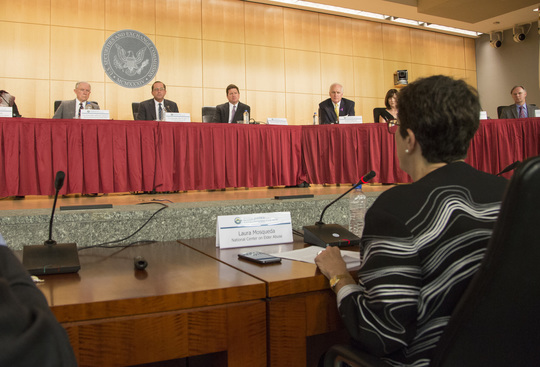
Dr. Laura Mosqueda, Dean of the
Keck School of Medicine at USC, describes how the opioid crisis is
impacting older adults and answers questions from HHS Secretary Alex Azar
and Attorney General Jeff Sessions at the spring meeting of the Elder
Justice Coordinating Council.
In nine days, we will join the world in commemorating World
Elder Abuse Awareness Day (WEAAD). Elder abuse is, by definition, abuse
that affects older adults, and yet every year on WEAAD I see people of all
ages coming together to take a stand against elder abuse. This is because
elder abuse doesn't just affect the person being targeted. Friends, family
members, and neighbors all feel the effects. It affects anyone who is, or
hopes one day to be, an elder living in a community where they are treated
fairly and equally. And ultimately, it affects all of us, because at elder
abuse strikes at our core values, which are predicated on human dignity and
the right of all people to live their lives without fear of harm.
Similarly,
opioid addiction doesn't just affect the person experiencing addiction. It
affects everyone around them, and as we are seeing across the country, it
can have devastating effects for the entire community.
And
when these two issues overlap, the results can be heartbreaking.
Yesterday
at the spring meeting of the Elder Justice Coordinating Council (EJCC), Dr. Laura Mosqueda
shared the story of a hospice patient she treated many years ago. The
patient was in great pain and Dr. Mosqueda, who now serves as Dean of the
Keck School of Medicine at USC and Director of the National Center on Elder
Abuse, was doing everything she could to help. She was baffled because
increasing dosages of morphine weren’t helping with her pain. The answer
came from a blood test -- the patient had no morphine in her system. She
was in pain because someone else was stealing her medication.
Sadly,
while the connection between substance abuse and the abuse of older adults
has been known for decades, stories like this one have become more common
in recent years as our country confronts a crisis of opioid addiction. The
overlap was the primary focus of today’s EJCC meeting.
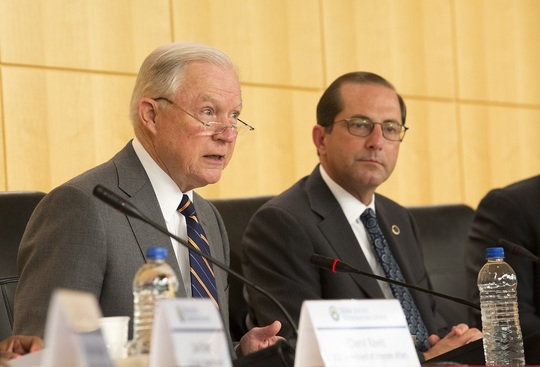
Attorney General Jeff Sessions
and HHS Secretary Alex Azar at the Elder Justice Coordinating Council
Meeting. "Fraud targeting seniors is so common that no victim should
feel ashamed to come forward and report it." Sessions told the group.
The meeting brought together leaders from a dozen federal
departments and agencies to coordinate efforts to combat elder abuse and
discuss the latest developments from the field. I was honored to be joined
at the meeting by U.S. Secretary of Health and Human Services Alex Azar, U.S.
Attorney General Jeff Sessions, and our gracious host Jay Clayton, Chairman
of the U.S. Securities and Exchange Commission.
"We know that some older adults abuse opioids themselves
and that many others also experience abuse, neglect, and exploitation by
others as a result of opioid addiction," said Azar. "Across HHS,
we're looking at approaches to help communities across our country that are
suffering from addiction, including ways to support (Adult Protective
Services) as they develop effective ways to prevent, detect and remediate
the harm caused by opioid abuse"
“We will continue to prosecute the fraudsters, the crooked
doctors, and the traffickers who are doing so much damage across this
country and across all age groups,” Sessions noted. “I am confident that
together we can put an end to this epidemic and ensure that every senior
has the safety and peace of mind that they deserve.”
It is clear that the elder justice community needs to be
prepared to address the increased cases of elder abuse resulting from the
opioid crisis. It is also clear that the needs of older adults must be
considered in any community response to the opioid crisis. The opioid
epidemic is putting new pressure on social service programs like state
Adult Protective Services and they often lack the preparation or resources
to fully address the increased demand.
The EJCC meeting also was an opportunity to reflect on the
progress we have made in the nine years since the body was established and
look to the future.
There was great excitement about the improvements we have
made, and continue to make, in cross-agency collaboration on elder justice
research, information dissemination, and data collection. In February, the
Department of Justice brought the largest elder fraud enforcement action in
American history against over 200 defendants who are accused of stealing
more than half a billion dollars from more than a million older Americans.
Two new laws approved by Congress and signed by President Trump over the
last year, the Elder Abuse
Prevention and Prosecution Act and the Strengthening
Protections for Social Security Beneficiaries Act of 2018, are
offering new opportunities to protect and empower elders. We look forward
to sharing more on the laws soon. These are just a few examples of
developments we touched on at the meeting.
The Elder Justice Coordinating Council is a potent illustration
of how much we can accomplish working together. But you certainly
don’t have to be in government to be part of the elder justice movement.
Anyone can work across disciplines and generations to make a difference, here are 12
ideas (PDF).
Please join us in observing World Elder Abuse Awareness Day on
June 15, as we reflect on how far we have come and look ahead with renewed
energy and clarity on what remains to be done to ensure justice for all
Americans. Find an event near
you or tools to plan
your own commemoration.
Elder abuse affects all of us, and we all have to work
together to end this human rights tragedy. Can I count on you to join the
movement?
|


No comments:
Post a Comment