Ryan Haygood, Health Care Policy Intern August 9, 2019
Hospitals and physicians generate most of their
profits from the privately insured. On average, physicians’ privately
negotiated rates are only 28 percent greater than Medicare payments, but
their median charges are 139 percent greater. Providers’
charges are rarely paid in full and typically serve more as a starting
negotiating point. Charges do matter, though, for the uninsured and patients
whose doctors aren’t included in their insurer’s network. They matter most when
a patient is unable to choose their provider and are unexpectedly treated by an
out-of-network doctor: When this happens, the patient is likely to incur a
“surprise bill.” It’s no accident that anesthesiologists, ER doctors, and
radiologists – the providers most likely to encounter patients out of network –
charge rates significantly higher than what Medicare pays. For these doctors,
surprise billing can be lucrative, not simply because they collect their
elevated charges more often than other doctors, but also because they can leverage the
profitability of their out-of-network options to demand higher in-network
rates. Legislation from the Senate HELP
Committee (noted above) would forbid providers from collecting
their full charges in “surprise” out-of-network scenarios and tie payment to
the median privately negotiated rate, which itself may fall as providers
lose leverage. The Congressional Budget Office projects lower premiums
and $25 billion in
public savings as negotiated rates prevail over artificially high charges.
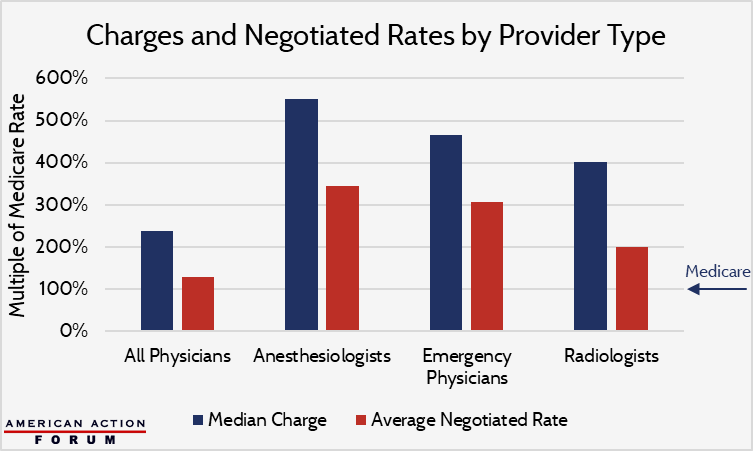
Data are
from the USC-Brookings Schaeffer Initiative for Health Policy.
https://www.americanactionforum.org/weekly-checkup/flying-into-surprise-bills/#ixzz5wR33A1yr
Follow: @AAF on Twitter

No comments:
Post a Comment