Margaret Barnhorst, Health Care Policy Intern April
17, 2020
With the massive influx of COVID-19 patients,
many hospitals are struggling to obtain the medications they need to treat
patients on ventilators. According to new research from
medical supplier Premier Inc., shortages are already evident for antivirals
(Valacyclovir), antibiotics (Azithromycin, Cefazolin, Cefepime), vasopressors
(Norepinephrine), neuromuscular blockers (Rocuronium, Cisatracurium),
bronchodilators (Albuterol), and sedatives (Propofol, Midazolam, Fentanyl)—a
combination of medicines that help treat patients on mechanical ventilators,
keep airways open, control lung functions, reduce fevers, and manage pain. The
demand for these critical drugs increased dramatically last month, with orders
for antibiotics nearly tripling. Of note, the demand for Azithromycin increased
170 percent in March, and the demand for Cisatracurium increased 253 percent.
Demand for Albuterol, a common medication in asthma inhalers, also rose
significantly in March because of its use in easing respiratory distress in
COVID-19 patients, therefore limiting the supply for asthmatic patients. As a
result of this increased demand, the rate at which prescriptions are filled has
decreased significantly, as seen by the number of unfilled orders in March.
Before COVID-19 outbreaks, the average fill rate for ventilator-associated
drugs was 95 percent,
but it now ranges from only 51 percent (Cisatracurium) to 87 percent
(Valacyclovir). In attempts to make these medications more accessible,
pharmaceutical companies such as Pfizer and Teva
Pharmaceuticals are adjusting production schedules to
prioritize certain drugs, and the Drug Enforcement Administration
temporarily increased production
quotas for sedative drugs and medications necessary for patients on
ventilators.
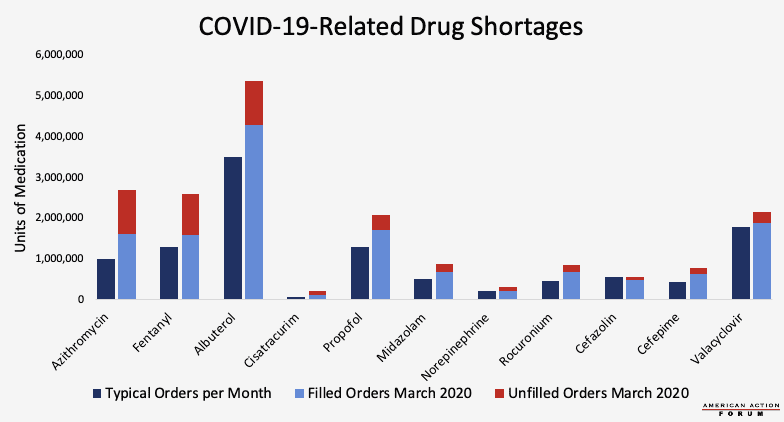
Data obtained from
Premier Inc. COVID-19
Pharmaceutical Supply Chain Vulnerabilities Survey from March
31, 2020
https://www.americanactionforum.org/weekly-checkup/the-challenge-of-the-newly-uninsured/#ixzz6KAXAvLax
Follow @AAF on Twitter
https://www.americanactionforum.org/weekly-checkup/the-challenge-of-the-newly-uninsured/#ixzz6KAXAvLax
Follow @AAF on Twitter
No comments:
Post a Comment