|
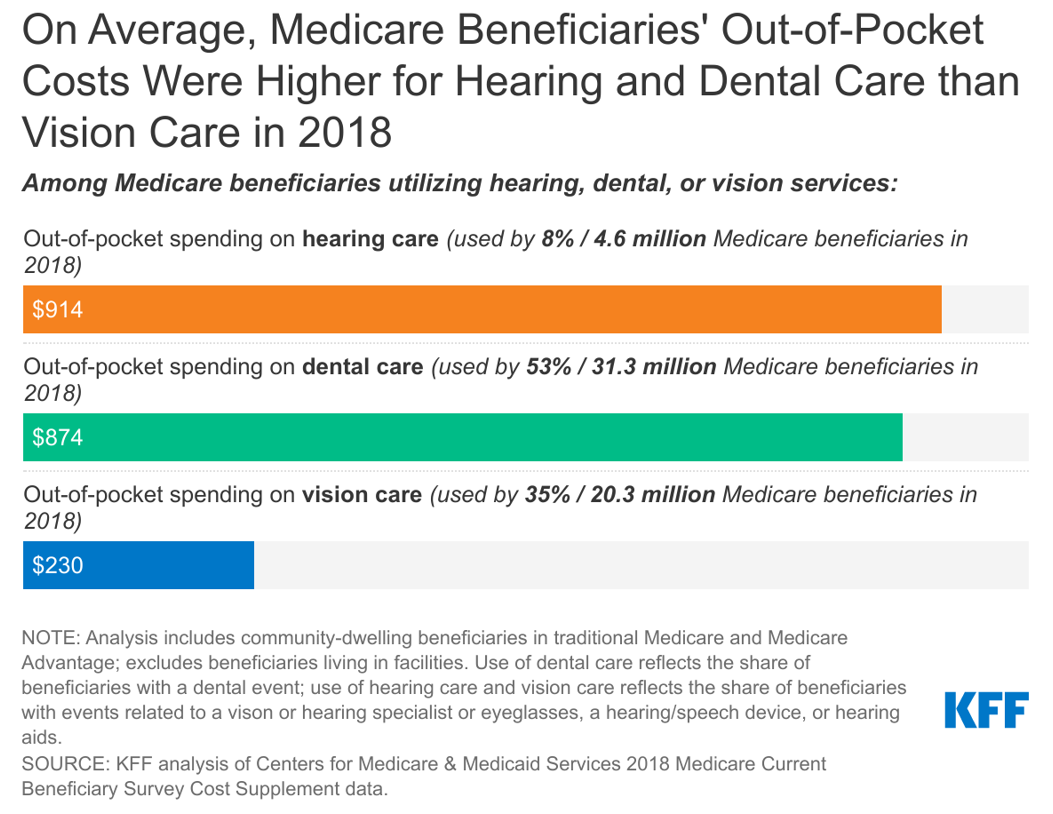
Beneficiaries can face
high out-of-pocket costs whether they are in traditional Medicare or
privately-run Medicare Advantage plans, the analysis finds. Among users
of dental services, for instance, average out-of-pocket spending was $766
among beneficiaries in Medicare Advantage and $992 among those in
traditional Medicare in 2018.
The analysis also finds that people on Medicare in communities of color,
with disabilities, or with low incomes are disproportionately likely to
have difficulty getting these services. About 16 percent of all Medicare
beneficiaries reported in 2019 that there was a time in the last year
that they could not get dental, hearing, or vision care, but this was
reported by a greater percentage of beneficiaries under age 65 with
long-term disabilities (35%); those enrolled in both Medicare and
Medicaid (35%); with low incomes (e.g., 31% for those with income under
$10,000); and Black and Hispanic beneficiaries (25% and 22%,
respectively).
The new analysis also
provides an overview of coverage of dental, hearing, and vision services
in Medicare Advantage plans. While most plans offer coverage for these
services, the extent of coverage varies and has limits.
- Nearly
all Medicare Advantage enrollees with access to dental coverage have
preventive care benefits, and most have access to more extensive
dental benefits. Cost sharing for more extensive dental services is
typically 50 percent for in-network care, and typically is subject
to an annual dollar cap on plan payments.
- Similarly,
almost all Medicare Advantage enrollees have access to hearing exams
and hearing aid coverage. The coverage generally is subject to
either a maximum annual dollar cap and/or frequency limits on how
often plans cover the service.
- Virtually
all Medicare Advantage enrollees have access to vision exams and
eyewear coverage, typically subject to maximum annual limits
averaging about $160 per year.
The findings come as
policymakers in Congress are considering adding dental, hearing, and
vision benefits to Medicare as part of the budget reconciliation bill,
one of several competing spending priorities in the debate. It would be
the largest expansion of Medicare benefits since the Part D drug benefit
was launched in 2006. (A similar 2019 proposal would have increased
Medicare spending by more than $300 billion over 10 years according to
the Congressional Budget Office.)
For the full analysis
and other KFF data and analyses about Medicare, including the recent Medicare
and Dental Coverage: A Closer Look, visit kff.org.
|

No comments:
Post a Comment