|
The analysis finds
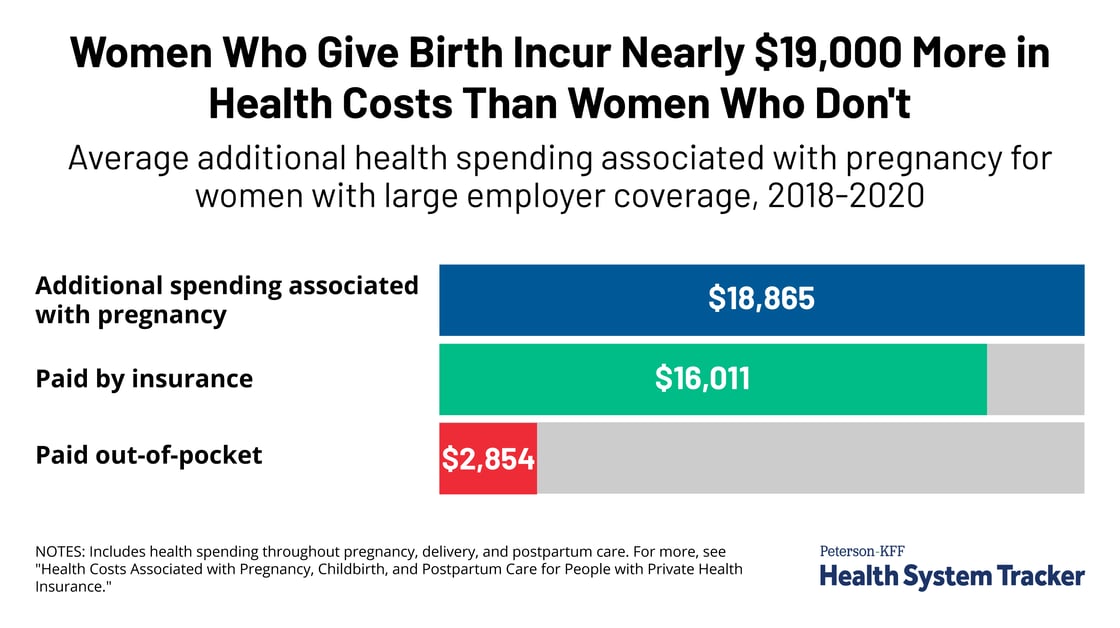
women who give birth incur an extra $18,865 in total health care
spending over three years than other women. This includes an average of
an additional $19,906 spent on inpatient and outpatient costs, which is
partially offset by a $1,040 reduction in prescription drug spending.
The lower drug costs likely reflect that pregnant women do not take
birth control pills, which is one of the most common prescriptions for
women of reproductive age, and that some other drugs are considered
unsafe to take during pregnancy.
Differences in health spending vary by delivery type. Women who give
birth via cesarean section spend an average of $26,280 more on health
care than those who do not give birth, including an average of $3,214
out of pocket. Those with a vaginal delivery spend an average of
$14,768 more, including $2,655 out of pocket.
The analysis examines claims for women of reproductive age (15-49) from
2018 through 2020 in the IBM MarketScan Encounter Database, comparing
total spending for women of similar ages who did and did not give
birth. It does not include health spending for newborn babies. The
analysis is available through the Peterson-KFF
Health System Tracker, an online information hub dedicated
to monitoring and assessing the performance of the U.S. health system.
|
.png?width=1200&upscale=true&name=Just%20Released%20Header_1%20(1).png)


No comments:
Post a Comment