|
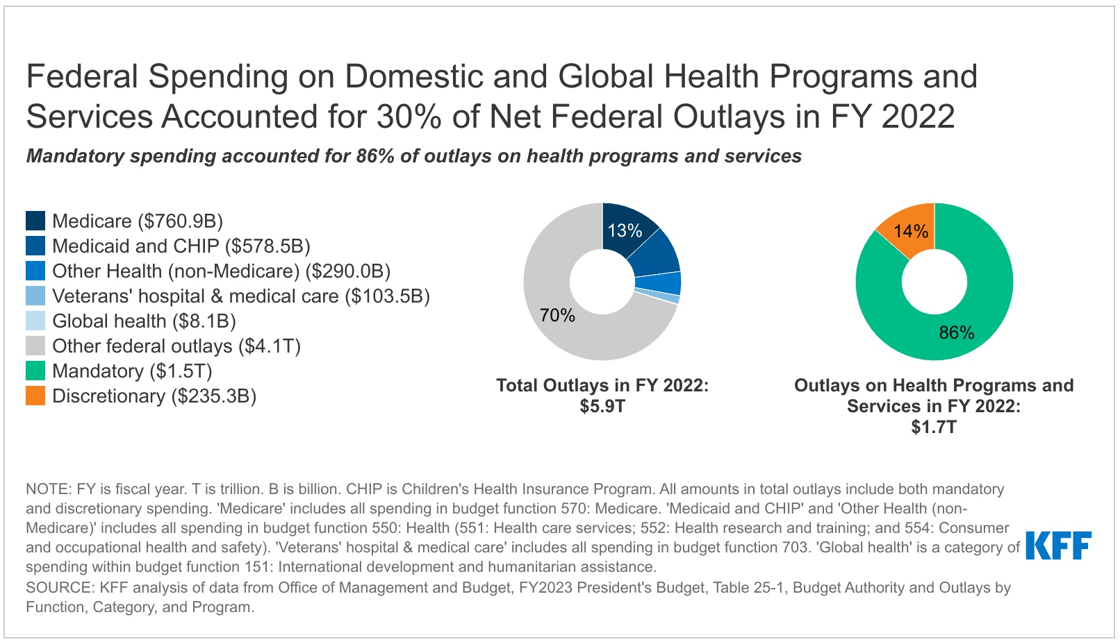
The large majority of
federal health spending (86%, or $1.5 trillion) is mandatory spending
that is not subject to annual appropriations votes by Congress. This
includes nearly all Medicare spending, federal spending on Medicaid and
CHIP (which are jointly funded by states and the federal government), and
part of the money devoted to premium tax credits for coverage through the
ACA Marketplaces, among other categories of spending. Medicare
accounts for half of mandatory spending on federal health programs and
services, while Medicaid accounts for another 37 percent.
The federal government also provides several tax benefits that support
health-related activities, known as tax expenditures because they result
in lower federal tax revenues.
Some Republican
lawmakers have pushed for reductions in future federal spending as part
of a deal to raise the debt limit. The Biden Administration has said it
will not negotiate spending reductions as part of debt limit talks but is
open to separate discussions about approaches to debt and deficit
reduction.
Members of both major political parties have indicated that cuts to
Social Security and Medicare are “off the table” in these discussions,
leaving open the question of whether Medicaid, the ACA’s premium tax
credits, and possibly other health programs and services could be
targeted for spending reductions.
Our FAQs answer basic questions about health spending and the federal
budget and budget enforcement tools, including the debt limit and
sequestration. We include detailed explanations and charts about what
counts as mandatory spending and what falls into the category of
discretionary spending. The debt limit itself does not directly affect
levels of spending by the federal government, including mandatory and
discretionary health spending.
|
.png?width=1200&upscale=true&name=Just%20Released%20Header_1%20(1).png)


No comments:
Post a Comment