Published: Feb 18, 2020
Sexually transmitted infections encompass many
different types of viral and bacterial infections. Every year, an
estimated 20 million new
sexually transmitted infections (STIs) are reported to the Centers for Disease
Control and Prevention (CDC) in the United States. The rates of reported STIs
reached record-breaking levels in 2018, continuing their recent rise. Despite these high
rates, a 2019
KFF poll found that a large share of the public is unaware of
how common STIs are, with less than half (36%) aware that STIs rates are
increasing.
While all sexually active individuals are
potentially at risk, rates are highest among 15-24 year olds, as well as gay
and bisexual men. Black and Hispanic populations are also disproportionately
affected relative to non-Hispanic White populations. Increasing rates of STIs
highlight the importance of prevention, testing, treatment, as well as
information and education, in curbing the transmission of these infections.
This fact sheet examines trends and disparities in STI prevalence, reviews the
STI screening and preventive care coverage policies for private insurance and
public programs (including coverage gaps), and describes confidentiality in the
provision of these services.
What are Sexually
Transmitted Infections?
STIs are generally defined to include
chlamydia, genital herpes, gonorrhea, hepatitis B, HIV, Human Papillomavirus
(HPV), syphilis, and trichomoniasis . All STIs, including HIV, are preventable,
and there are treatments to cure many, though not all, of them. Because some
STIs often show no symptoms, at least initially, some people with an STI may
not find out until more serious health concerns present. For this reason,
preventive measures and routine screenings are important for the early
identification of these infections in order to engage in treatment and to
prevent further transmission and more serious complications.
Untreated STIs, particularly chlamydia and
gonorrhea, can result in pelvic inflammatory disease (PID) in women and
infertility. It is estimated that HPV, the most common STI in the United States, will be
contracted at some point during the lifespan of nearly every sexually active
individual. Most cases of HPV resolve on their own, but certain strains of HPV
are linked to cervical, throat, penile, and anal cancers. The HPV vaccine
protects against nine strains of this virus, including several that are
associated with cancer.
Pregnant women with an untreated STI face
increased risk of complications as do their infants. Exposure to an STI during
pregnancy can result in preterm labor, low birth weight, premature rupture of
membranes, and transmission to the infant during delivery. HIV and syphilis are
particularly serious if transmitted to newborn infants. So long as a mother
with HIV is engaged in consistent antiretroviral (ARV) treatment, it would be
highly unlikely to transmit HIV to a baby.
Up to 40% of babies born to women with untreated syphilis may
be stillborn or die from the infection. Late or limited prenatal care has been
associated with congenital syphilis (when the infection is present in utero or
childbirth). Congenital syphilis is preventable in most cases, if women are
screened for syphilis and treated early during prenatal care.
Prevalence of Sexually
Transmitted Infections
While women still account for the highest
reported cases of STIs (driven mainly by high numbers of chlamydia in women),
men, in particular gay and bisexual men, saw greater increases in rates of
syphilis, chlamydia, and gonorrhea in recent years. Syphilis infection rates
nearly doubled among men from 2014 to 2018 (Figure 1).
|
Table 1: Sexually Transmitted Infection Rates of Reported Cases,
by Selected Characteristics, 2018
Rate per 100,00 population |
|||||||
|
Gonorrhea
|
Chlamydia
|
Syphilis (primary and
secondary stages)
|
Congenital Syphilis
|
HIV
|
|||
|
U.S. Total
|
179.1
|
539.9
|
10.8
|
33.1
|
11.4
|
||
|
Sex
|
Men
|
212.8
|
380.6
|
18.7
|
NR
|
22.5
|
|
|
Women
|
145.8
|
692.7
|
3
|
NR
|
5.1
|
||
|
Race
|
White
|
71.1
|
212.1
|
6
|
13.5
|
4.9
|
|
|
Black
|
548.9
|
1192.5
|
28.1
|
86.6
|
39.3
|
||
|
Hispanic
|
115.9
|
392.6
|
13
|
44.7
|
16.2
|
||
|
Asian/Pacific
Islanders
|
35.1
|
132.1
|
4.6
|
9.2
|
NA
|
||
|
American
Indian/Alaska Native
|
329.5
|
784.8
|
15.5
|
79.2
|
7.8
|
||
|
Age
|
15-19
|
432.4
|
2110.6
|
7.7
|
NR
|
8
|
|
|
20-24
|
713
|
2899.2
|
27.8
|
NR
|
27.6
|
||
|
25-29
|
553.6
|
1427.3
|
33
|
NR
|
32.5
|
||
|
30-34
|
366.4
|
701.5
|
26.9
|
NR
|
25.6
|
||
|
Region
|
Northeast
|
138.4
|
492.1
|
8.7
|
8.5
|
10
|
|
|
South
|
194.4
|
565.2
|
11.1
|
12.4
|
15.7
|
||
|
Midwest
|
184.5
|
524
|
7.1
|
44.7
|
7.2
|
||
|
West
|
179.7
|
548.5
|
15
|
48.5
|
9.3
|
||
|
NOTES: NR is Not
Reported. Primary and secondary syphilis stages are the earliest stages of
infection, reflect symptomatic disease, and are indicators of incident
infection.
SOURCE: Centers for Disease Control and
Prevention (CDC), Sexually Transmitted Disease Surveillance 2018; CDC,
Diagnoses of HIV Infection in the United States and Dependent Areas, 2018.
|
|||||||
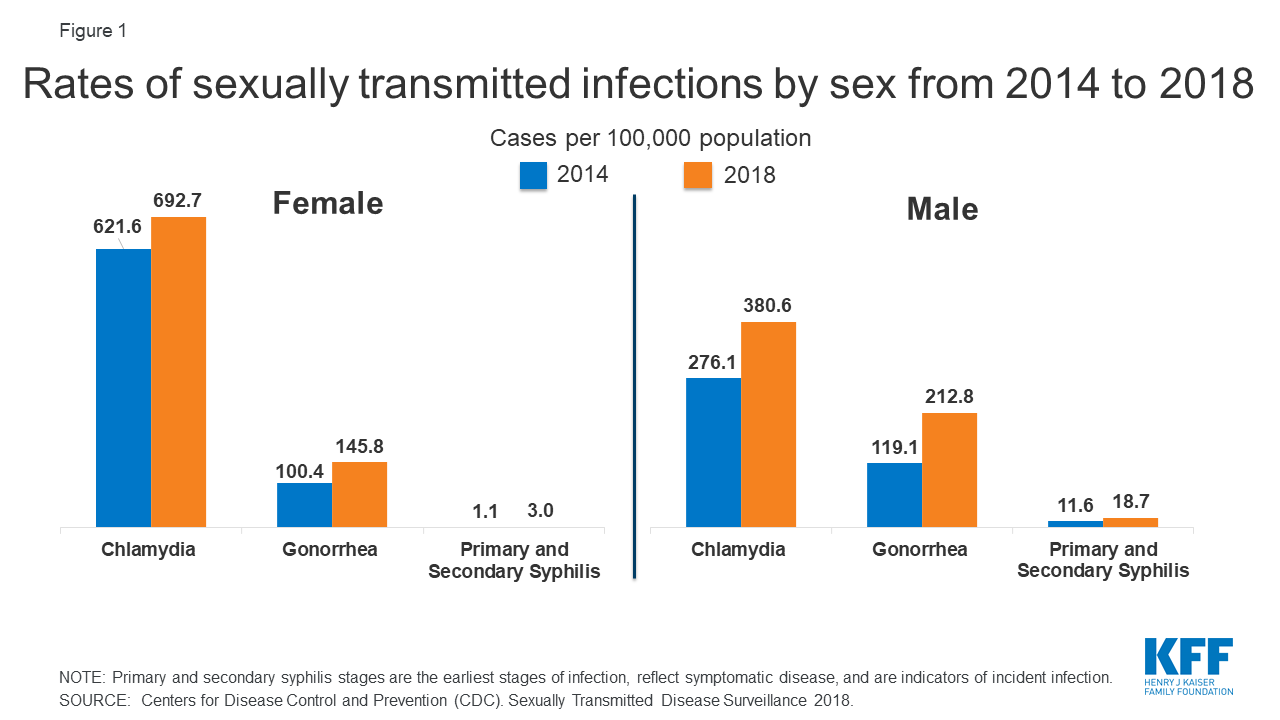
Figure 1: Rates of
sexually transmitted infections by sex from 2014 to 2018
Congenital syphilis rates increased 173%
between 2014 and 2018, with the number of cases the highest they have been
since 1995. The highest rates of congenital syphilis were in the South, West,
and Southwest (Figure 2).
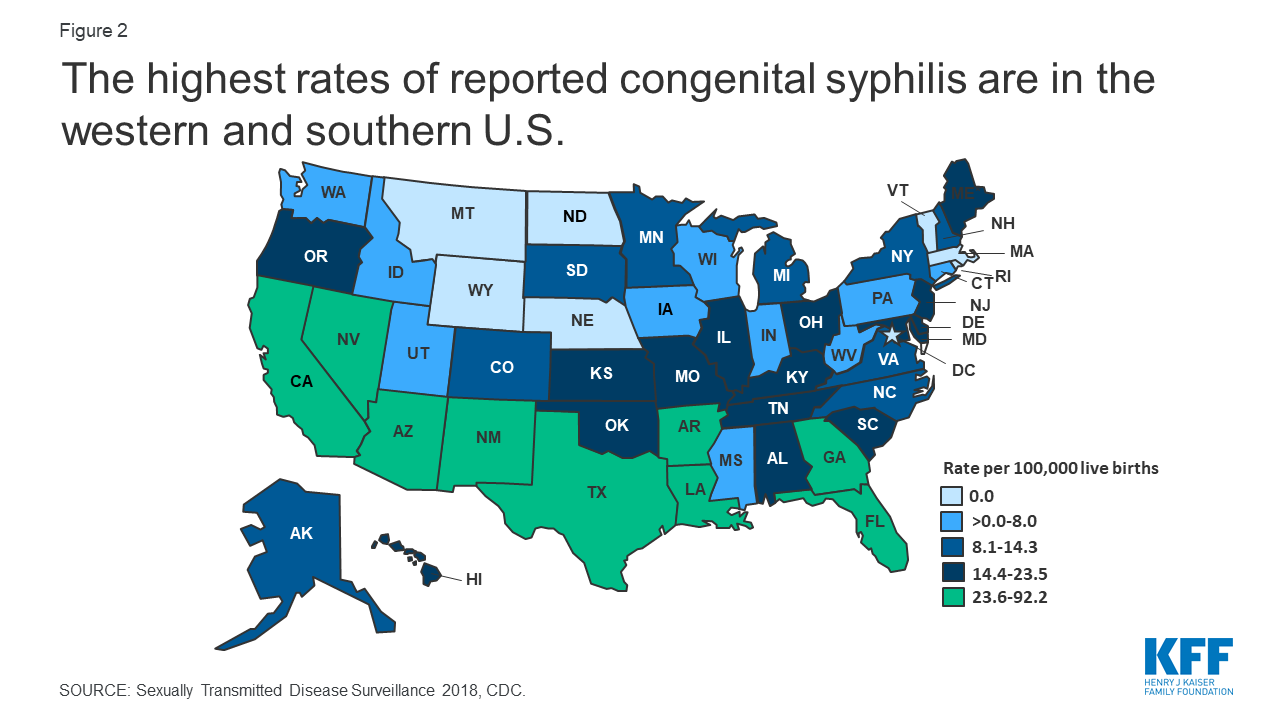
Figure 2: The highest
rates of reported congenital syphilis are in the western and southern U.S.
STIs also have a disproportionate impact on
young people, ages 15-24, who acquire half of all new
STIs, despite only representing 25% of the
sexually active population (Figure 3). Young people, ages
15-24, account for 60% of all reported cases of gonorrhea and chlamydia.
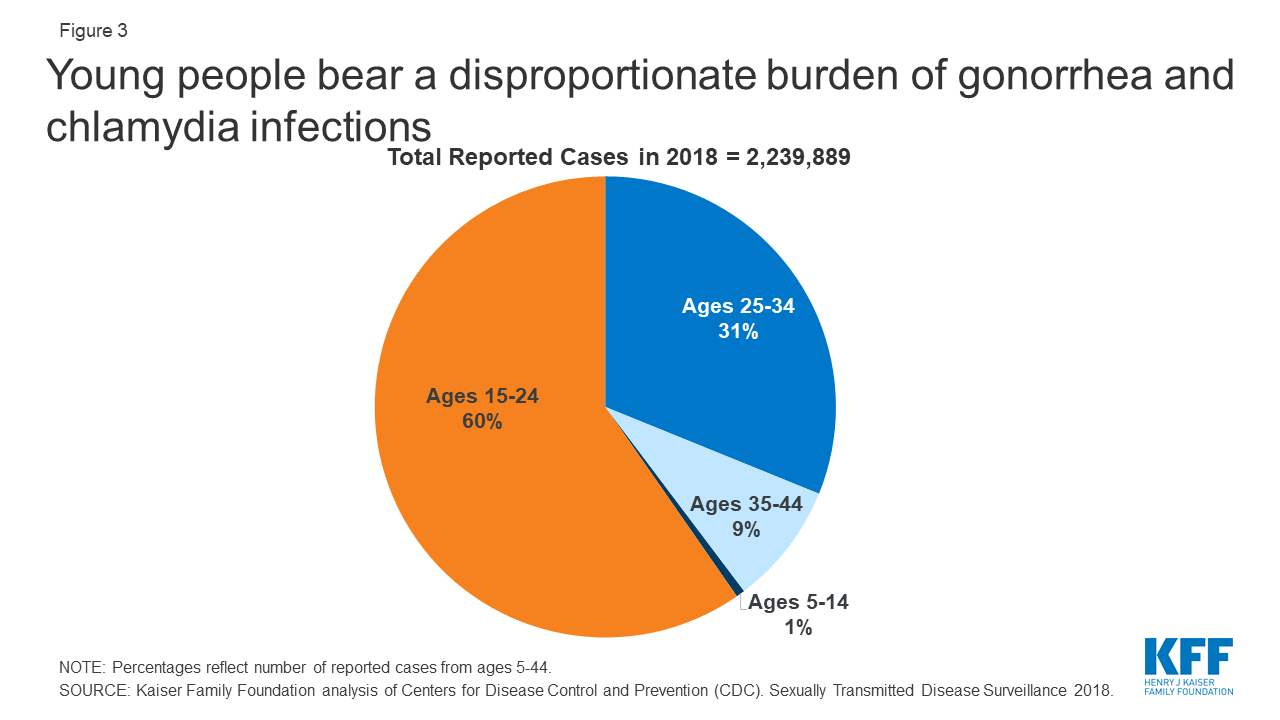
Figure 3: Young people
bear a disproportionate burden of gonorrhea and chlamydia infections
Due to a combination of social, structural,
and economic inequities, HIV and other STIs disproportionately affect certain
groups (Figure 4). In 2018, Blacks
accounted for 38% of reported gonorrhea cases and 33% of primary and secondary
syphilis cases, despite comprising just 13% of the
population. Blacks also accounted for 42% of new HIV
diagnoses in the U.S in 2018. Hispanics are also disproportionately affected,
accounting for 27% of persons
newly diagnosed with HIV and representing 18% of the
population in 2018.

Figure 4: There is
considerable variation in rates of STI infections among different racial and
ethnic groups
Gay and bisexual men of all races have also
been disproportionately affected since the start of the HIV/AIDS epidemic. In
2018, men who have sex with men (MSM) accounted for more than two thirds (69%) of all HIV
diagnoses in the U.S., representing 86% of cases
among males. MSM also accounted for 78% of male primary and secondary syphilis cases
in 2018.
The higher prevalence of HIV and other STIs in
certain communities can mean risk of exposure is also greater in these communities,
particularly when sexual networks are close-knit. When used correctly, condoms
are effective at preventing the transmission of HIV and other STIs. However,
condom use in the U.S. remains low (Figure 5. Pre-exposure prophylaxis (PrEP), a daily
pill approved by the FDA in 2012, reduces the risk of sexually contracting HIV
by up to 99% among people at high risk.
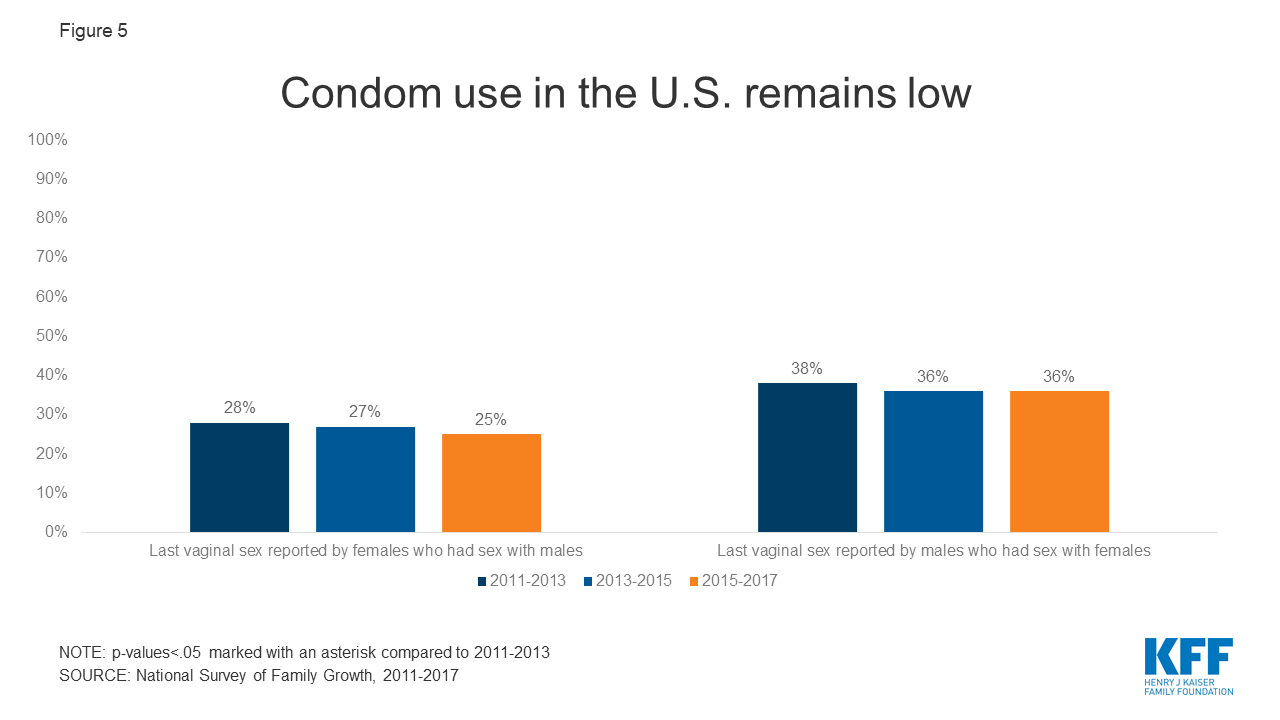
Figure 5: Condom use
in the U.S. remains low
Expedited Partner
Therapy
Many states have laws allowing expedited
partner therapy (EPT), which permits the treatment of partners of patients
diagnosed with an STI without examination. The CDC has recommended this
practice since 2006 in certain circumstances due to its success in reducing
gonorrhea reinfection rates. Currently 39 states and DC allow physicians to provide at
least some treatment to the partner of a patient diagnosed with a STI. Among
publicly funded clinics, 79% provided
expedited therapy for the patient’s partner at the same visit in 2015. However,
even in states where EPT has been legalized, many do not allow the patient’s
insurance coverage to be billed for the partner’s treatment, which can create a
financial barrier to care.
Paying for STI
Prevention and Treatment Services
Access to prevention, screening, testing and
treatment services for STIs is facilitated by private insurance, public coverage
such as Medicaid and Medicare, as well as publicly-supported health programs.
The CDC estimates that in 2008 (the most recent estimate available), the annual
direct medical costs in the US associated with STIs (including HIV) were
nearly $16 billion.
Private Insurance
The Affordable Care Act (ACA) requires most
private health insurance plans to cover recommended
preventive services, including HIV and other STI screening, with no
cost sharing. For adults, this includes US Preventive Services Taskforce
(USPSTF) recommendations receiving an A or B grade, which include
vaccines recommended by the CDC’s Advisory Committee for Immunization
Practices, and services for women recommended by the Health Resources and
Services Administration (HRSA). STI-related services that must be covered
without cost-sharing by most plans are presented in Table 2.
In June 2019, the USPSTF Task Force added an A
grade recommendation for PrEP for the
prevention of HIV in high-risk populations, which means that most insurance plans
must begin covering the full cost of the drug in the plan year that starts
after June 2020. CDC guidelines on
PrEP advise that individuals on PrEP have follow up visits and lab work,
including being re-tested for HIV four times a year, but it is unclear whether
these follow-up visits and lab work must be covered without cost-sharing by
most insurance plans.
Plans are also required to cover prescription
contraceptives for women, so coverage for female condoms would be required if
an enrollee has a prescription but not when purchased over the counter. Twelve states (CA,
CT, DE, IL, MD, MA, NJ (will apply to insurance plans in April 2020), NM, NV,
NY, OR, WA) and DC currently require insurance coverage for over-the-counter
contraceptive methods – of these however– 8 states (CA, DE, IL, MD, MA, NJ, NV,
OR) exclude male condoms.
Medicaid
Medicaid, the national health coverage program
for low-income individuals, is financed and operated jointly by the federal and
state governments. For the 37 states and DC that have expanded Medicaid, STI
counseling, screenings, preventive vaccinations, and PrEP must be covered at no
cost for the newly eligible populations under the ACA just as they are for
enrollees in private insurance plans (Table 2). However, this requirement does not apply to
populations covered by Medicaid through other pathways, where coverage for
specific STI screenings and treatments is determined by the state.
Some states extend access to STI services
through limited-scope Medicaid family planning programs that provide Medicaid
coverage solely for family planning services to women and men who do not
qualify for full Medicaid benefits. Most of these programs cover STI
screenings, but not all cover treatment if diagnosed. While all
state Medicaid programs must cover medically necessary HIV testing, state
coverage of routine HIV screening varies because it is an optional benefit
under Medicaid. While several states cover condoms, they require prescriptions
for this over-the-counter product. Medicaid is the largest public funder of HIV
treatment and care, and all state Medicaid programs should cover PrEP.
|
Table 2: STI-related Preventive Care Benefits that Plans Must
Cover without Cost-Sharing
|
|||||
|
Men who are sexually active
or at higher risk
|
Women who are sexually active
or at increased risk
|
Pregnant women
|
Young people
|
||
|
Gonorrhea screening
|
X – sexually active women <24
years, and older women at increased risk
|
X (for those at increased risk
|
|||
|
Chlamydia screening
|
X – sexually active women <24
years, and older women at increased risk
|
X – under 25
|
|||
|
Syphilis screening
|
X
|
X
|
X
|
||
|
HPV DNA Testing
|
X – 30 years and older
|
||||
|
HPV vaccine
|
X – 11 to 26 years
|
X – 11 to 26 years
|
X – 11 to 26 years
|
||
|
Hepatitis B screening
|
X
|
X
|
X – at first prenatal visit
|
X
|
|
|
Hepatitis B vaccine
|
X
|
X
|
X – children under 18 years
|
||
|
STI prevention counseling
|
X
|
X
|
X – if sexually active
|
||
|
HIV screening and counseling
|
X – all aged 15 to 65 years, all
others at higher risk
|
X – all aged 15 to 65 years, all
others at higher risk
|
X
|
X
|
|
|
PrEP
|
X – all at high risk of HIV
acquisition
|
X – all at high risk of HIV
acquisition
|
X – all at high risk of HIV
acquisition
|
X – all at high risk of HIV
acquisition
|
|
|
Pap Test (cervical cancer screening)
|
X – All women ages 21 to 65
|
||||
|
NOTES:
Population covered and definition of high risk vary by condition.
Coverage without cost sharing required in new private plans and Medicaid
expansion groups.
SOURCE:
Kaiser Family Foundation, Preventive Services Tracker,
October 2019.
|
|||||
Medicare
Medicare plays a key role in providing health
coverage to 60 million people 65 and older as well as younger people with
long-term disabilities. The ACA also requires Medicare to cover preventive
services that are rated “A” or “B” by the USPSTF without cost-sharing. Medicare Part B (Medical
Insurance) covers STI screenings for chlamydia, gonorrhea,
syphilis, and/or Hepatitis B once every 12 months for individuals at increased
risk for an STI or at certain times during pregnancy for pregnant individuals.
Medicare also covers up to two individual 20-30 minute, face-to-face,
high-intensity behavioral counseling sessions once each year for sexually
active individuals at increased risk for STIs. Additionally, Medicare covers an
HIV screening once per year for individuals age 15-65 without regard to
perceived risk or for individuals outside of this age range who are at an
increased risk for HIV. Medicare Part D is required to cover all approved
antiretrovirals (one of “six protected” drug classes), which includes PrEP, but
unlike most preventive services covered under Part B, plans are allowed to
charge cost sharing for these drugs.
Services and Programs
for Uninsured Individuals
Roughly 28 million people, 9% of the
population, were uninsured in 2018. A patchwork of public-supported clinics and
program make STI services available to uninsured individuals. STI programs
funded by federal, state, and local governments, such as those that receive
funding from various federal agencies such as HRSA, the CDC, or the Office of
Population Affairs (OPA), are important sites of care for STI prevention and
treatment, especially, those who are under- or uninsured. As part of the safety-net
healthcare network, health centers and health departments provide low-income
individuals with free or low-cost care, including counseling, testing,
diagnosis and treatment. Research suggests
that clinicians at these clinics are also more likely to provide routine STI
care and discuss the use of condoms with patients than private providers.
The federal Title X family planning grant
program, administered by OPA, also provides support to clinics to serve
low-income and uninsured individuals in need of STI screening and treatment. In
the past year, however, the network of clinics participating in the program has
shrunk significantly. About one in four Title X funded sites have withdrawn from
the program in response to the Trump Administration’s new regulations that
block Title X support to clinics that provide abortion services and referrals
in addition to family planning and STI services. The organizations that no
longer participate in the program have not only lost funding available to
provide low-income individuals with contraceptive services, but also may have
had an impact on the availability of STI testing and treatment services in many
communities.
For people living with HIV, the Ryan
White HIV/AIDS Program works with health departments and local
community-based organizations to provide HIV medical care and other support
services for people living with HIV who have no insurance or are underinsured.
The AIDS Drug Assistance Program or
ADAP is part of the Ryan White HIV/AIDS Program. It helps covers the cost
of HIV-related prescription medications for low- to moderate- income people who
have limited or no prescription drug coverage. Each state operates its own
ADAP, so eligibility and program elements can vary state to state.
Gilead, the manufacturer of Truvada and
Descivy, the PrEP medications, offers a Medication Assistance Program for
PrEP that may provide the medication at no cost based on income, but does not
cover the cost of the medical visits or the recommended lab testing. The
program may also be available to those on Medicare who do not have Part D prescription
drug coverage. In addition, some city and state health departments, and
foundations offer navigation and other support services, as well as financial
assistance to make PrEP free or low cost. In December 2019, the U.S. Department
of Health and Human Services launched the Ready, Set, PrEP program,
which makes PrEP prescriptions available at no cost to 200,000 at-risk,
uninsured individuals each year for up to 11 years. The program does not
support required labs and medical services, which can be expensive. This new
program is still in early implementation stages.
Confidentiality
Confidentiality is a crucial factor in the
provision of STI screening and treatment services. For minors in particular, it
can be a challenge. Although all 50 states and
DC allow minors to consent to STI services, 18 states allow physicians to
inform a parent or guardian that the minor is seeking these services (Figure 6).
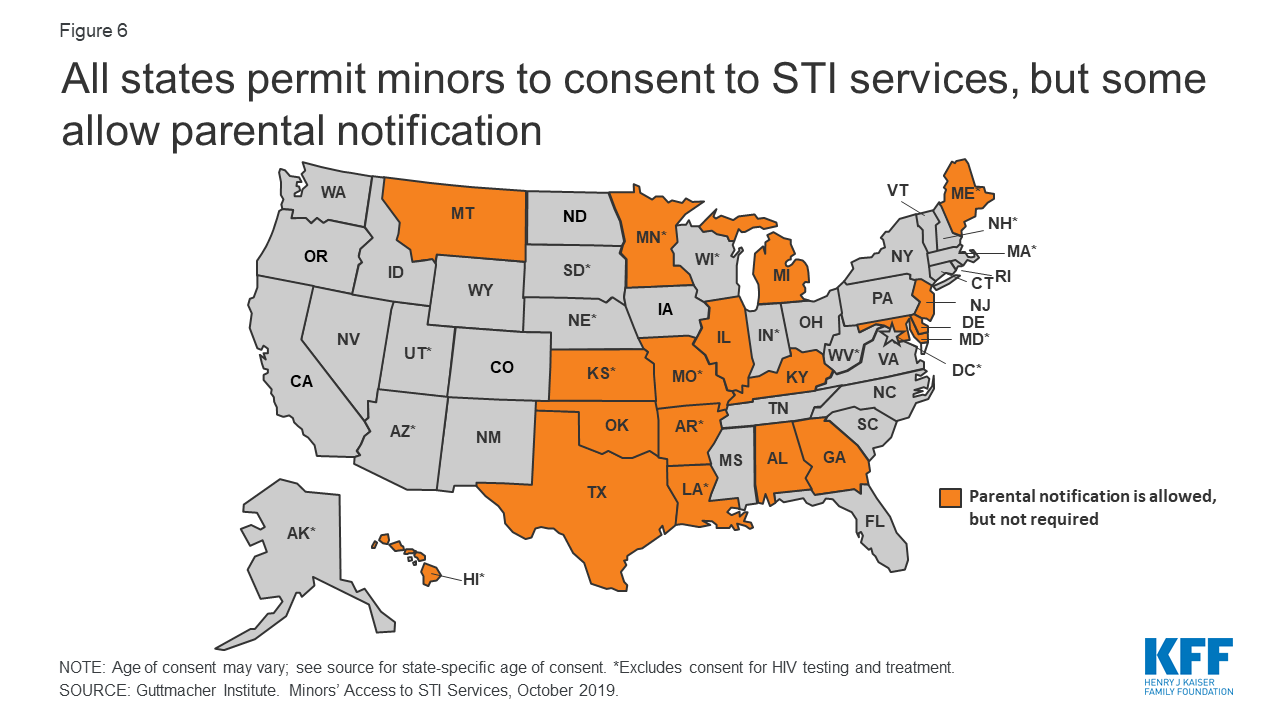
Figure 6: All states
permit minors to consent to STI services, but some allow parental notification
Confidentiality has long been a fundamental
principle of the Federal Title X family planning program; however, the Trump
Administration’s new final regulations for
the Title X program also have broadened its requirements to encourage family participation,
require documentation of the specific actions taken to encourage family
participation (or the specific reason why family participation was not
encouraged) in minor’s records, and to document the age of the minor’s sexual
partner. While the impact of this regulation on minors’ willingness to seek
care at a Title X clinic has not yet been evaluated, there is concern that this
new requirement will deter minors
from seeking services because of their concerns about confidentiality.
Another confidentiality concern resulted from
the ACA provision that allows dependents to remain covered under their parent’s
plan up to the age of 26. In 2018, approximately 11.1 million young adults aged
19-25 were covered as dependents in an employer-sponsored insurance policy.1 Although this policy has expanded
coverage for young adults, it has raised concerns about privacy and
confidentiality in the use of sensitive health services such as STI screening
and treatment for young adults covered as dependents. According to a 2013
Kaiser Family Foundation survey, 71% of women ages 18 to 25 rated
confidentiality as important to them, but only 37% understood that an Explanation
of Benefits (EOB) summary is sent to the primary policyholder (typically the
parent) when health services are used.
However, seven states (CA,
CO, HI, MD, ME, OR, and WA) have implemented broad laws to ensure confidentiality
for minors seeking sensitive services such as STI screenings. Some states (CA,
MD, and OR) require insurers to provide confidential communications upon the
written request of the covered dependent, including minors. Other states (HI
and ME) offer broader protections from disclosure of health information without
the consent of the minor. Some states (CT, DE,
and FL) have laws focusing specifically on the disclosure of STI treatment
without a minor’s consent, including in the billing process.
Conclusion
High rates of STIs continue to be a public
health concern. Women, people of color, and youth experience the highest rates
of reported infections. Gay and bisexual men account for the majority of the
increase between 2000 and 2018. The general public, however, appears to be
unaware of the how commonly STIs occur and that their incidence is on the rise.
Publicly funded clinics, many funded by the
CDC, OPA’s Title X program, and HRSA’s Ryan White program, including health
centers, state and local health departments, STI clinics, and Planned Parenthood
clinics, provide confidential STI and HIV care to at-risk and uninsured populations.
With the passage of the ACA, most private health insurance plans and Medicaid
expansion programs are now required to cover HIV and STI counseling and
screening without cost sharing. In addition to coverage, access to and the
availability of STI/HIV care will likely depend on a number of factors,
including public funding for safety-net providers, adoption of practices aimed
at the reduction of transmission such as patient education, expedited partner
therapy, consistent routine screenings and treatment, as well as proximity to
providers.
|
Appendix Table 1: Number of Reported Sexually Transmitted Infections,
2018
|
||||||
|
State
|
Chlamydia Cases
|
Gonorrhea Cases
|
Syphilis
(Primary and Secondary) Cases |
Congenital Syphilis Cases
|
HIV Prevalence (2017)
|
HIV Diagnoses
|
|
Alabama
|
28,437
|
12,742
|
477
|
7
|
13,124
|
572
|
|
Alaska
|
6,159
|
2,247
|
55
|
1
|
720
|
20
|
|
Arizona
|
40,807
|
12,870
|
1,047
|
61
|
16,062
|
806
|
|
Arkansas
|
17,663
|
7,300
|
288
|
25
|
5,634
|
281
|
|
California
|
231,415
|
79,192
|
7,607
|
332
|
128,153
|
4,398
|
|
Colorado
|
29,124
|
8,894
|
337
|
7
|
12,352
|
409
|
|
Connecticut
|
16,732
|
4,959
|
91
|
2
|
10,328
|
250
|
|
Delaware
|
6,038
|
1,691
|
30
|
0
|
3,285
|
91
|
|
DC
|
9,014
|
4,240
|
279
|
0
|
14,316
|
208
|
|
Florida
|
104,758
|
32,644
|
2,880
|
108
|
110,034
|
4,683
|
|
Georgia
|
65,936
|
20,867
|
1,607
|
31
|
52,528
|
2,552
|
|
Hawaii
|
7,735
|
1,495
|
92
|
4
|
2,524
|
66
|
|
Idaho
|
6,572
|
1,134
|
46
|
1
|
1,145
|
37
|
|
Illinois
|
77,325
|
25,422
|
1,408
|
29
|
35,076
|
1,352
|
|
Indiana
|
34,926
|
12,193
|
367
|
1
|
11,218
|
510
|
|
Iowa
|
14,682
|
4,839
|
86
|
3
|
2,671
|
116
|
|
Kansas
|
14,231
|
5,256
|
152
|
8
|
2,997
|
154
|
|
Kentucky
|
19,440
|
7,470
|
366
|
9
|
7,108
|
360
|
|
Louisiana
|
36,293
|
12,043
|
669
|
46
|
20,424
|
986
|
|
Maine
|
4,345
|
710
|
74
|
0
|
1,576
|
28
|
|
Maryland
|
35,482
|
10,305
|
737
|
29
|
32,436
|
979
|
|
Massachusetts
|
30,460
|
8,076
|
552
|
0
|
20,374
|
654
|
|
Michigan
|
50,592
|
16,688
|
649
|
13
|
15,667
|
718
|
|
Minnesota
|
23,569
|
7,542
|
292
|
10
|
8,304
|
283
|
|
Mississippi
|
22,086
|
9,749
|
464
|
3
|
9,399
|
479
|
|
Missouri
|
34,728
|
15,090
|
806
|
17
|
12,308
|
446
|
|
Montana
|
4,917
|
1,181
|
45
|
0
|
625
|
23
|
|
Nebraska
|
8,026
|
2,696
|
119
|
0
|
2,136
|
79
|
|
Nevada
|
17,508
|
6,475
|
682
|
31
|
9,609
|
508
|
|
New Hampshire
|
3,734
|
594
|
64
|
1
|
1,189
|
36
|
|
New Jersey
|
36,514
|
9,067
|
570
|
13
|
34,891
|
1,044
|
|
New Mexico
|
14,000
|
5,268
|
304
|
10
|
3,428
|
121
|
|
New York
|
119,571
|
37,262
|
2,654
|
28
|
126,495
|
2,470
|
|
North Carolina
|
66,553
|
23,725
|
1,098
|
17
|
30,953
|
1,200
|
|
North Dakota
|
3,525
|
1,369
|
41
|
0
|
407
|
36
|
|
Ohio
|
63,220
|
25,146
|
740
|
20
|
21,899
|
984
|
|
Oklahoma
|
21,974
|
8,998
|
531
|
12
|
6,084
|
234
|
|
Oregon
|
19,224
|
5,913
|
424
|
10
|
6,879
|
230
|
|
Pennsylvania
|
59,340
|
15,887
|
797
|
9
|
35,520
|
1,002
|
|
Rhode Island
|
5,487
|
1,336
|
96
|
0
|
2,547
|
76
|
|
South Carolina
|
33,910
|
13,801
|
384
|
9
|
16,858
|
719
|
|
South Dakota
|
4,432
|
1,689
|
41
|
1
|
568
|
28
|
|
Tennessee
|
38,212
|
14,627
|
553
|
12
|
16,612
|
759
|
|
Texas
|
146,510
|
47,231
|
2,538
|
367
|
88,099
|
4,483
|
|
Utah
|
10,541
|
2,895
|
169
|
1
|
2,757
|
121
|
|
Vermont
|
1,712
|
268
|
11
|
0
|
693
|
18
|
|
Virginia
|
42,965
|
11,776
|
702
|
9
|
22,149
|
867
|
|
Washington
|
34,449
|
11,207
|
802
|
7
|
13,205
|
503
|
|
West Virginia
|
3,599
|
1,143
|
65
|
1
|
1,810
|
85
|
|
Wisconsin
|
28,027
|
7,882
|
152
|
1
|
6,216
|
210
|
|
Wyoming
|
2,169
|
311
|
23
|
0
|
326
|
12
|
|
Sources: Centers
for Disease Control and Prevention (CDC). 2018 Sexually Transmitted Diseases
Surveillance. Atlanta: U.S. Department of Health and Human Services, October,
2019. CDC, National Center for HIV/AIDS, Viral Hepatitis, STD, and TB
Prevention (HCHHSTP) AtlasPlus, accessed February 2019.
|
||||||
Endnotes
1.
Kaiser Family Foundation

This comment has been removed by a blog administrator.
ReplyDeleteThis comment has been removed by a blog administrator.
ReplyDeleteThis comment has been removed by a blog administrator.
ReplyDelete