Family physicians are struggling to find the time to address
social determinants of health, but the AAFP is offering new resources to help
them.
January 23, 2018 - Family
physicians recognize the important role that the social determinants of health
play in managing population, but lack the time, tools, and resources to have
meaningful conversations with their patients, according to a recent survey
from the American Academy of Family Physicians (AAFP).
Eighty-three
percent of family physicians (FPs) agree that the social determinants of
health, including housing and food security, community safety, access to
transportation, and health literacy, have a significant impact on patient
outcomes and should be addressed.
More than
three-quarters of the nearly 500 AAFP members participating in the survey added
that collaboration with community organizations will be key to understand and
addressing social determinants that affect their patient populations.
Yet 80 percent feel
as if they do not have the time to discuss these important circumstances with
their patients during routine consults, and 64 percent of providers don’t
believe they have the staff or resources to do anything about these risk
factors even if they can identify them.
The AAFP has
started to develop a provider toolkit called The AAFP's The EveryONE Project
aimed at reducing the disconnect between the number of providers who
acknowledge the importance of socioeconomic factors and the number of physicians
equipped to manage them.
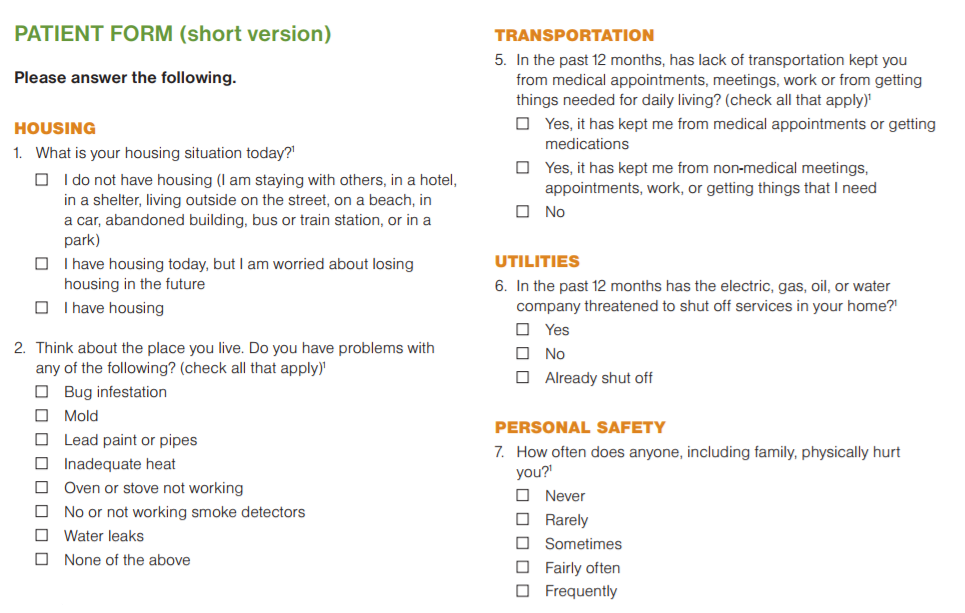
The freely available
resources include patient screening tools and printable
assessments that address key socioeconomic concerns.
The assessments
including questions about housing quality, such as whether the patient’s home
has working smoke detectors, leaking water pipes, mold, or insect infestations,
as well as questions about interpersonal violence and abuse, utility access,
secure access to food, and whether or not the patient would like assistance
with one or more of these concerns.
Source: American
Academy of Family Physicians
“During the
toolkit's development, we realized that as the importance of the issue
continues to grow and the practice of SDOH screening becomes more common, there
will be additional demands on the AAFP to go further than just providing a
screening toolkit as a patient-level intervention," said
Danielle Jones, MPH, manager of the AAFP's Center for Diversity and Health
Equity (CDHE), which is overseeing The EveryONE Project.
The resource
package also includes a guide for providers detailing how to integrate social
needs assessments into a team-based primary care practice.
The guide suggests
that receptionists or medical assistants can distribute the short-form
11-question assessment upon a patient’s arrival, while a nurse, physician
assistant, or health educator can review the patient’s answers and begin to
plan any necessary counseling or referrals.
A longer-form
questionnaire with additional questions about child care, education, finances,
and transportation is also available.
“Screening for SDOH
does not need to be administered by a physician, and it can be performed upon
check in or while rooming so that it does not disrupt the flow of the visit
while promoting more comprehensive care,” the guide states. “The screening tool
can be self-administered or given via an in-person interview. However,
individuals may be more likely to disclose sensitive information, such as
interpersonal violence, when self-administered.”
Physicians may not
need to administer the questions themselves, but they should still participate
in reviewing the patient’s answers, the document adds.
Patients may feel
more comfortable discussing sensitive issues with a physician they know and
trust, and as leaders in the team-based care format, physicians may be in the
best position to refer the individual to the correct member of their care team.
As the accompanying
survey pointed out, the majority of providers may struggle to allocate the time
and resources to fielding and acting upon even short patient assessments.
An integrated
social worker or community health worker can certainly be an important asset
for organizations with the budgets to launch such programs, but the AAFP
stresses that there are numerous free resources available to help providers
understand their local needs and identify existing services to work with
higher-needs populations.
The 211 Helpline Center, available in regions
in all 50 states and Puerto Rico, allows users to call – or in many cases
connect by text message – to access crisis services and basic needs resources
such as meal access for children, utilities assistance, information on
eligibility for social care programs.
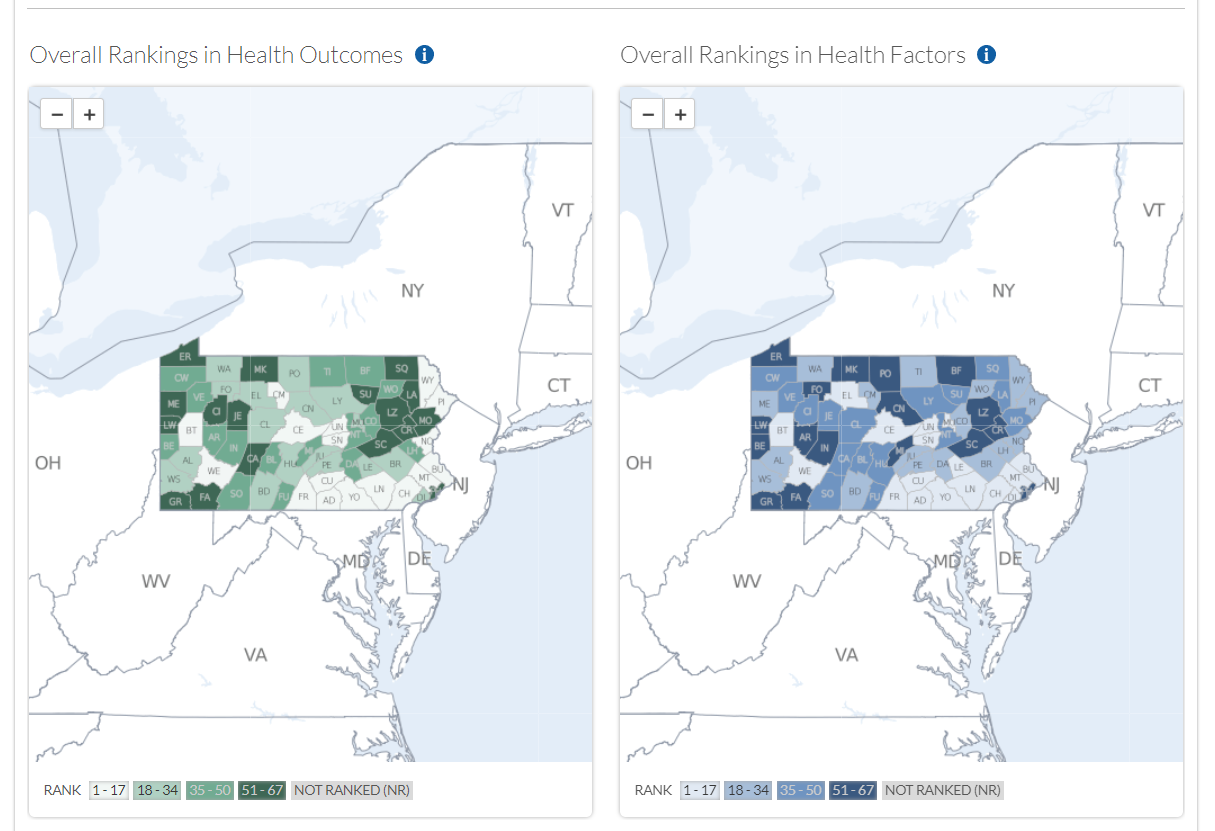
Providers can also
get a sense of what resources and partnerships might be most impactful to
prioritize for their populations by using the Robert Wood Johnson Foundation’s County Health Rankings and Roadmaps
tool.
Source:
CountyHealthRankings.org
The interactive
online map breaks down the socioeconomic landscape county by county, offering
insights into health outcomes as well as the health factors that contribute to
them. The tool includes lifestyle behaviors, such as smoking, excess
alcohol consumption, and obesity rates, as well as statistics about care
access, education and employment rates, and poverty levels.
For many counties,
information about the physical environment is also available. Data
includes air pollution levels, recent drinking water quality violations, severe
housing problems, and how long it takes individuals to commute to work.
Stakeholders can
also connect with a Community Coach who can help break down the data or suggest
activities to help address the needs of vulnerable populations.
The AAFP plans to
release even more population health management resources in 2018, including a
community-level social determinants of health toolkit that will be available in
March.
The kit will allow
providers to assess their readiness to start addressing socioeconomic needs for
more of their patients and tips for developing partnerships with community
organizations and behavioral healthcare providers.
"You can also
look to the CDHE to begin communicating its work more broadly, not just across
the family medicine specialty, but also with other industries and sectors to
develop high-impact collaborative partnerships aimed at advancing health
equity,” Jones said.

No comments:
Post a Comment