Andrew Strohman, Health Care Data Analyst
While many have seen the value of telehealth
during the pandemic, some have long promoted using telehealth services to
expand access to health care in rural communities. Limited broadband access in
rural areas—required to transmit larger data files such as imaging
results—could limit the availability of telehealth, recent data indicate
COVID-19 may have accelerated some of this needed transition. In February of
2020, telehealth claims accounted for about .14 percent of total rural claims,
ranging from .11 percent in the South to .19 percent in the Midwest. During the
first month of widespread lockdown, these numbers spiked dramatically to a
national average of about 5 percent of total rural claims, ranging from 3.3
percent in the South to 8 percent in the Northeast. (To be sure, at least some
of this spike is due to a drop in the overall number of services, as many
patients and doctors delayed elective procedures and appointments.) As the
debate continues over making permanent some of the recent changes to telehealth
access and utilization, politicians should consider the significant benefits it
could bring to rural communities.
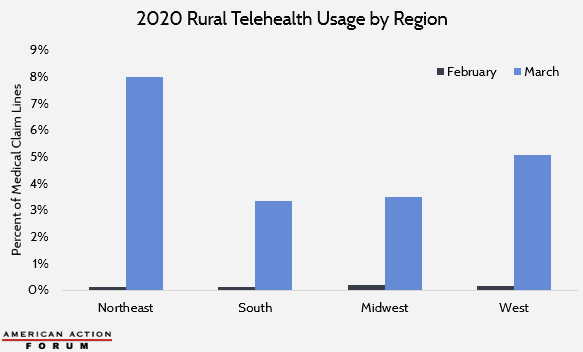
Data obtained from FAIR Health
https://www.americanactionforum.org/weekly-checkup/moving-the-needle-on-telehealth/#ixzz6Q6hjyDxP
Follow @AAF on Twitter

No comments:
Post a Comment