Ryan Haygood, Health Care Policy Intern June 14,
2019
The
Orphan Drug Act of 1983 began a reorientation of U.S. drug development toward
smaller target populations by incentivizing and financing therapies for rare
diseases (those affecting 200,000 people or fewer). Despite a relatively high
development success rate of 26 percent, they often come with extraordinary price tags of hundreds of
thousands of dollars per patient—partially because, by definition, there are
few beneficiaries over which to spread the high cost of development. Interest
in rare disease development has swelled even further in recent years, with
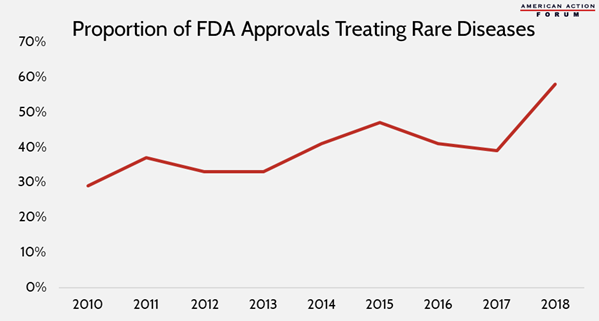
orphan drugs making up 59 percent of FDA approvals in 2018. These trends are
likely to progress as next-generation biotherapeutics, including gene and cell
therapy, begin coming to market—although the FDA approved a gene therapy for
the first time only in 2017, 269 such drugs are now in late-stage development, up from just 120 in
2015.
https://www.americanactionforum.org/weekly-checkup/reviewing-the-trump-administrations-health-insurance-actions/#ixzz5r7AtxgYf
Follow @AAF on Twitter

No comments:
Post a Comment